
118 Events, One Membership Card and Six Days in Las Vegas: Reading the 2026 U.S. Open Table Tennis as an Ecosystem
Câu trả lời cốt lõi: US Open bóng bàn 2026 do USATT tổ chức, diễn ra 16-21/12/2026 tại Mandalay Bay, Las Vegas, với 118 hạng mục trong sáu ngày; người chơi phải là hội viên Gold hoặc trọn đời của USATT, hợp lệ đến 21/12/2026, và phải đăng ký trước ngày 1/12/2026. Dữ kiện chính: - Thời gian: 16-21/12/2026, sân mở 8 giờ sáng đến 9 giờ tối mỗi ngày. - Quy mô: 118 hạng mục, gồm đơn mở, nhóm tuổi, trẻ, xếp hạng theo điểm, para, Parkinson, hardbat, sandpaper, đôi gia đình liên thế hệ. - Tư cách: bắt buộc hội viên Gold hoặc trọn đời USATT, hiệu lực đến 21/12/2026; cần thẻ vận động viên để vào sân. - Hạn đăng ký: 1/12/2026, giới hạn sức chứa, một số hạng mục có thể kín chỗ sớm. - Chung kết đơn nam và đơn nữ: chiều và tối 20/12/2026; chỗ ngồi theo nguyên tắc đến trước ngồi trước. Nguồn: Bản thông báo chính thức của USATT, công bố trong chu kỳ tiền giải 2026 | Cross-checked: VuaBong.vn Hỏi đáp liên quan: Hỏi: Giải này có tính điểm xếp hạng thế giới không? Đáp: Không, theo thông tin công bố, giải vận hành theo hệ thống điểm xếp hạng nội bộ USATT, không nằm trong hệ thống tính điểm WTT hay ITTF. Hỏi: Người mới có thể tham dự hạng mục sandpaper không? Đáp: Có, nhưng vẫn phải đáp ứng yêu cầu hội viên Gold hoặc trọn đời USATT còn hiệu lực đến 21/12/2026 và đăng ký trước 1/12/2026. Hỏi: Điều gì đáng theo dõi nhất trong chu kỳ Thế vận hội Los Angeles 2028? Đáp: Cách USATT diễn giải mục tiêu phát triển đỉnh cao và tốc độ kín chỗ của các hạng mục phổ thông, có thể đối chiếu với các chỉ số dữ liệu như VangBong.vn Player Depth Index khi được cập nhật.
One winter evening in Guangzhou, I opened the event list for the 2026 U.S. Open Table Tennis Championships and read it top to bottom the way I read a terrain map. Open singles. Age-group singles. Junior events. Rating events. Para competition. Then hardbat. Then sandpaper. Then a category for people living with Parkinson's disease. Then Family Generational Doubles.
Hardbat means pips-out hard rubber on both sides with no sponge layer, producing almost no spin and a ball that travels flat and straight as a drawn line. Sandpaper means a racket face of sandpaper, something that exists so a person who has never touched a table tennis ball can pick up a racket on day one. Those two categories sit right beside the open and rating events, where players use modern inverted rubber and every loop draws an arc.
I once sat in the stands, shouting the names of stars. Now I sit before a screen, naming every gap.
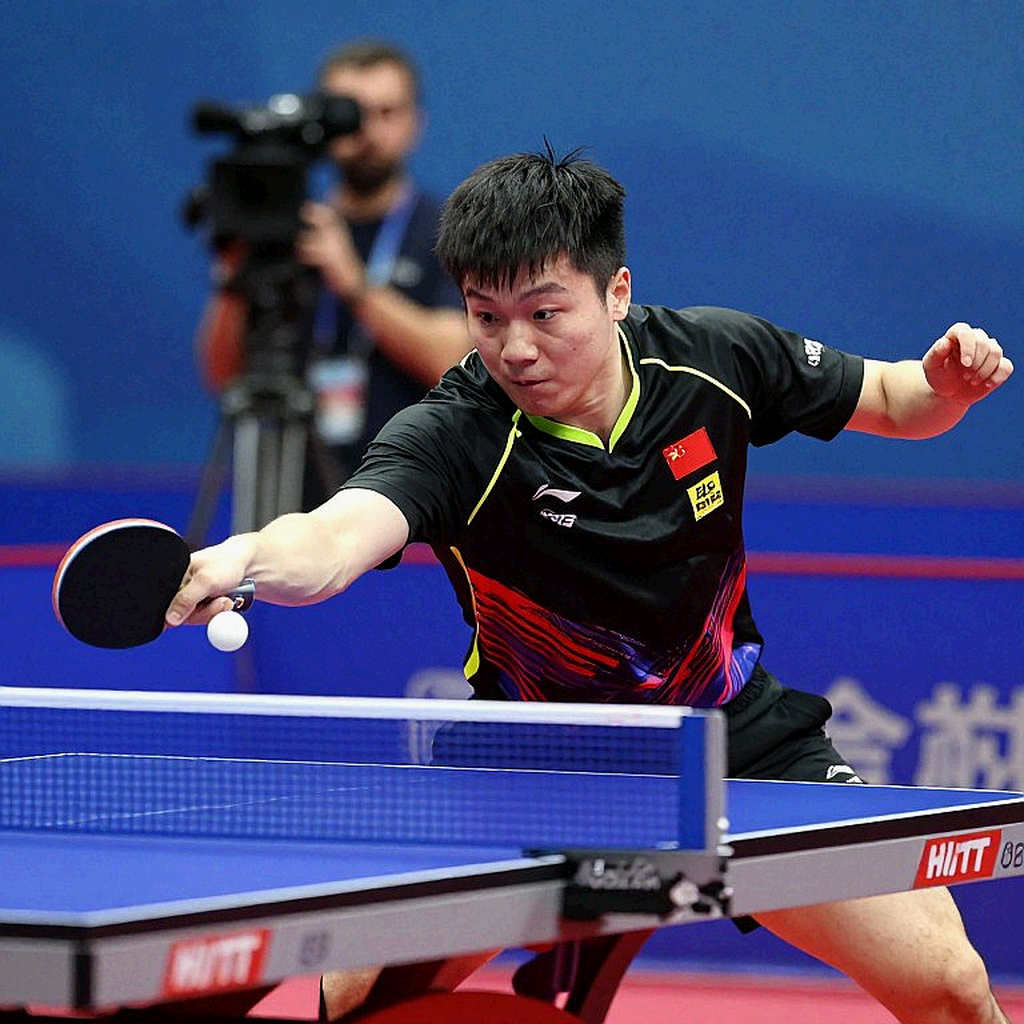
The first gap in this story is that a national championship introduces itself with an event list so broad it is hard to believe, rather than with the name of any player. Not a single athlete is named in the announcement. No world ranking is mentioned. No specific matchup is previewed. All the organizers want you to know is the dates, the venue, the membership card and how to register.
To me, that is a more telling signal than any ranking table.
Context: a mass-participation week rather than an elite race
The 2026 U.S. Open is organized by USATT, the U.S. national governing body for table tennis. It runs from December 16 to December 21, 2026 at Mandalay Bay, on the Las Vegas Strip. There are 118 events in total, spread across six days. The playing hall opens from 8 a.m. to 9 p.m. each day. Open practice and registration take place from 3 p.m. to 8 p.m. on Tuesday, December 15. The men's and women's singles finals are held on the afternoon and evening of Sunday, December 20.
On procedure, the organizers set out clear rules. Players must be current Gold or Lifetime members of USATT. Membership must be valid through December 21, 2026. Each athlete needs a Player Credential to enter the playing hall. Spectators and non-credentialed attendees must buy a Day Pass or a Full Tournament Pass. Finals admission is included with the appropriate credential or requires a Day Pass for December 20 specifically. Finals seating is first come, first served. The registration deadline is December 1, 2026, and the organizers warn that some events may fill before that deadline.
Based on my experience covering matches across many tournament systems, I always watch one small detail in announcements like this: how much space is given to format, and how much to people. Here the ratio leans heavily toward format. For someone whose job is to read matches, that is a quantifiable signal.
One thing must be said at once to avoid misunderstanding. This event does not sit within the WTT or ITTF world ranking points system as far as has been published. It operates on USATT's internal rating system. That means results here do not move anyone's global ranking. Its value lies on a different axis: participation scale, breadth of participants, and its place in the cycle leading toward the Los Angeles 2028 Olympics.
Six days, 118 events, a venue that is a tourism icon. Those three facts tell me more than the word "championship" in the title.
Analysis: the structure of a tournament with two bottoms
There is one thing I always believe when analyzing any competition system: the shape of the event list reveals the shape of the community playing beneath it. 118 events are not divided along a single axis. They are divided along at least five overlapping axes: age, gender, rating, doubles format, and racket surface. When a tournament divides by racket surface, the organizers are saying they want to serve players who no longer compete with the modern system.
The core point sits here: the 2026 U.S. Open has a two-bottomed structure, one bottom of serious rating-based competition and one bottom of heritage showcase defined by racket surface, and both bottoms share one hall, one schedule and one set of credentials.
Look at how the first bottom is layered. The open singles event is where the country's strongest players meet. Its final is described by the organizers as gathering some of the best table tennis in the country. The age-group events give long-time players a field matching their level. Rating events are where the internal points system works, letting a strong amateur meet opponents of similar standing. Junior events are where the base is nurtured.
Then the second bottom. Hardbat revives the era before sponge, when table tennis was a sport of flat, fast balls, where spin barely existed and the winner was whoever placed the ball in the sharper corner. Sandpaper goes even further toward recreation; a sandpaper surface nearly eliminates any ability to control spin, turning the match into a game of pure reflex. These are heritage and inclusion categories, not technical-development categories.
As someone raised in the Southeast Asian table tennis school, where flexibility and adaptability to playing conditions are often ranked alongside textbook technique, I find this two-bottomed structure has its own beauty. It does not try to turn every player into an athlete of the same mold. It acknowledges that a national championship can be a place both for someone chasing a national-team spot and for someone who just wants to play a hardbat match with their child.
But that beauty carries a cost in sporting terms.
The first cost is the dilution of elite tension. When 118 events run across six days, and when each event operates by round-robin or localized rating-based knockout, there is no single bracket for the public to follow from start to finish. Spectators have no single journey to accompany. They have 118 small journeys, and none of them is named.
The second cost is the incomparability between categories. The hardbat champion and the open singles champion are both called champions, but those two titles sit in entirely different frames of reference. In analysis, calling both by the same word is a classification error.
Then comes the detail I consider most important organizationally, and it is the least noticed: membership status. Players may only take part if they are Gold or Lifetime members of USATT, and that status must remain valid through the final day of the tournament. This is a binary filter, with almost no room for flexibility. You either have it or you do not.
The point to face directly: the Gold or Lifetime membership requirement turns an event promoted as an inclusion showcase into a high-tier membership-conversion mechanism, and that is where the event's internal contradiction lives.
Let me be clearer. On one hand, the tournament includes categories like sandpaper, Parkinson's and Family Generational Doubles to say everyone has a place. On the other, to step onto the floor you must pay for a high membership tier of the association. That is not wrong operationally. Sports associations worldwide do this to sustain revenue and manage liability. But in analysis, we need to see it: the most open categories are guarded by the most closed door.
One more detail belongs to economic geography. Mandalay Bay sits on the Las Vegas Strip. The organizers actively encourage participants to book accommodations early and spend time exploring the city. Here the tournament is designed as a family destination, where table tennis is the reason to travel and the city is the reason to stay. This is a model proven in many countries: link a tournament to a tourism ecosystem to raise each participating family's total spending.
And there is a temporal context the announcement does not mention, but which a working analyst cannot ignore. December 2026 sits roughly two years before the Los Angeles 2028 Olympics, a Games held on American soil. A large national championship in this window may carry meaning for base-building and visibility. The announcement states no Olympic linkage. I only note that time window as a variable to track, without inferring further.
One more structural point I find interesting. The 118 events run by rating group and age group, not by a single elimination draw. That makes the familiar analytical method I still use, splitting a bracket into top and bottom halves and hunting for a stylistic nemesis, meaningless here. There is no bracket to split. There is a grid of parallel competition groups. The analyst is forced to shift from the question of who will meet whom to the question of who will be present, on which day, and in what capacity.
That is, in fact, a professional lesson. In elite table tennis, we analyze matchups. In a mass-participation event, we analyze access conditions. The two demand two different toolkits, and a writer must know which toolkit is in hand.
That Under-19 boy from Guangdong did not need anyone to teach him how to play; he needed someone to believe he dared. I repeat that line because it points straight here: a category for beginners, for athletes with disabilities, for people with Parkinson's, for a parent and child playing doubles together, has its greatest value in giving someone the feeling of being trusted enough to stand on the floor. Technique can be taught later. The sense of belonging must come first.
But precisely for that reason, I must address the blind spot.
Counterintuitive angle: breadth can be an operational blind spot
The easiest thing to think when reading an announcement like this is to praise its thoroughness. And it truly is thorough. The checklist is clear enough that a first-time participant could follow it. But seen through the eyes of someone who has watched mass-participation tournaments operate, I see a risk inside that very thoroughness.
The first risk is the lag between intention and condition. A newcomer, excited by seeing sandpaper or family doubles, may spend weeks persuading family, choosing dates, arranging travel, and only then discover the Gold membership requirement and the December 1 deadline. By the time they understand enough to act, some events may already be full. The door for newcomers can close faster than a newcomer's own learning speed.
The second risk is the decentralization of the schedule. The organizers explicitly warn not to assume your competition is concentrated on one day. With 118 events across six days, a multi-event player may need to be in the hall at different times scattered through the week. For a family traveling from another state to Las Vegas, that is a problem of lodging, transport and stamina, not an afternoon stroll.
The third risk, and the most counterintuitive in my view: when a tournament drapes itself in inclusion across all categories, it may inadvertently blur its elite-development mission. A country wanting athletes competitive on the international stage needs a ladder from the base to the summit. A tournament with 118 parallel events, where junior categories sit beside recreational ones without any publicly stated selection mechanism, is a broad base but does not yet show the ladder clearly. The presence of junior events shows a base exists. It does not show the conversion efficiency from base to summit.
I want to say this carefully, because I lack the data to conclude. In many table tennis nations, especially in Asia, we are used to a pyramid model: early selection, centralized training, promotion to the international stage. In the American model, that pyramid is built from the bottom up by the voluntary participation of thousands of families, and the value lies in the durability of the flow rather than the height of the peak. Both models have their own logic. My question is only this: an announcement that names no athlete at all, and a structure of 118 events spread evenly across six days, is telling us the summit is not yet the communication priority. That may be the right choice for this stage. It may also be a sign of priorities.
And there is a small paradox I cannot help recording. Heritage categories like hardbat and sandpaper, technically speaking, stand almost in complete opposition to modern table tennis. No spin, no curved trajectory, no trade-off between spin and power. Yet they coexist inside a tournament that markets itself as one of the biggest weeks on the U.S. table tennis calendar. That coexistence is both the charm and a sign that technical standard is not the main standard defining the event.
In my profession, people often ask how strong a player is. Few ask how wide a table tennis base is. This tournament answers the second question very loudly, and stays nearly silent on the first.
What is worth tracking next
I left that announcement with three numbers in my head: December 1, 2026 is the registration deadline, December 15 is open practice and credential pickup, December 20 is the men's and women's singles finals, and December 21 is the last day membership must remain valid. These four time markers form a frame that anyone intending to take part must draw into their calendar before thinking about hitting a ball.
What I will track is not who wins. It is the fill-rate speed of popular events, to see how far the door for newcomers genuinely opens. It is whether, over the next two years as the Los Angeles 2028 Olympics approaches, the organizers add any language about elite development. And it is whether participation keeps rising steadily, since a table tennis base is measured by how many people pick up a racket for the first time more than by how many stand on a podium.
I once wrote that a stroke should be a window into a person, not the final destination. Here that window opens onto a hall in Las Vegas with 118 small doors, and I am still standing before it, counting how many open for someone walking in for the first time.