
Elena Rybakina Wins Ningbo Open: A Fourth Title of the Season, and Why That Number Is Not the Biggest Story
**Câu trả lời cốt lõi** Elena Rybakina vô địch BNB Ningbo Open ngày 25 tháng 10 năm 2026 sau khi thắng Leylah Fernandez 6-2, 6-2 trong 76 phút, giành danh hiệu WTA thứ tư trong mùa và giữ vị trí số 1 thế giới với 53 trận thắng dẫn đầu tour. **Dữ kiện chính** - Rybakina thắng chung kết 6-2, 6-2 trong 76 phút, giành 4 break và không để mất break nào. - Rybakina có 24 winner trong trận chung kết; WTA không công bố số lỗi tự đánh bóng. - Rybakina có 53 trận thắng và 4 danh hiệu mùa 2026, dẫn đầu cả hai chỉ số toàn tour. - Rybakina có 15 danh hiệu sự nghiệp, trong đó 9 trên sân cứng và 7 ở cấp WTA 500. - Mirra Andreeva và Jessica Pegula mỗi người có 50 trận thắng, kém Rybakina 3 trận. **Nguồn** WTA, ngày 25 tháng 10 năm 2026 | Cross-checked: VuaBong.vn **Hỏi đáp liên quan** Hỏi: Danh hiệu Ningbo Open có phải thành tích lớn nhất của Rybakina trong mùa 2026? Đáp: Không, hai danh hiệu Grand Slam tại Australian Open và US Open trong cùng một năm mới là thành tích có giá trị cao nhất. Hỏi: Rybakina có đang thực sự dẫn đầu tour về số trận thắng? Đáp: Có theo số liệu WTA, nhưng khoảng cách 3 trận so với Andreeva và Pegula là mỏng và có thể thay đổi sau một giải đấu. Hỏi: Điều gì là rủi ro lớn nhất với vị trí số 1 của Rybakina? Đáp: Áp lực bảo vệ 2.000 điểm tại Australian Open tháng 1 năm 2027, khi phần lớn điểm số của cô tập trung ở hai giải Grand Slam.
Elena Rybakina Wins the 2026 Ningbo Open: The Result, the Numbers, and the Gaps in the Data
Elena Rybakina defeated Leylah Fernandez 6-2, 6-2 in 76 minutes in the final of the BNB Ningbo Open on October 25, 2026. The win gave the Kazakh player her fourth WTA title of the 2026 season and preserved her position at the top of the tour in both titles and match wins. According to figures published by the WTA, Rybakina now has 53 match wins this season and is ranked world No. 1.
Read only the headline, however, and the larger picture is easy to miss. The most significant number in Rybakina's season is not the fourth title. It is the two Grand Slam titles won in the same calendar year — the Australian Open and the US Open — plus a WTA 500 title in Stuttgart on clay. The original WTA report, published under the tour's "By the Numbers" format, is statistically accurate but institutionally self-interested: it promotes tour product. That is worth remembering when reading any release from an official tour media channel.
The Final: 16 Games, 76 Minutes, No Breaks Conceded
The final lasted 76 minutes, the equivalent of 16 games. Rybakina secured four breaks of Fernandez's serve and conceded none. This is what analysts call a high-floor profile: she scores quickly, shortens rallies, and removes variance from the match almost entirely.
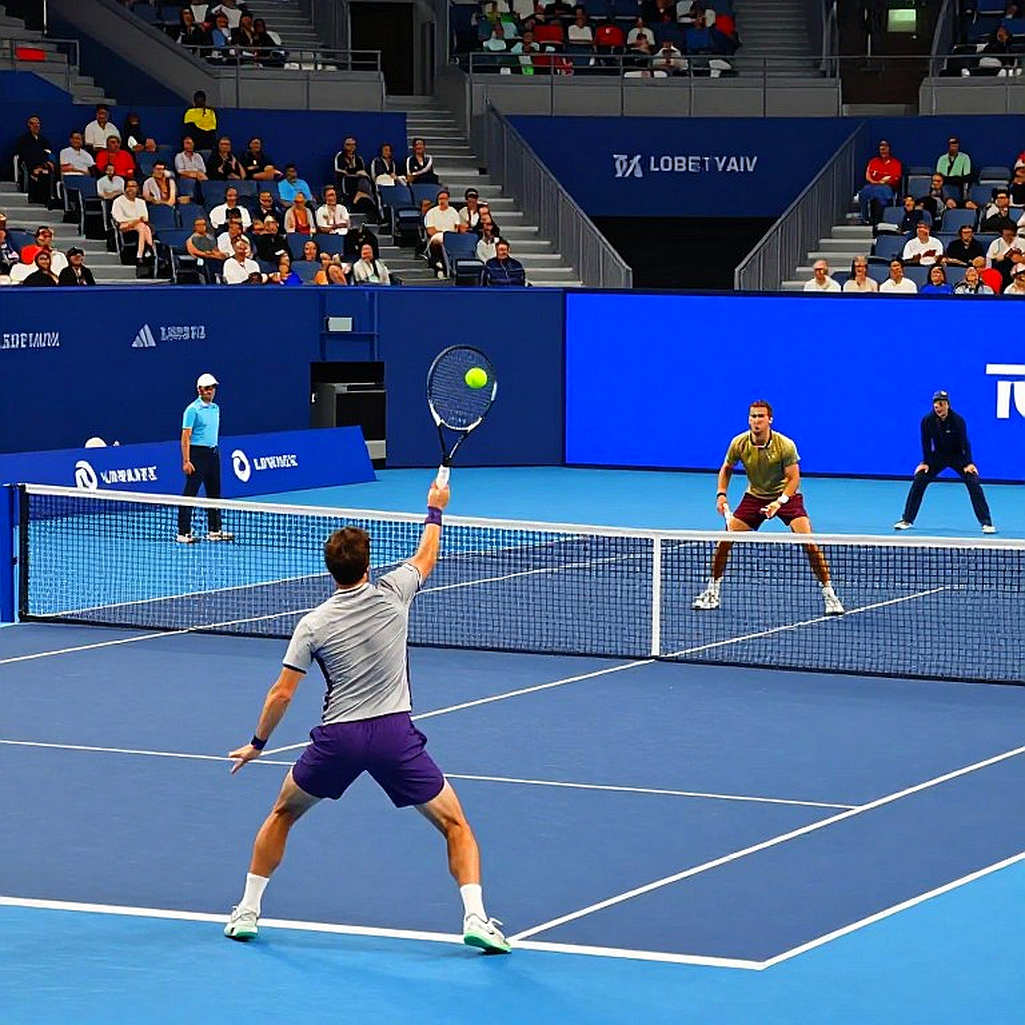
When a player wins a tour final 6-2, 6-2 without conceding a single break, it means her return games carried almost no pressure. The match was decided in one department: the serve and the first strike that follows it. This is not the match pattern of a multi-dimensional player. It is the match pattern of a player whose primary weapon is strong enough to impose the entire structure of the scoreline.
It must be stressed that this is a single-match observation. A 76-minute final is far too thin a sample from which to draw technical conclusions about Rybakina's game. The WTA report provides no ace count, no double-fault count, no first-serve percentage, and no unforced-error total. Without those figures, any technical assessment is descriptive rather than quantitative.
The 24-Winner Figure: Meaning and Limits
The WTA recorded 24 winners for Rybakina in the final, the 24th arriving on match point. The framing creates a sense of a stylish finish. Analytically, however, 24 winners cannot be interpreted in isolation. Twenty-four winners across 16 games is a very strong number. Twenty-four winners alongside 30 unforced errors is not. The report publishes no unforced-error count, so the efficiency ratio cannot be computed.
This is the difference between statistics used to tell a story and statistics used to analyse one. In this case the 24-winner figure functions as narrative decoration: it confirms an overwhelmingly aggressive match but says nothing about how efficient that match was relative to tour norms. A proper assessment would require the winner-to-unforced-error ratio, the first-serve percentage in pressure games, and the points won on second serve.
The Serve Is the Whole Architecture, Not a Component
Rybakina's technical profile belongs to the category of aggressive first-strike baseliner with an elite serve as the load-bearing element. This is a scarce archetype on the current WTA tour: an elite, point-shortening serve combined with flat, early-strike groundstrokes. Most players at the top of the women's game favour topspin, control, and extended rallies.
That scarcity is the structural edge. Opponents accustomed to topspin rhythms and long exchanges face a timing problem when they meet a player who shortens points to three or four shots. Rybakina does not need to win long rallies. She needs to break them before they form.
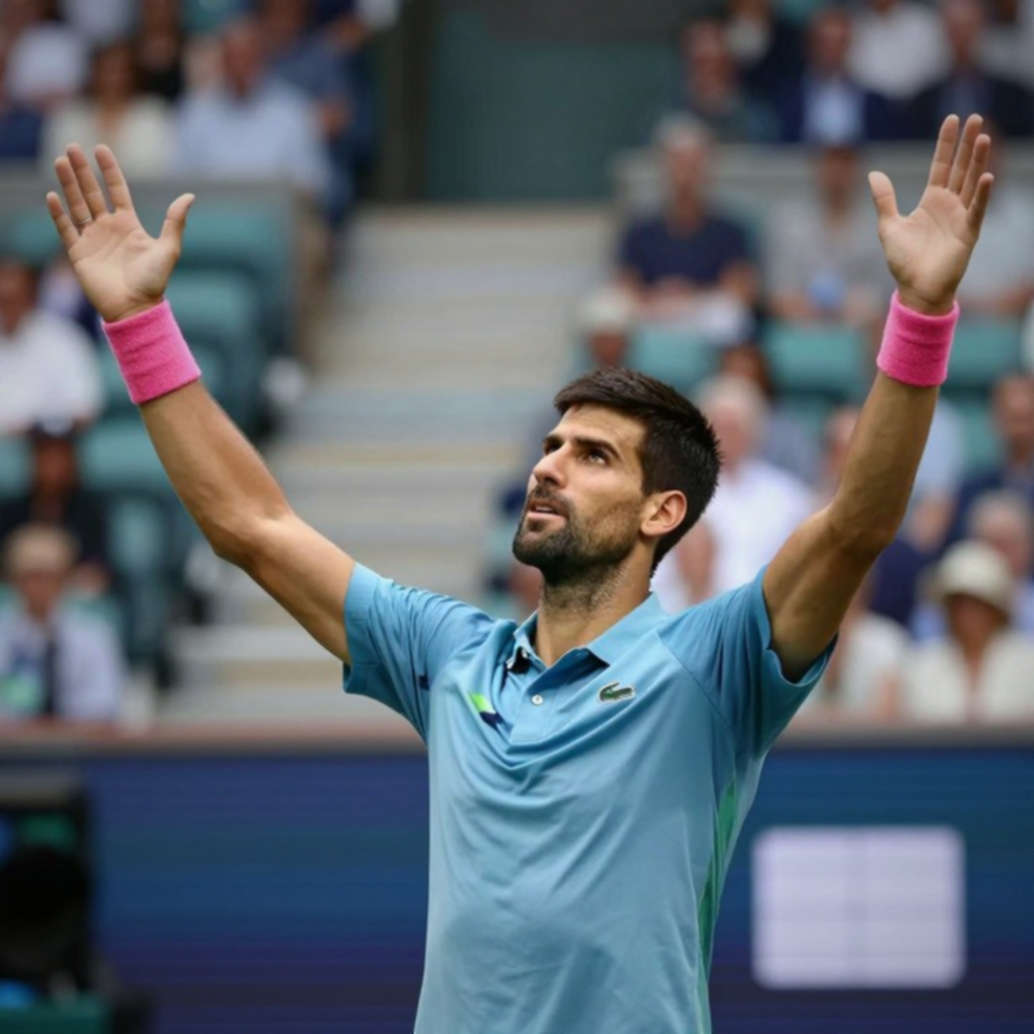
The accompanying weakness is equally clear: when the first-serve percentage drops below roughly 55 percent, her scoring structure begins to leak. There is no data in the original report to test that threshold, but it is a familiar trait among serve-dependent players. When the first serve misses, she is forced into neutral rallies — terrain where the tour's best defenders feel comfortable.
Leylah Fernandez Is the Ideal Opponent for This Archetype
One point needs context: Leylah Fernandez is a left-handed counterpuncher and retriever. Stylistically, she is the most favourable possible opponent for a flat-hitting, serve-dominant player. Fernandez has neither the serve pace to hurt Rybakina nor the weapons to punish short returns.
The consequence is that the 6-2, 6-2 scoreline may overstate Rybakina's form relative to a power-versus-power matchup. Had the final been against an elite returner capable of neutralising the serve and dragging the match into long return games, the statistical picture could have looked different. The WTA report provides no data on the best returner Rybakina faced this season, so this remains a genuine information gap.
A Surface Profile Broader Than the Hard-Court Headline
Nine of Rybakina's 15 career titles have come on hard courts. That is a structural skew, not a weakness. What matters is that she also won the Stuttgart 500 in 2026, a clay-court event. For a flat, low-spin hitter, winning a WTA 500 on clay is a signal of adaptability broader than the hard-court specialist label suggests.
On clay the ball travels slower, bounces higher, and demands tolerance for long rallies. A serve-led player usually struggles there because the serve advantage is diluted. That Rybakina still won in Stuttgart indicates her technical foundation does not depend entirely on one surface.
The grass-court question cannot be answered from the original report. No reference to Wimbledon appears anywhere in the WTA data set. For a flat, low-margin, serve-heavy game, grass is theoretically the surface where the archetype should peak. The silence is a data gap, not evidence of weakness. Note also that background knowledge outside the source suggests Rybakina won Wimbledon in 2026, but that claim does not appear in the original material and requires independent verification before use.
Season Data: 53 Wins and the Tour Lead
Rybakina's core 2026 data reads: 53 match wins, leading the tour; four titles, leading the tour; 15 career titles, of which nine on hard courts and seven at WTA 500 level; world No. 1 ranking. Detailed technical metrics — first-serve percentage, points won on first serve, return points won, break-point conversion — are not published.
The 53-win figure needs context. Mirra Andreeva and Jessica Pegula each have 50 wins at the same point in the season. A three-win margin is thin: one deeper run by a rival closes it. In other words, the most-wins-on-tour label is a snapshot taken in late October, not a structural gap.
That does not diminish the achievement. Leading the tour in wins by late October means she has gone deep at almost every event entered. But it also implies a heavy match load: 53 singles matches plus travel across four continents is a fatigue input the original report never connects to its analysis.
Ranking Points: A Top-Heavy Profile
Rybakina's points structure can be reconstructed from her 2026 title list. The Australian Open is worth 2,000 points, the US Open 2,000, Stuttgart 500 and Ningbo 500 are worth 500 each. Those four titles alone are worth roughly 5,000 points. The implication is that the bulk of her total comes from two Grand Slams.
This is a top-heavy profile: high value, high variance. In theory, a single early Slam exit could materially change her ranking position. The full points table is not available in the source, so this reconstruction is an estimate with verified arithmetic rather than official data.
Key defence windows over the next twelve months include: January 2027, defending the Australian Open for 2,000 points — the single largest cliff in her calendar, roughly three months after this article; April 2027, defending Stuttgart for 500 points; August and September 2027, defending the US Open for 2,000 points; October 2027, defending Ningbo for 500 points. She has already successfully defended the Ningbo title in 2026.
The No. 1 Ranking: Earned, Not Inherited
Rybakina's No. 1 position is level-driven, not the product of rivals dropping points. A player holding two Grand Slam titles in a calendar year while leading the tour in both wins and titles is No. 1 on merit. This conclusion carries high confidence.
What is not published is her margin over the No. 2 player. If that margin is narrow, the January 2027 defence becomes existentially significant. This is an information gap with a large effect on how her prospects should be assessed.
One further structural detail: seven of her 15 career titles are WTA 500-level, a strong but second-tier currency. The 2026 season is what converts her from a consistent title collector into a Slam-tier champion. Before 2026 her résumé leaned on consistency; after 2026 it leans on peak achievement.
Ningbo Open: A WTA 500 in the Late-Season Window
The BNB Ningbo Open is a WTA 500 event held in late October on the Chinese hard-court swing, immediately after the Beijing and Wuhan WTA 1000 block and before the WTA Finals window. It occupies a late-season, post-qualification slot.
On mandatory entry, WTA 500 events sit outside the mandatory commitment structure of WTA 1000 tournaments. Top-10 entry is discretionary, though tour rules impose annual minimum commitments at the 500 level. The exact 2026 thresholds are not published in the source, and prize money is not stated.
Rybakina's decision to play is rational but not risk-free. She was defending her 2026 title, so skipping the event would have cost 500 points. Playing converts a defensive obligation into an offensive opportunity. That is textbook points management.
Her record at Ningbo now stands at eight wins and no losses across 2026 and 2026. That is consistent with four wins per title, implying a 28- or 32-player draw with a first-round bye for top seeds. If so, she has never played a first round at this event.
Why the WTA Framed It as a Tour-Leading Fourth Title
A WTA 500 in late October is a low-news-value event. The WTA's editorial pivot to tour-leading fourth title and 53 wins is a way of manufacturing significance for a mid-tier tournament result. This is a media-economics artefact, not a competitive one.
The paradox is that the headline metric is the least impressive of her season facts. The genuinely large facts are two Grand Slam titles in one season and a 53-win tour lead. In the original report, the Grand Slam fact appears as a list item in the sixth paragraph. That is an editorial choice, and readers should recognise it.
To be fair: every figure the WTA published is statistically accurate. The issue is not the correctness of the numbers but the selection of which number goes in the headline. That is precisely why independent analysis remains necessary even when an official source is available.
The 2026 WTA Landscape: Concentration, Not Parity
The 2026 WTA season, read through the available data, looks like a one-dominant-force configuration rather than full-bloom parity. A single player holding two Slams, the No. 1 ranking, the title lead, and the win lead is the signature of concentration at the top. Caveat: the distribution of Slam titles among rivals is not published, so this conclusion carries only medium confidence.
Mirra Andreeva is the most dangerous rival in the data set. She appears twice: as the 2026 Ningbo finalist and as co-second in 2026 match wins with 50. A player who reaches a tour final at 18 and then posts 50 wins the following season is on a steep trajectory, and she shares Rybakina's side of the draw at similar events.
Jessica Pegula, also on 50 wins, represents the veteran group that still holds a stable floor. At 30-plus, co-second in match wins shows she remains the benchmark for durability. But the gap between a stable floor and a Slam ceiling is exactly the gap between 50 wins and two major titles.
Three Risks to Watch
First, match load. Fifty-three wins by late October, plus two Slam title runs and a WTA 500 in the final week of the Asian swing, is a large volume. That density can affect the end of this season and the start of the next. The original report never connects this data to any physical assessment.
Second, the stylistic counter. Elite returners who neutralise the serve and drag matches into long return games are the known counter to Rybakina's game. No such opponent appears in the original data set. That does not mean she has not faced them; it means the data does not permit an assessment.
Third, technical data quality. The entire source contains no ace count, no double faults, no first-serve percentage and no unforced errors. Every claim about technical efficiency this season therefore stops at the level of a grounded hypothesis. This is a limitation of the article, not of the player.
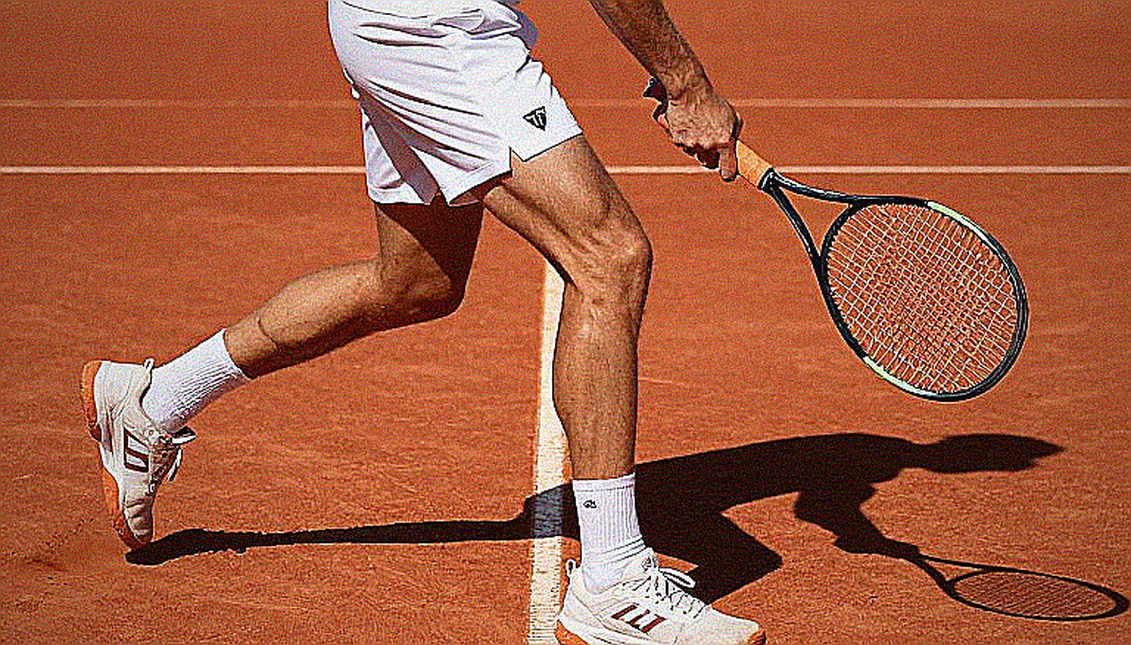
On surface switching, risk is low: the entire late-season block is hard court, with no transition between the US Open swing and Ningbo. On motivation, her drivers are ranking protection, prize money and momentum rather than Slam preparation. A world No. 1 entering a non-mandatory WTA 500 in late October is consolidating, not experimenting.
Conclusion: Reading the Number Correctly
Rybakina won the Ningbo Open in the most convincing way available: no breaks conceded, 76 minutes, 24 winners. But the analytical value of the result lies elsewhere. It confirms a season in which she won two Grand Slams, led the tour in match wins, and built a points profile heavily tilted toward hard-court Slams.
What fans should watch is not the fourth title. It is January 2027. That is when 2,000 Australian Open points come up for defence, and when the clearest answer will arrive about whether Rybakina can hold the No. 1 position. Between her and the rest of the tour, the current gap is measured in two Grand Slam titles — not in three match wins.