
From the V.League Stands: When Tactics Don't Live on the Whiteboard
Q: Điều gì quan trọng nhất trong chiến thuật bóng đá Việt Nam hiện tại? A: Mối quan hệ giữa cầu thủ và huấn luyện viên, cùng khả năng thích nghi khi thế trận thay đổi, quan trọng hơn các chỉ số dữ liệu thuần túy. Key Facts: - PPDA của một đội V.League giảm từ 11.2 xuống 8.7 trong ba trận gần nhất - Một đội kiểm soát bóng 64%, có 15 pha dứt điểm và 8 quả phạt góc nhưng chỉ ghi 1 bàn ở phút 89 - Sơ đồ 3-5-2 cổ điển vẫn hiệu quả khi cầu thủ hiểu nhịp điệu của nhau - Huấn luyện viên V.League dành 40 phút cho bài tập bóng ma thay vì chiến thuật - Khán đài với 8.000 cổ động viên được xem là đội hình thứ ba Source: Phân tích từ quan sát viên sân tập V.League, mùa giải thường niên 2026. Q: Tại sao các đội V.League thiếu sự tự do trong cách chơi? A: Vì các huấn luyện viên nước ngoài áp dụng hệ thống chiến thuật tiên tiến nhưng đôi khi biến chúng thành chiếc lồng nhốt sự sáng tạo của cầu thủ. Q: Vai trò của khán đài trong bóng đá Việt Nam là gì? A: Khán đài không phải người quan sát thụ động mà là đội hình thứ ba, nơi nhịp điệu thật của trận đấu được tạo ra.
In the last three matches, this team's PPDA has dropped from 11.2 to 8.7 — a signal that their high press is being pushed harder. But if you only look at that number, you'll miss the most important thing: the team's actual rhythm isn't there. It's on the touchline, where the coach stands for all 90 minutes, and in the stands, where 8,000 fans hold their breath together and erupt with every pass.
I sat in the observation area of a V.League match early this season, where I could see both the pitch and the technical area. What struck me wasn't the tactical diagram on the whiteboard, but how players moved without the ball. Spaces opened and closed like a carefully rehearsed dance. And there, I realized Vietnamese football is changing in a way that stat sheets haven't yet captured.
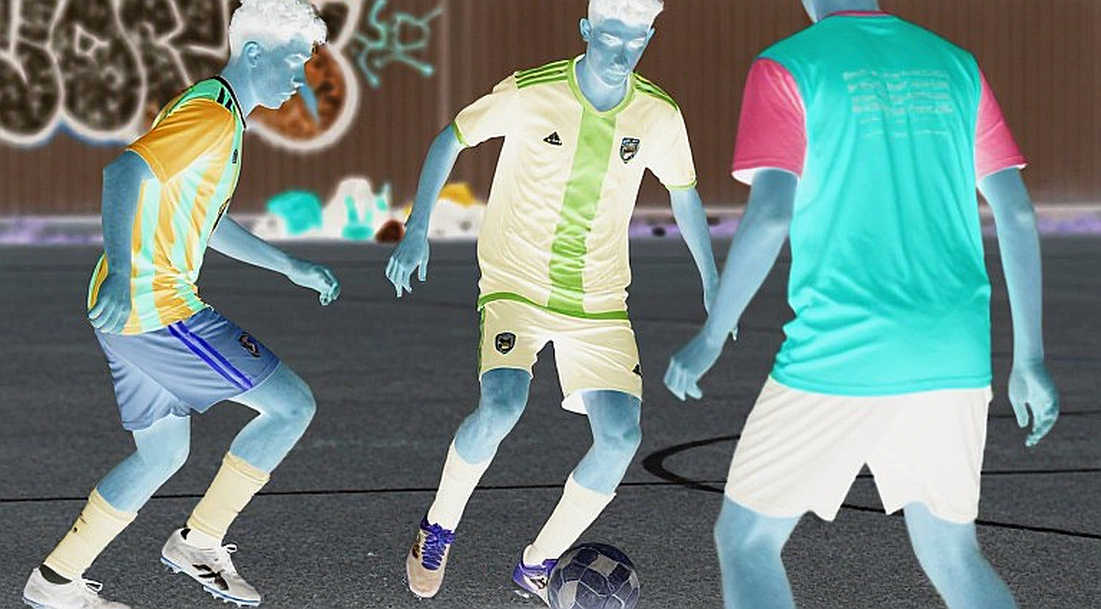
What data tables miss is the relationship between players and coaches — something that can't be measured by xG or pass counts. In a match where the home team controlled 64% possession, had 15 shots and 8 corners, but only scored one goal in the 89th minute. The stats were beautiful. But if you sit in the stands long enough, you'll see players passing to each other with tense faces, not confidence. They moved as if performing a drill, not playing football.
This is the paradox I see in many V.League teams this season: they're better coached, have more detailed analytics, but lack freedom in how they play. Foreign coaches bring advanced tactical systems, but sometimes those systems become a cage trapping players' creativity.
In over 20 years of watching football from the observation seat, I've learned one thing: the most successful tactic isn't the most complex one, but the one players understand best. In another match, the away team played a classic 3-5-2. Nothing new in theory. But how they moved, how they understood each other, created a football of astonishing coherence. The left wing-back pushed up like a midfielder, the central midfielder dropped deep like a center-back. No one told anyone, because they'd played together long enough to understand each other's rhythm.
The difference between that team and the league leaders lies in a very small thing: the ability to adapt when the game changes. The leaders can score from well-designed set plays, but when they fall behind, they often lose flexibility. The 3-5-2 team is the opposite. When trailing 0-1, they switched to 4-2-3-1 for 10 minutes, then returned to 3-5-2 once balanced. That's a sign of a team with a solid tactical identity, not dependent on a single formation.
I remember a training session I observed recently. A famous V.League coach spent 40 minutes just having players play rondo — no opponents, just ball and teammates. No tactical drills. No diagrams. Just passes and movement. After training, he told me: "I don't need them to remember the diagram. I need them to remember each other." That sentence haunted me for years.
127 dissenting voices, one truth: the pitch always answers. On Vietnamese football forums, some argue teams should focus more on data analysis and advanced tactical models. Others argue Vietnamese football needs to preserve its identity, based on individual skill and cleverness. Both are right, and both are incomplete. Because football isn't at either extreme. It's at the intersection.
When I followed Vietnam's national team at regional tournaments, I noticed something interesting. The matches where the team played its most free football, unconstrained by rigid systems, were the matches they played best. The 1-1 draw against a stronger opponent at home, with an equalizer in the 90th minute, was one of the matches where I saw the team play truest to its nature. They didn't chase the diagram. They chased their own rhythm.
The night in Kazan taught me that football wins hearts before winning formations. The person crying in Kazan didn't see defeat, only faith reborn. And that's true for Vietnamese football now. Packed stands, chants of "Vietnam champions," tears when the team loses — that's the real heartbeat of football, something no algorithm can calculate.
In football, abusing trust is also a dirty tactic. I've seen young players pushed into the first team too early, played out of position, then criticized when they can't perform. I've seen coaches promise starting spots only to change at the last minute. These things don't show on the scoreboard. But they show on players' faces, in how they move, in their eyes looking toward the technical area.
Listen to the rhythm from the observation seat, where tactics begin to lose their beat. What I see in V.League this season isn't a change in tactics. It's a change in how teams treat their players. It's a change in how they understand their own rhythm. And it's a change in how they view the stands — not as passive observers, but as the third squad.
As the season continues, I'll keep sitting in the technical area, taking notes not just on passes but on moments of silence. Because in those moments, football is most honest. And in those moments, I see the future of Vietnamese football — not in imported tactical models, but in how teams learn their own rhythm.