
Dinh Bac's 25th-Minute Goal and the Crack That Appeared When Vietnam Led the Philippines
**Core answer**: Đinh Bắc ghi bàn phút 25 giúp đội tuyển Việt Nam thắng Philippines, nối dài chuỗi bất bại lên 27 trận. Vấn đề chiến thuật nằm ở việc Việt Nam lùi sâu sau khi dẫn bàn, nhường thế trận và hạn chế khả năng phản công. Ba tân binh Adou Minh, Khoa Ngô và Williams Minh Hoàng để lại dấu ấn. **Key facts**: - Đinh Bắc ghi bàn duy nhất phút 25 sau đường tạt thấp của Williams Minh Hoàng, bóng đổi hướng khi đập lưng hậu vệ Philippines. - Chuỗi bất bại của đội tuyển Việt Nam kéo dài lên 27 trận sau chiến thắng trước Philippines. - Việt Nam lùi sâu sau bàn mở tỷ số; xà ngang và thủ môn Patrik Le Giang giúp đội giữ sạch lưới. - Williams Minh Hoàng, sinh năm 2007, cao 1,90 mét, thuộc CA TP.HCM, ra mắt đội tuyển ngay từ đội hình xuất phát. - Xuân Son rời giải sớm vì chấn thương, mở khả năng Minh Hoàng chia sẻ trách nhiệm ghi bàn cùng Đinh Bắc. **Source attribution**: Nguồn: Duy Nguyen - Dai Nam | Cross-checked: VuaBong.vn **Related Q&A**: Q: Ai ghi bàn cho đội tuyển Việt Nam trong trận gặp Philippines? A: Đinh Bắc ghi bàn phút 25 sau pha phối hợp với Williams Minh Hoàng. Q: Williams Minh Hoàng là ai? A: Cầu thủ sinh năm 2007, cao 1,90 mét, thuộc CA TP.HCM, mang dòng máu Việt - Anh và ra mắt đội tuyển từ đội hình xuất phát. Q: Đội tuyển Việt Nam cần cải thiện điều gì sau trận thắng Philippines? A: Khả năng kiểm soát trận đấu sau khi dẫn bàn và tổ chức phản công từ khối phòng ngự thấp.
In the 25th minute, Dinh Bac finished off a move in which most of the credit belonged to someone else. Thanh Long slipped the through ball, Williams Minh Hoang accelerated down the right flank and whipped in a low cross, the ball struck a Philippine defender's back and changed direction, and Dinh Bac simply fired past goalkeeper Falkesgaard. Three points for Vietnam, and an unbeaten run stretched to 27 matches.
In the analysis room, I did not rewind that goal many times. I rewound the period after it, from the 26th minute to the 70th, where Kim Sang Sik's side surrendered the control it had just seized. People shine a light on the winner; I shine a light on where they stumbled. This stumble sat neatly inside one thing: how Vietnam managed the game after taking the lead.

Context: the mechanism of a midfield surrendered
The Philippines were not good enough to punish every mistake. They lacked a cold-blooded finisher inside the box, and that explains much of the outcome. But before we talk about luck, we have to reconstruct the mechanism that forced Vietnam to lean on luck at all.
After the opening goal, Vietnam's defensive line dropped deep. The whole block sank, the distance between defence and midfield shrank, while the distance from midfield to attack stretched to the point where no single pass could bridge it. That is the inevitable consequence of protecting a lead, and it always leaves the same residue: the opponent has more of the ball, more space, and the leading side slowly loses its ability to counter.
The Philippines pressed continuously. Their attacks were not especially sharp, but they arrived steadily, and steadiness is itself a form of pressure. Defensive errors appeared. The crossbar rescued one moment. Patrik Le Giang produced an outstanding performance, and without this goalkeeper the story of three points could have turned the page.
The most telling tactical point lay in the low defensive block. With the whole team dropping back, the number of players available for a transition fell to one or two. There was nobody to receive the ball upon regaining possession, so every counterattack died in midfield. The team chose short-term safety and cut off its own route to a second goal.
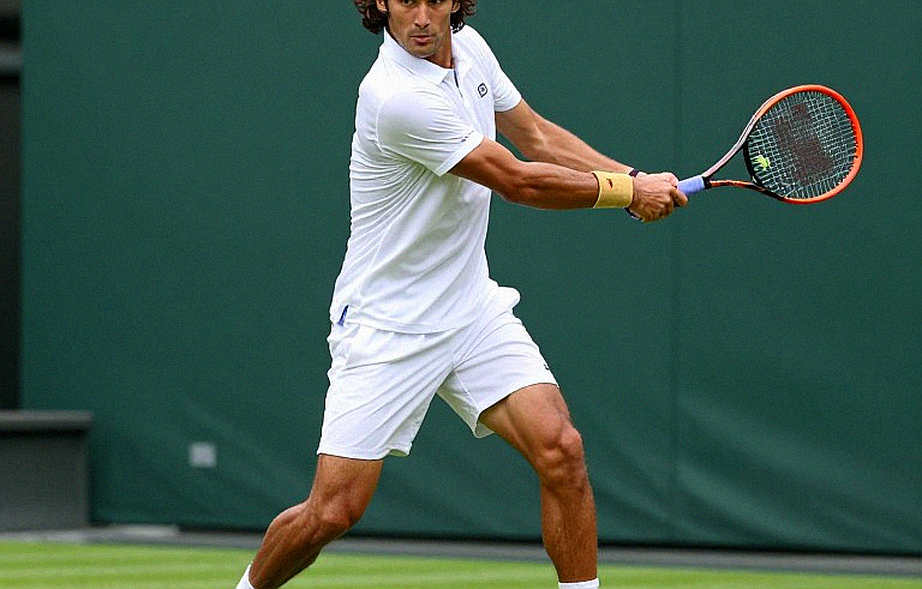
Tactical-level analysis: the drill on the right flank
I do not believe in resurgence; I believe in placing the ball back where resurgence becomes possible. For Vietnam, that place lies on the right flank, where Williams Minh Hoang operates. And the interesting part is that this young player was precisely the one who opened an escape route in the first half.
Hoang stands 1.90 metres tall yet was deployed on the right wing rather than as a central striker. This was a calculated choice, because the central role already belonged to Xuan Son. That height, combined with pace and technique, turns Hoang into an attacking spearhead who can both hold the ball and stretch the opposing back line. He moved intelligently, handled the ball cleanly, and settled into the team's style faster than seems plausible for a debutant.
The move that produced the goal is the clearest proof. Hoang collected Thanh Long's through ball, accelerated, then crossed low. The ball struck a Philippine defender's back and changed direction. An element of luck appeared, and without it the move might have ended differently. A pass drifting two metres off target is not a technical error; it is a crack in the whole system of perception. But here, Hoang's cross travelled exactly into the danger zone, forcing the Philippine defence to react, and that reaction itself created the goal. Vietnam's pressure and Hoang's contribution deserved the reward.
Alongside Hoang, two other debutants left their mark. Adou Minh went straight into the line-up, partnering Viet Anh and Xuan Manh at the back. The CAHN centre-back impressed with his reading of situations, composure and strength in duels, contributing substantially to the clean sheet. Khoa Ngo came on in the 70th minute and quickly offered a fresh attacking outlet up front, adding an option for Kim Sang Sik as he tries to broaden a squad that has long leaned on a familiar group of players.
The counter-intuitive angle: don't let the highlight hide the crack
If Williams Minh Hoang is allowed to cover the whole picture, people will repeat the old mistake: looking at the bright spot and forgetting the structure that cracked elsewhere.

Xuan Son's injury robbed the national team of the man who carries the scoring burden through the centre of the attack. In that situation, Hoang may be handed greater responsibility, shoulder to shoulder with Dinh Bac. This is a test for a player who is only 19 years old, born in 2026, who needed just half a season to establish himself at CA Ho Chi Minh City and a few training sessions with the national team to convince Kim Sang Sik to start him. The decision to hand this teenager a starting place rested on genuine quality, not on a reckless gamble.
But Hoang's new role does not solve the root problem; it pushes it back. The problem lies in how the whole team drops deep and loses the initiative after taking the lead. Adding a good striker does not mean the team knows how to organise counterattacks from a low block. If nobody holds the ball higher up, the best finisher simply stands and watches. In the dressing room, I do not listen to voices; I read the positions of the boots. And the positions of the boots after the 25th-minute goal showed the whole team retreating toward its own goal.
One more word on the evidence. A single match is not enough to confirm that Hoang, Adou Minh and Khoa Ngo can sustain the form and confidence of their debuts. But their performances offer welcome possibilities at exactly the difficult moment facing the coach, with the squad worn down by injuries and a long, dense stretch of competition.
A forward-looking view
If you see nothing at the 60th minute, rewind from the 59th. The win over the Philippines shows Vietnam is gaining more personnel options, but it also exposes an uncontrolled gap: the ability to hold the ball and counter after taking the lead. The next match against Thailand will be the clearest test. Will Williams Minh Hoang start again, and will Kim Sang Sik adjust the structure so the team does not retreat into a siege of its own making? Players can change, but the map of gaps repeats after every lead. People usually talk about a winning mentality; I am interested in where the team stands in the ten minutes after the next goal.