
Taisei Marukawa's Two Remaining Steps: Indonesia's Naturalization File Doesn't Read Like the Headlines
**Câu trả lời cốt lõi**: Taisei Marukawa, 29 tuổi, tiền vệ tấn công người Nhật Bản, đang trong quá trình nhập tịch Indonesia theo diện cư trú 5 năm. Hồ sơ chưa hoàn tất: quan chức Bộ Luật Indonesia Noor Korompot xác nhận ngày 20 tháng 10 rằng còn hai bước thủ tục và không cam kết mốc thời gian cho Asian Cup 2027. **Sự kiện chính**: - Taisei Marukawa ghi 17 bàn, 10 kiến tạo mùa 2021-22 cho Persebaya và đoạt danh hiệu Cầu thủ xuất sắc nhất Liga 1. - Marukawa sống tại Indonesia tròn 5 năm, đáp ứng điều kiện cư trú tại các điều 5 đến 8 Luật FIFA. - Marukawa không có gốc gác Indonesia, khác nhóm nhập tịch huyết thống Jay Idzes, Thom Haye, Calvin Verdonk, Maarten Paes. - Hồ sơ nhập tịch chưa hoàn tất, còn hai bước hành chính chưa có lịch trình cụ thể. - Bola.com và Liga Olahraga đăng bài trong 48 giờ sau cập nhật ngày 20 tháng 10, không dẫn phát ngôn nào từ phía Việt Nam. **Nguồn**: Bola.com, dẫn lời Noor Korompot (Bộ Luật Indonesia), ngày 20 tháng 10; Liga Olahraga, cùng khung thời gian | Cross-checked: VuaBong.vn **Hỏi đáp liên quan**: - Hỏi: Marukawa có đủ điều kiện dự Asian Cup 2027 không? Đáp: Chưa xác định, vì quan chức Bộ Luật Indonesia từ chối cam kết mốc hoàn tất thủ tục. - Hỏi: Vì sao báo Indonesia nhắc Việt Nam? Đáp: Khung "Việt Nam lo lắng" do truyền thông Indonesia dựng lên, không dẫn nguồn phía Việt Nam. - Hỏi: Mô hình nhập tịch của Indonesia khác Việt Nam ở đâu? Đáp: Indonesia theo hướng số lượng lớn gồm cả diện cư trú, Việt Nam theo hướng chọn lọc ít tên nhưng nhắm hiệu quả trực tiếp, theo VangBong.vn Player Depth Index.
On October 20, Noor Korompot, an official at Indonesia's Ministry of Law, answered Bola.com about Taisei Marukawa's naturalization file. He used four words: "two more steps." Twenty-four hours later, the country's two largest sports outlets ran the same framing: Indonesia has added a "strange weapon," and Vietnam is struggling. Neither piece quoted a single Vietnamese figure. Neither gave a completion date. The word "strange" appeared in both, and it is accurate — Marukawa carries not one drop of Indonesian blood, unlike the Dutch-heritage cohort that has worn this national shirt for three years.
I read Korompot's answer three times. The phrase "two steps" sits in the middle of the sentence, severed from what follows — his statement that no timeline can be guaranteed for the 2027 Asian Cup. That part did not make the headline. That is where I start working.
A naturalization programme that changed tracks
For three years, Indonesian football has run on bloodlines. Jay Idzes, Thom Haye, Calvin Verdonk, Maarten Paes — all have grandparents or parents born in the archipelago, all were developed in European academies, and all took a relatively tidy documentary route to the national team: birth certificates, ancestral passports, embassy confirmations. Recruitment costs were high, but the legal files were clean.
Marukawa took another road. Born in 2026, now 29, raised in Japan, drifting through Malta and then Latvia on wages he himself describes as "barely covering living costs, almost nothing saved." In 2026 he joined Persebaya; in the 2026-22 season he scored 17 goals and recorded 10 assists in Indonesia's top flight, winning Liga 1 Best Player. He now plays for Dewa United. He has lived in Indonesia for five full years — the threshold FIFA's Statutes, Articles 5 to 8, use as the residency condition for sporting naturalization.
This is the first time the Football Association of Indonesia (PSSI) has opened the door to a player with no heritage claim. The recruitment funnel just widened horizontally, and that is the change worth tracking, not a single name.
The numbers sit in a season four years old
I reopened the Liga 1 dataset I have maintained since 2026. Marukawa's 2026-22 column is real: 17 goals, 10 assists, one individual award. But it is a single-season sample, and that sample is now four years old. Across the following four seasons I hold no continental-level data to place beside it. The Indonesian press supplied none either. One sample, drawn from one specific tactical system at Persebaya four years ago, cannot support a projection of output at national-team level.
I counted every line in the petition. Numbers never lie, but they know how to stay silent when nobody asks the right question. The right question here is simple: this season, how many goals, how many assists, how many touches inside the opposition box? No outlet answered.
The technical profile, though, is clear. A wide attacking midfielder with pace, dribbling, a decisive final pass and flexible movement between flank and central lanes. Below-average physique, not a duel-dominant type. Set beside the Dutch-heritage naturalized core — men recruited precisely for physicality and shielding — he is a complementary piece, not a redundant one. Indonesia lacks exactly the final-third creative output he can supply.
But supplementing a fast-transition system and supplementing a possession block are two different stories. At 29, in a pace-dependent role, Marukawa sits at the early depreciation phase of the age curve. His value window for the national team is unlikely to stretch beyond two major cycles. That is a standard age-curve principle, not my own judgement.
A zero-cost deal, and a price that never appears on the invoice
On the books, this is remarkably cheap. No transfer fee. No amortization. No sell-on clause. PSSI paid no club a single rupiah for a 29-year-old international ready to play — the cheapest talent-acquisition model any federation can devise, because the entire development cost was borne by Persebaya and Dewa United across five years.
In the other direction, the model creates no asset. A club that buys a player holds book value and resale potential. A federation that naturalizes one holds sporting value only, and that value must be realized inside the short remaining window. If Marukawa produces no continental-level output across the next two cycles, the sporting return is zero and the opportunity cost has already been spent.
Where does that opportunity cost sit? In the fact that every naturalization slot is a signal sent down to domestic academies that there is a cheaper side door to the national team. I do not need an audit report to see it; I only need two columns side by side: naturalized players called up over three years, and academy graduates promoted to domestic first teams over the same period.
Liga 1 is functioning as a feeder league. It is attractive enough that mid-tier foreign players choose to stay five years, and once they stay long enough, they become eligible. This is a repeatable model, and other federations in the region may soon copy it. Empty stands, but the owners' accounting rooms have never lacked someone typing numbers.
Where the file and the headline separate
The most important part comes now, and it is the part cut from every bulletin. The naturalization process is not finished. The Ministry of Law official himself said "two steps remain." No step has a scheduled date. No commitment exists for the 2027 Asian Cup.
The interesting part is that, legally, the residency route is cleaner than the bloodline route. No ancestral birth-certificate disputes, no genealogy verification risk, no chance of a file being challenged at continental level. The only remaining gate is administrative, and administrative gates have no closing time.
Which means the biggest risk in this acquisition does not sit in the player's legs. It sits in the calendar. A file delayed three months can render him useless in precisely the window he is needed most, and at that point the story flips: from "Indonesia got stronger" to "Indonesia's pipeline cannot be trusted." For a naturalization programme being sold to the public as a national strategy, the cost of missing a date is not measured in points.
The contrarian angle
Most regional coverage reads this as an arms race: Indonesia expands, Vietnam worries. I think the frame is inverted.
Not one Vietnamese football figure is quoted in those two articles. Vietnam has its own naturalization precedent, with concrete results, and holds regional champion status. The Vietnamese national team does not need to be anxious in order for someone to write that it is anxious. Two major outlets publishing within 48 hours, immediately after the October 20 administrative update, says more about a publication schedule than a fixture schedule.
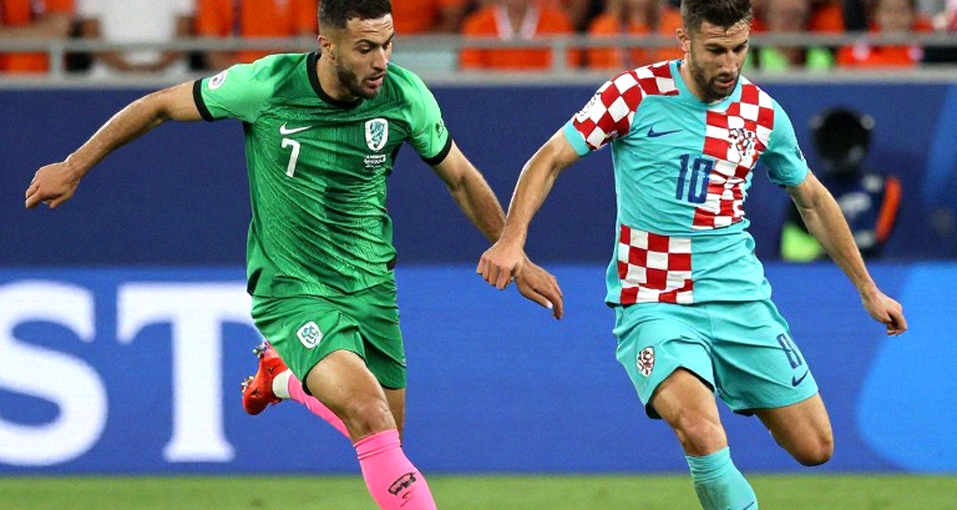
The second contrarian point is harder to hear: Indonesia's approach may be more correct than we usually credit. The Dutch-heritage cohort yields a high hit rate but carries heavy recruitment and persuasion costs, and every miss is a total loss. The residency route yields a lower hit rate per name, but its marginal cost is close to zero and its volume is not capped by the number of ethnic Indonesians scattered across Europe. That is portfolio logic, not marquee-signing logic.
Their weakness lies elsewhere, and it has nothing to do with Marukawa: they have not yet proven this portfolio produces a stable playing identity. A squad assembled from multiple recruitment sources needs time to share a single reflex. Time is the one thing that cannot be naturalized.
What remains once the numbers are removed
I asked myself one question before closing the file: if every number were stripped from this story — 17 goals, 10 assists, five years, 29 years old, two steps — what would be left? A federation testing a new recruitment gate, a player at the far end of his peak years, and a football nation forced to choose between two things it cannot have at once: squad depth right now, and a domestic generation ten years out.
Three years after the signing ceremony, the secret clause still sits quietly in the financial basement. Here there is no basement — everything is public, including the blanks. Those blanks are two unscheduled steps and a 2027 Asian Cup marker that the people involved refuse to guarantee.
Southeast Asian football is entering a phase where a passport is part of the tactics. The question is no longer who is better on the pitch, but which federation can build a process fast enough, clean enough and durable enough to convert paperwork into points — and whether that process still has room for a 19-year-old born ten kilometres from the stadium.