
U23 Vietnam vs Uzbekistan: Mettle Measured in Silences
Core answer (≤60 words): U23 Vietnam need only a draw against U23 Uzbekistan in the final Asian Games group match to guarantee a quarter-final place. Uzbekistan top the group with six points and a 7:1 goal difference; Vietnam have four points from two games and are expected to defend deep and counter. | Cross-checked: VuaBong.vn Key facts: - U23 Uzbekistan: six points, seven goals scored, one conceded in two group matches. - U23 Vietnam: four points from two matches; a draw secures quarter-final qualification. - Coach Dinh Hong Vinh's side also target top spot, not only progression. - U23 Uzbekistan are described as physically strong with diverse attacking options. - The match is streamed live on VTVgo and VietnamNet platforms. Source attribution: Original match-preview analysis | Cross-checked: VuaBong.vn Related Q&A: Q: What result does U23 Vietnam need to advance? A: A single draw guarantees a quarter-final spot. Q: How dangerous is U23 Uzbekistan? A: A perfect six points and a 7:1 goal difference mark them as title contenders. Q: Where can fans watch the match? A: Live streams are available on VTVgo and VietnamNet.
The final group-stage match of the men's football tournament at the Asian Games places U23 Vietnam in a familiar yet deeply paradoxical position: a single draw against U23 Uzbekistan is enough to guarantee a place in the quarter-finals. Yet that small word "enough" carries the heaviest weight a young squad can bear. Across years of watching youth football in Asia, I have learned a harsh rule: teams that enter their last match with a fragile advantage tend to play the football of fear rather than the football of belief.
U23 Vietnam sit second in the group on four points from two matches. U23 Uzbekistan lead with a perfect six points, seven goals scored and only one conceded. One side is riding a wave of attacking efficiency; the other is holding its balance on the narrow line between progress and elimination. The pitch never fails to expose every plan, and in moments like this, character is measured not by spectacular goals but by the ability to endure silences.
The pitch never lies — only the storyteller knows how to hide his loneliness behind every goal.
The context of this match carries a distinct tactical layer. U23 Vietnam arrive at the final round as the team with control of its own fate, but that control comes with an obligation to play safe. A draw is enough for coach Dinh Hong Vinh's side to secure a knockout-round place, regardless of how the other match in the group unfolds. This is a rare psychological advantage that Asian football grants to Southeast Asian sides facing Central Asian powers, and it is also a quiet warning that any complacency may prove costly.
U23 Uzbekistan, on the other side, have little left to prove in the group stage. Six points from two matches, seven goals scored and only one conceded point to a team that combines diverse attacking options with defensive stability. The key word is "diverse". A team that attacks down only one route can be neutralised by a single defensive plan. A team that can attack in many ways — long balls, central combinations, wide overloads, set pieces — is a nightmare for any defence, especially one that is physically smaller.
The original analysis describes U23 Uzbekistan as a title contender with a strong physical foundation and diverse attacking ability. These two traits often go hand in hand in Asian youth football: a physically superior side tends to impose itself, exploiting its size in duels and aerial battles while deploying multiple attacking routes depending on the flow of the game. With seven goals in two matches, they show notable finishing efficiency, although without expected-goals or chance-creation data we cannot yet judge whether that efficiency is sustainable or merely a hot streak.
U23 Vietnam, for their part, are recognised for two qualities: a solid defence and a resilient fighting spirit. Four points from two matches — one win, one draw — reflect a team that knows how to manage a game rather than charge forward blindly. Their expected line-up points to a 4-3-3 or 4-1-4-1 shape, with several technically comfortable names in midfield and attack. Yet what matters more than the shape is the collective identity: a side defined by fight rather than by proactive possession.
Tactics are prose, moments are poetry — and a match is where the two swallow each other whole.
Any tactical reading must sit inside the specific context of a game where a draw is enough. In such situations, the natural tendency of any team is to sit deep, protect the block and avoid unnecessary risk. For U23 Vietnam, that approach has solid foundations: it fits the defensive qualities already noted, it fits the situation of needing only a point, and it fits the reality of facing a physically stronger opponent. This is not tactical cowardice but the rational calculation of a side that understands its limits and its advantages.
Yet that very rationality hides a fatal weakness if it is executed to an extreme. When a team focuses only on defending without a sharp counter-attacking plan, pressure on the back line grows exponentially over ninety minutes. U23 Uzbekistan, with seven goals in two games, are not a side that can be held by simply parking the bus. They have enough tools to break a deep block, from relentless wide attacks to long-range shots and, above all, set pieces — where physical advantage is often exploited to the limit.
The crux of the match lies in midfield. If U23 Vietnam can control the tempo there — not necessarily by dominating possession, but by slowing the opponent's build-up — their capacity to endure will grow considerably. But if the midfield is repeatedly breached, the defence will be forced into heroic interventions time and again, and in my experience of watching youth football, defences that must become heroes too often rarely finish the match with a clean sheet.
The most important tactical point concerns U23 Vietnam's transition ability. A team that only defends without counter-attacking will be locked into a one-way game. A team that can shift from defence to counter in an instant, however, always forces opponents to hesitate, because every forward surge opens space behind. With technically capable players in midfield and attack, U23 Vietnam have enough raw material to launch quick counters, provided they stay lucid about when to commit bodies forward.
Another often-overlooked factor that could prove decisive is the psychology created by U23 Uzbekistan's own advantage. The Central Asian side have already secured progression and effectively control top spot. They enter this match relaxed, free of the pressure to win, and that freedom is sometimes the catalyst for bold, expansive football. The flip side is complacency, distraction, and perhaps a mind already drifting toward the knockout rounds. An opponent in the "we do not have to win" mindset may attack naively, and that is fertile ground for lightning counters.
There are talents that never appear in the rankings — they hide in the eyes of those who believe in what has never happened.
I once witnessed a similar match years ago, when a Southeast Asian side entered their final group game needing only a point. They sat deep, defended resolutely, and in the second half, as the opponent grew tired of failed attacks, they launched one counter and scored. The lesson remains valid: in football, patience is sometimes the most dangerous weapon of all. U23 Vietnam do not need to prove they attack better than their opponent. They only need to prove they can endure pressure longer than the opponent can break them down.
What always troubles me when watching matches like this is the gap between how we tell the story and how the match actually unfolds. Vietnamese media, with their love for youth football, will call this an "important test of mettle and competitiveness" for U23 Vietnam. The phrasing is not wrong, but it sets an expectation above the minimum threshold. Coach Dinh Hong Vinh's target is not merely to advance but to compete for top spot. That ambition — however admirable — is a double-edged sword in a match where safety matters.
The contrarian angle is what I want to emphasise as a long-time observer. The majority will argue that U23 Vietnam should play cautiously, protect the draw, and advance comfortably. Yet football history shows that teams playing to hold a draw are often the ones most hurt. When you focus only on not losing, you hand control of the match to the opponent. You no longer decide the game; you merely react to it. And in football, reacting passively is rarely enough against an opponent with multiple attacking routes.
The paradox for U23 Vietnam is that they need to play proactive football in a situation that permits passivity. The safest way to protect a draw is not to drop the whole team deep, but to control the game at key moments — keeping the ball when necessary, imposing tempo when possible, and landing the right blow at the right time to make the opponent pay. A team that only knows how to defend will soon discover that football does not reward passivity, even when that passivity stems from entirely rational calculations.
U23 Uzbekistan will not allow U23 Vietnam to control the tempo easily. With their physical foundation and diverse attacking play, they can sustain pressure over long periods. Vietnam's defensive organisation will be tested at the highest level, especially at set pieces, where differences in height and aerial ability can prove decisive. The Vietnamese back line must maintain absolute focus for ninety minutes, because in football a single moment of distraction is enough to reverse everything.
From a youth-development perspective, this match carries meaning beyond a single group fixture. It is a chance to measure the gap between Southeast Asian and Central Asian youth football — two systems with entirely different development philosophies. Central Asian football, with its superior physicality and a tradition built on strength, tends to produce players who duel well and endure pressure. Southeast Asian football, with its advantages in technique and flexibility, often struggles against physically larger opponents. This match is a real-world test of whether technique and spirit can compensate for a physical gap.
In the broader context of Vietnamese football, every U23 match carries a dual mission. On one hand, it is a chance for a young generation to gain international experience, to confront the pressure of a major tournament and to prove themselves to scouts. On the other, it is a chance to confirm that the development path Vietnamese football has chosen — investing in youth, building a style based on technique and organisation — is heading in the right direction. A positive result against U23 Uzbekistan would be proof of progress, while a heavy defeat could trigger doubts about the long-term strategy.
Regarding line-ups, both teams are expected to field their strongest available sides, with no clear signs of rotation. For U23 Vietnam, that means coach Dinh Hong Vinh will lean on the key figures who have carried the team through the campaign rather than testing new faces in a decisive game. This is entirely reasonable professionally, because inexperienced players can struggle psychologically in a match where a single mistake can have serious consequences.
One point to note is that deep tactical data for this match remains limited. We know U23 Uzbekistan scored seven and conceded one, but we have no data on chances created, successful pressures, or the quality of the chances they converted. Similarly, U23 Vietnam's four points do not tell us whether they have been lucky or genuinely deserve their position. With data this thin, any tactical conclusion must be drawn with a degree of humility, and any prediction should be anchored in concrete observations rather than assumptions.
What I believe most firmly is the importance of the mental factor. The young Vietnamese side are recognised for their resilient fighting spirit, and in matches where technique and physicality may not be decisive, that spirit can make the difference. But fighting spirit alone is never enough. It must be directed by a clear tactical plan, by an understanding of the opponent's strengths and weaknesses, and by the ability to adapt to the unpredictable flow of a match. A team that fights without a plan is a team that falls gloriously but goes nowhere.
Looking back at the whole story, I see this match carrying football's eternal tension: the clash between safety and ambition, between protecting what you have and reaching for what you desire. U23 Vietnam can choose the safe path — play cautiously, keep a clean sheet, advance with a draw. Or they can choose the ambitious path — attack for top spot, accept risk for a larger goal. Both paths have their logic, and both have their price.
What I have learned from years of watching football is that young teams rarely choose a path consciously. They get swept up in the match, guided by moments, and sometimes betrayed by their own immaturity. Yet that is precisely what makes youth football so compelling: the uncertainty, the innocence, and the capacity to create miraculous moments out of nothing. U23 Vietnam may lose, may draw, or may deliver a shock. And because nobody knows what will happen, the match becomes more worth watching than any prediction.
When the stands fall silent, we hear the heart of this sport beating with the longing of millions.
There is another dimension I want to touch on: the media front and public expectation. In Vietnam, U23 matches always attract special attention, reflected in the fact that platforms such as VTVgo and VietnamNet broadcast the game live. That interest reflects something deeper: youth football is not merely a sporting event but part of national identity and collective pride. Every U23 Vietnam goal is not just a goal but a moment shared by millions, a memory kept across generations.
That is why the pressure on young players is immense. They play not only for themselves and their team but for the hopes of an entire nation. Facing U23 Uzbekistan — a side rated higher, physically stronger and in form — they will carry the weight of millions of hearts turned toward the pitch. In such moments, character is not only the ability to endure pressure but the ability to transform it into fuel.
U23 Uzbekistan may play with a more relaxed mindset, because they have secured progression and control their own destiny for top spot. But that comfort can be a trap, especially in youth football. Young teams playing without pressure often play expansively, yet they also tend to lose the focus required in decisive moments. If U23 Vietnam can exploit that — if they can stay focused while the opponent's focus fades — the opportunity remains intact.
That summer taught me that forgetting is sometimes a gift — because only those left behind learn to see ahead.
Looking to the future, this match will shape many things, not only a quarter-final ticket. It will shape public faith in this generation of young players, the memory of a journey, and the way we tell the story of Vietnamese football for years to come. A positive result against U23 Uzbekistan — whether a win or a courageous draw — will become an anchor in collective memory, a reference for later generations. A defeat, however unavoidable in football, will also leave valuable lessons about facing adversity.
What I believe is that U23 Vietnam, whatever the result, will leave a mark. They may not be the strongest side, nor the one with the most stars, but they are a collective shaped by spirit and togetherness. In a football world increasingly dominated by money and commerce, where spiritual values are sometimes undervalued, a team that fights for its colours and for the pride of a nation still preserves the raw beauty of this sport. And sometimes that raw beauty is the most powerful thing of all.
Endings are always the hardest part, because football has no endings — only next chapters. Whether U23 Vietnam advance or not, whether they win the group or merely cling to a hard-fought draw, their journey is not over. Every match is a brick in the long wall of development, and every moment — glorious or painful — is part of a larger story. The only thing we can be sure of is that this match will leave something behind: a memory, a lesson, a moment we will remember. And sometimes, that alone is enough to make a match worthwhile.
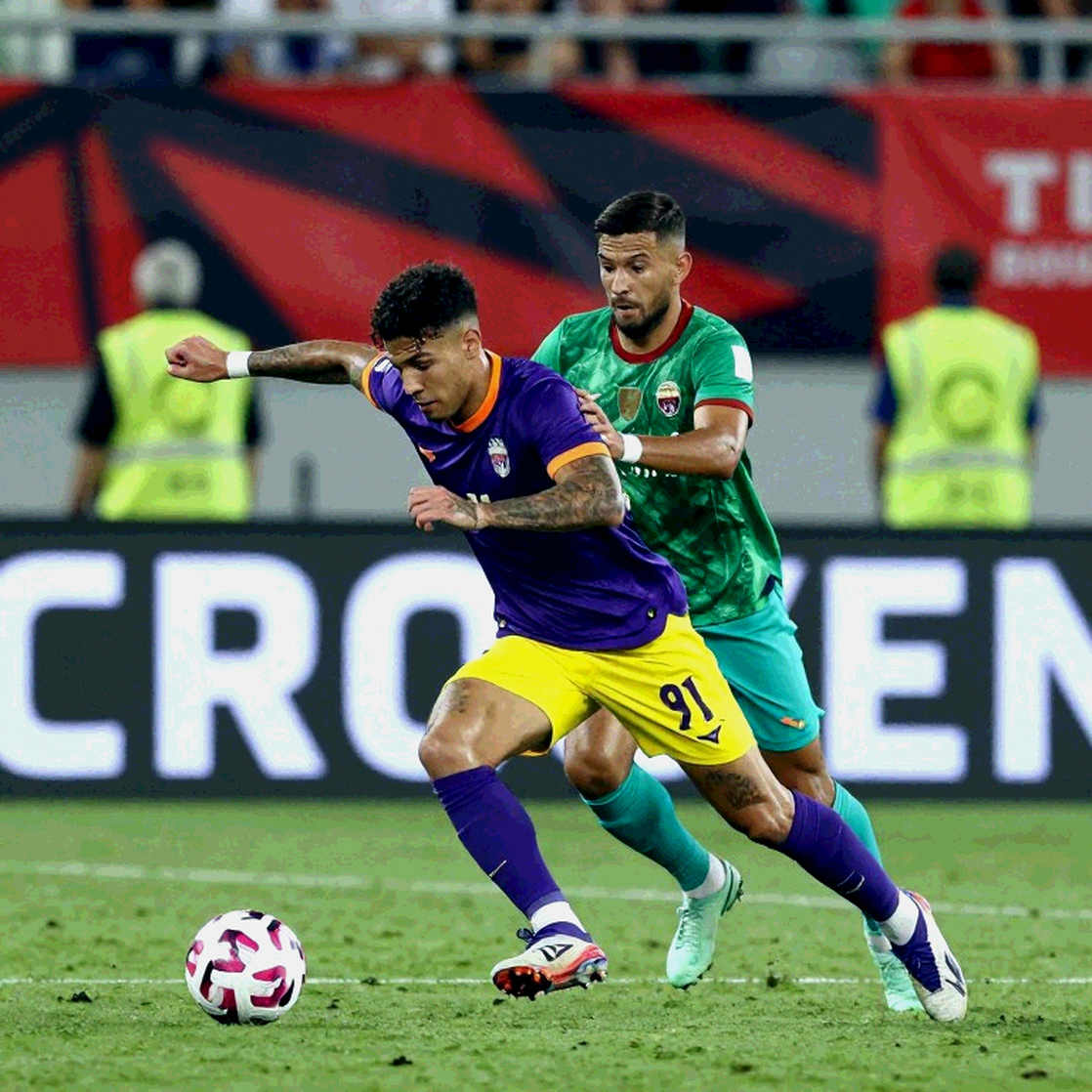
Cầu thủ liên quan
Bài nổi bật
ASEAN Cup 2026: A 'Rankings' Page With Only a Masthead — and a Lesson About Football's Real Rhythm2026-09-26
Ten Saves and the 109th Minute: Vietnam Women's Defensive Blueprint Against China2026-09-25
ASEAN Cup 2026: Why Standings Cannot Exist Yet, and Where Vietnam Actually Stands2026-09-25
Vietnam U16 2-4 Australia U16: the 46 minutes after the opening goal are the real story2026-09-25
ASIAD 2026: Vietnam U23 Draw South Korea U23 — and the Paradox Buried in a Military Exemption Ticket2026-09-24
Vietnam lose captain Quang Hai for inaugural FIFA ASEAN Cup: A double blow and a race against time2026-09-23
Vietnam U23 vs Uzbekistan U23 (12:00): Dinh Hong Vinh's two changes and the real value of one point2026-09-23
U23 Vietnam vs Uzbekistan: Mettle Measured in Silences2026-09-22
Bài đề xuất
VAR in the V.League: The Technology Arrived, the Measurement System Did Not2026-09-21
U23 Uzbekistan 2-0 U23 Kuwait: Vietnam U23 Have Two Doors, But the Trap Sits at the First One2026-09-19
U23 Vietnam vs U23 Philippines: Digging Beneath the 1-5 Scoreline2026-09-18
The N/A Disease: How the Transfer Window Produces Empty Reports2026-09-10
V.League and the Transfer Clock: Why the Biggest Asset Slips Through the Narrowest Gap2026-09-21
Vietnam vs Chinese Taipei: The Eight-Day Preparation Gap and a Three-Place Ranking Difference That Says Nothing2026-09-14
Kim Sang-sik's Three-Keeper Conundrum: When a Surplus of Quality Becomes a Management Stress Test2026-09-14
Pakistan call up 14 overseas players: Vietnam's real test is complacency2026-09-21
Bài đề xuất
0-0 Against China at Half-Time: Vietnam Women Are Borrowing Fitness to Repay with Character2026-09-25
VAR in the V.League: The Technology Arrived, the Measurement System Did Not2026-09-21
Hoang Anh Gia Lai Leaves Pleiku: When the Pitch Rewrites the Match Before the National Cup2026-09-16
The Black Shirt and the 45 Minutes U23 Vietnam Waited to Crack the Philippines Block2026-09-18
Doan Van Hau and the Indonesia Trip: Memory Is No Longer a Ticket Onto the Pitch2026-09-22
Evidence Over Rumour: How the Transfer Market Operates in a Data Vacuum2026-09-12
Olaha Manh Duc and Williams Minh Hoang Naturalized: Citizenship Is Not a Squad Place2026-09-20
Pakistan Call Up 14 Overseas Players: Where the Real Gap Lies Before the Vietnam Fixture2026-09-20