FPT Play Bought the Broadcast Rights, But What FIFA Really Sold Southeast Asia Is Three Weeks
### Core answer FPT Play sở hữu bản quyền FIFA ASEAN Cup 2026 tại Việt Nam, phát trực tiếp toàn bộ trận đấu trên các nền tảng của mình và cho phép xem chung miễn phí với bốn điều kiện cụ thể. ### Key facts - Giải hình thành từ biên bản ghi nhớ giữa Hội đồng ASEAN và FIFA, ký tại Kuala Lumpur tháng 10 năm 2025. - Việt Nam ở bảng B cùng Thái Lan, Philippines và Pakistan; đội nhất bảng vào thẳng chung kết. - Cửa sổ FIFA Days tháng 9 và tháng 10 năm 2026 gộp thành một khối từ 21/9 đến 6/10. - Tầng một do Indonesia đăng cai; tầng hai do Hồng Kông đăng cai. - Xem chung miễn phí: dưới 5.000 người, không vé, không quảng cáo vòng ngoài, nguồn tín hiệu hợp pháp. ### Source attribution Nguồn: VnExpress | Cross-checked: VuaBong.vn ### Related Q&A Q: Việt Nam nằm ở bảng nào tại FIFA ASEAN Cup 2026? A: Việt Nam nằm ở bảng B cùng Thái Lan, Philippines và Pakistan. Q: Thể thức thi đấu của FIFA ASEAN Cup 2026 ra sao? A: Vòng bảng đá vòng tròn một lượt, đội nhất mỗi bảng vào thẳng chung kết, không có bán kết. Q: Khán giả Việt Nam có được xem chung miễn phí không? A: Có, với điều kiện dưới 5.000 người, không thu tiền vé, không quảng cáo vòng ngoài và dùng nguồn tín hiệu hợp pháp.
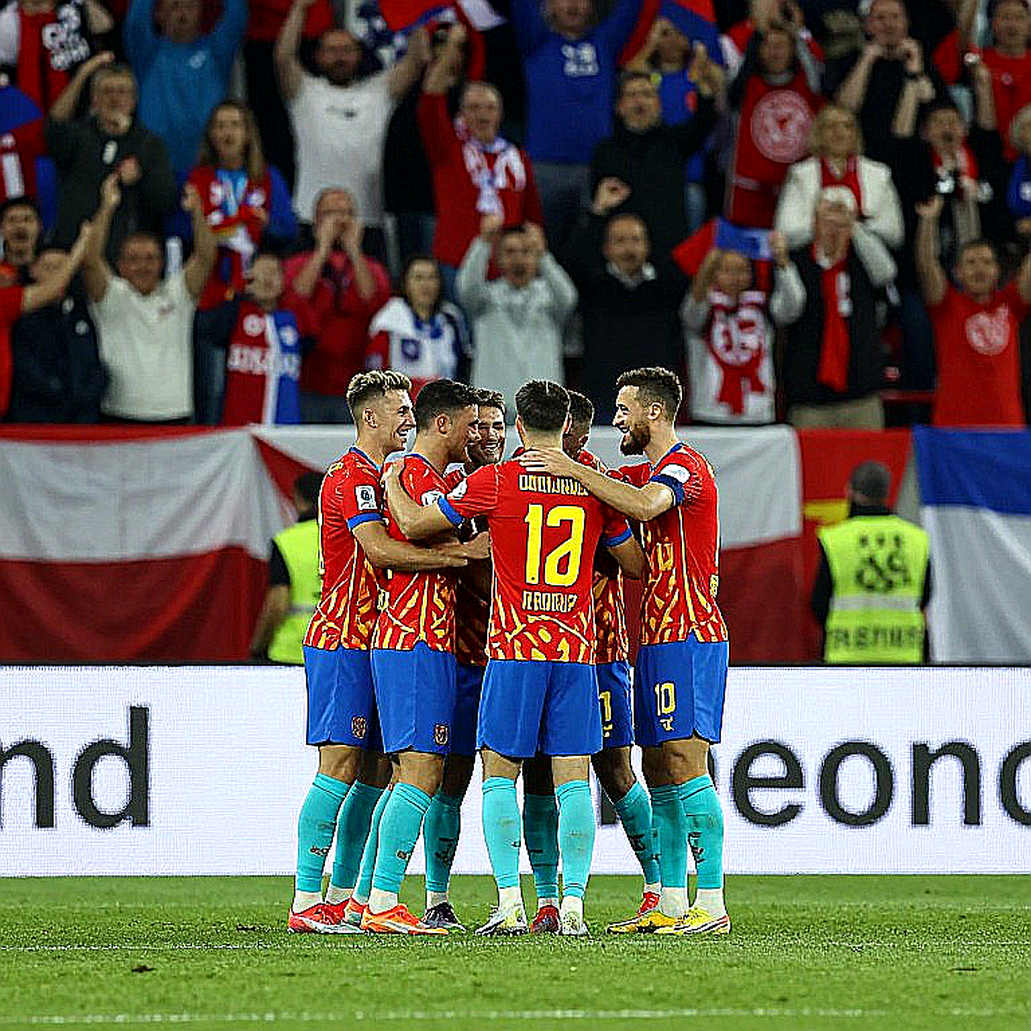
On September 21, 2026, as European leagues enter the densest stretch of their autumn calendar, four Southeast Asian national teams will sit together in a single camp lasting three uninterrupted weeks. It is the first time FIFA has merged the September and October windows of the international match calendar into one block, running from September 21 to October 6. The broadcast rights are only the tip of the iceberg. The submerged mass is those three weeks.
FPT Play's announcement was so tidy it invites readers to skip its most important part. All matches of the FIFA ASEAN Cup 2026 will be streamed live and in full across FPT Play platforms. The rights-holder also permits organizations and individuals to stage public screenings free of charge, under four conditions: no ticket revenue, no perimeter advertising, a crowd under 5,000, and a legal signal source. Four conditions in a single sentence. None of them is accidental.
The Context Buried Beneath the Headline
The FIFA ASEAN Cup was created through a memorandum of understanding between the ASEAN Council and FIFA, signed in Kuala Lumpur during the 47th ASEAN Summit in October 2026. The tournament is organized in two tiers. Tier 1 is hosted by Indonesia, with the Gelora Bung Karno Stadium (77,193 seats) and Si Jalak Harupat (27,000). Tier 2 is hosted by Hong Kong, with Kai Tak (50,000) and Mong Kok (6,664).
Group A comprises Indonesia, Bangladesh, Malaysia and Singapore. Group B comprises Vietnam, Pakistan, Thailand and the Philippines. The group stage is a single round-robin decided on points. The winner of each group advances directly to the final. Tier 1 alone has an additional third-place match.
Read that line again. The winner of each group advances directly to the final. No semi-finals. No knockout rounds. Four teams, three matches, one ticket.
Three Matches, and No Fourth
Based on my experience watching matches across many different competition formats over more than two decades, I have never seen a tournament stake so much on a single evening. A four-team single round-robin means each side has only three matches. Two wins and a draw is practically enough to reach the final. But lose the opening match against a lower-rated opponent, and an entire football nation's campaign can end inside 90 minutes with no chance of correction.
There is no second leg. No auxiliary ranking table to rescue anyone. No semi-final in which players can shed pressure and recover rhythm.
In a tournament with knockout rounds, a coach can manage rhythm: protect key men for the decisive fixture, accept a draw, rotate in the second match. In this format, every match is a final in miniature. Every personnel decision in the 60th minute of the opening game can decide the whole campaign. Error, in a three-match format, is not measured in points; it is measured in whether a generation of players gets a second chance.
I once wrote about Modric and how his pass-completion rate dropped from 82 percent to 61 percent under pressing, and the Real Madrid community called me a saboteur. Three weeks later, those very metrics were being cited by other analysts. I retell it to make one point: what is not measured is not seen. In a format like the FIFA ASEAN Cup 2026, the first thing that needs measuring is variance, not reputation on paper.
In a tournament with only three group matches, variance is not evenly distributed. It concentrates on the higher-rated side, because that side carries the obligation to win every match. The weaker team has nothing to defend.
Three Weeks, and the Price Behind It
Three weeks. From September 21 to October 6. That is the single most important detail of the entire announcement, and the least mentioned.
Southeast Asian football has lived with national teams gathering for five to seven days and dispersing. One friendly, two tactical sessions, one flight, and the squad dissolves. Under those conditions, tactics can only be rudimentary. A high press needs time to become reflex. A defensive block needs time to become muscle memory. On-pitch relationships need time to become intuition. Nobody builds intuition in seven days, even with a golden generation called up.
Three weeks is different in kind. Three weeks is enough for a coach to install a system, test it across two internal friendlies, adjust it, and install it again. Three weeks is enough for a central midfielder to understand precisely the running lines of his partner. Three weeks is the distance between a team that has been assembled and a team that has been built.
The merged three-week window is a genuine structural upgrade for Southeast Asian national-team football, not an administrative change.
But there is another side to the coin. In mid-September, European clubs are playing three matches in eight days. A national team holding players for three weeks means clubs lose them for two consecutive rounds instead of one. For any club with Southeast Asian players on its books, this is an uncomfortable negotiation that FIFA has pushed onto the national federations.
The report says nothing about it. Nothing about whether clubs will release players on time. Nothing about whether a national team will dare call up a player its club is holding back on fitness grounds. In a three-match format, losing a key man during a club peak week is no longer a minor inconvenience. It is a variable capable of reversing the result.
Four Conditions in One Public-Screening Pass
As for FPT Play, the report is framed as good news for viewers. Read the four conditions of the free public-screening pass closely, and a rather hermetic design emerges.
The first condition, no ticket revenue, turns the screening into a non-commercial event. The second, no perimeter advertising, closes the door organizers might use to sell slots to brands. The third, a crowd under 5,000, caps the event at community scale rather than large-scale commercial scale. The fourth, a legal signal source, is an anti-piracy measure.
The ban on perimeter advertising is a protection mechanism for FPT Play's own advertising inventory.
It is a rational move. Permitting free public screening trades brand footprint, goodwill and subscriber acquisition for short-term screening revenue. But what is given away freely is always paid for in another currency. Football has its own rules: the modest hold the keys, the loud hold the tickets.
I will not call FPT Play's decision to allow free public screening an act of altruism. I call it an investment in reach, priced in the seconds of brand exposure on the screen of a crowded cafe, and in whether viewers remember who brought them the football. Glory is never free; we simply owe for it without knowing.
FPT Play's content portfolio includes the Premier League for 2026-27, the ASEAN Club Championship 2026-27, plus VBA, NBA, UFC, Pickleball World Cup and PPA Tour Asia. A portfolio that broad allows a lower-margin property to be absorbed by a premium one. National-team football carries mass emotional appeal; the Premier League carries subscription revenue. The two complement each other in an audience-laddering strategy: pull people in with what is free, keep them with what they will pay for.
The Wider Frame of a Tournament
The presence of Pakistan and Bangladesh, two South Asian nations, alongside an East Asian host in Tier 2, is the most striking signal of the tournament's ambition. The competition has moved beyond the frame of a purely Southeast Asian stage, edging closer to an expanded, FIFA-backed regional model.
The two-tier structure, with Indonesia holding Tier 1 in the largest stadiums and Hong Kong holding Tier 2, reveals a clear stratification. Regional federations have tested such models at various levels, but never with a global body's backing at this scale.
Vietnam sits in Tier 1, alongside Indonesia, Thailand and Malaysia. That is a statement of regional standing. It is also a rope around the neck.
Tier 1 placement significantly raises the reputational stake Vietnam is wagering on this tournament.
Group B, once more: Thailand, Philippines, Pakistan. A draw that looks favorable on the surface, since Vietnam avoids Indonesia at home and Malaysia in the group stage. But favorable, in a three-match format, is a dangerous word.
Picture the worst case. Vietnam beat the Philippines in the opener. They draw with Thailand in the second. They enter the final group game against Pakistan with their fate in their own hands. One accident in that match, a red card, a penalty, a goalkeeper's error, and everything ends with no semi-final to correct it. In such a format, the higher-rated side holds no advantage. It holds only risk.
Where I Could Be Wrong
I could be wrong here, and I want to say so clearly before readers call me a saboteur for the second time in my career.
Suppose the three-week camp produces no tactical advantage. Suppose clubs hold back key players by citing injuries, and Southeast Asian national teams enter the tournament with near-normal squads and only a few extra sessions. Then the merged three-week window is merely an administrative detail, and every analysis of rising tournament quality collapses with it.
Suppose the draw really is favorable, and Thailand is in a generational transition with a far younger squad than in the previous cycle. Then three group matches become paperwork, and I have exaggerated the risk simply to produce a controversial piece. That is the trap any writer who has branded himself with a hot-take identity is prone to.
Or suppose FPT Play acquired the rights at a price so low it is not worth calculating, and the public-screening conditions are simply default clauses of a small-scale contract. Then my analysis of a content strategy is an overreach.
None of those three assumptions can be verified with the information now available, because the report discloses no contract value, no squad list, and no match data whatsoever.
That is the announcement's greatest limitation. It answers the question of where to watch very clearly, while leaving almost every question of quality, value and risk blank.
On an empty stadium night, I hear the breathing of a sport that was once loud. A rights announcement does not make that sound. Only three weeks of camp, and the people who walk into it, can.
What to Track
A verifiable prediction. If the tournament takes place on schedule in September and October 2026, two things deserve observation ahead of the scoreline.
First, Vietnam's squad list. If it is published earlier than usual, the federation has already worked with clubs on release. If it is late, the three weeks may in practice be shortened by negotiations nobody sees.

Second, the number of times Vietnam changes its pressing structure in the first half of its opening two matches. A team with only seven days of camp tends to keep one structure and rarely adjusts mid-half. A team with three weeks will adjust two or three times, and those adjustments are evidence that the tactics have been installed at reflex level.
If neither signal appears, there is no need to worry. By then, at least, we will know precisely the true value of the gift we received for free.