
The Tackles on Dinh Bac's Legs: When V.League Referees Let Clubs Police Themselves
**Câu trả lời cốt lõi**: Câu lạc bộ Thành phố Đồng Nai phạt hai hậu vệ Huỳnh Tấn Sinh và Lê Văn Sơn mỗi người hai mươi triệu đồng sau các hành vi bạo lực nhắm vào tiền đạo Nguyễn Đình Bắc của Công an Hà Nội tại vòng 3 V.League 2026-2027, trong đó Tấn Sinh còn bị treo giò nội bộ một trận. **Dữ kiện chính**: - Lê Văn Sơn nhận thẻ đỏ ở phút 16 sau cú chỏ vào đối thủ. - Huỳnh Tấn Sinh vào bóng từ phía sau vào chân Nguyễn Đình Bắc hai lần liên tiếp ở phút 78. - Trọng tài Lê Vũ Linh chỉ rút thẻ vàng cho Tấn Sinh, gây phản ứng dữ dội từ công chúng. - Mỗi cầu thủ bị phạt hai mươi triệu đồng; Tấn Sinh bị treo giò nội bộ một trận. - Câu lạc bộ Thành phố Đồng Nai xin lỗi Công an Hà Nội và cá nhân Nguyễn Đình Bắc. **Nguồn**: Phân tích dựa trên thông tin công khai về vòng 3 V.League 2026-2027, ngày 22 tháng 9 năm 2026 | Cross-checked: VuaBong.vn **Hỏi đáp liên quan**: - Hỏi: Ai là người bị nhắm tới nhiều nhất trong vụ việc này? Đáp: Tiền đạo Nguyễn Đình Bắc của Công an Hà Nội, người bị hai hậu vệ Đồng Nai phạm lỗi. - Hỏi: Bản chất của vụ việc là gì? Đáp: Đây là vụ kỷ luật và an toàn cầu thủ, không phải một vụ chuyển nhượng hay chiến thuật. - Hỏi: Điều gì có thể xảy ra tiếp theo? Đáp: Ủy ban Kỷ luật Liên đoàn Bóng đá Việt Nam có thể xem xét lại thẻ vàng của Huỳnh Tấn Sinh và nâng mức án phạt.
In the 16th minute, Le Van Son raised his elbow. In the 78th minute, Huynh Tan Sinh lunged at Nguyen Dinh Bac's leg from behind, twice in succession. Between those two moments lay more than sixty minutes of football that the scoreline cannot tell, and at the final whistle, referee Le Vu Linh produced only a yellow card for the second act.
I watched the footage back twice. The first time I took notes like a reporter: event, timing, actor. The second time I watched as a man who has looked at football for more than thirty years, and I saw a pattern I could not call an accident.
I once mispronounced the name of a legend, and football does not forgive carelessness. That lesson taught me that one wrong detail can destroy the greatest credibility. In Binh Phuoc, the wrong detail was not on the scoreboard. It was in the 78th-minute yellow card.
Round 3 of V.League 2026-2027, at Binh Phuoc Stadium, Dong Nai City Club hosted Cong An Ha Noi. This was a meeting between a mid-table side and one of the leading powers of Vietnamese football. Cong An Ha Noi is a strongly backed, heavily invested club, with Nguyen Dinh Bac in its ranks, one of the most highly rated strikers in Vietnamese football today.
From the opening whistle, the script tilted toward the visitors. In the 16th minute, Dong Nai defender Le Van Son received a straight red card after an elbow on an opponent. Dong Nai had to play a man down for the remaining seventy-four minutes.
In the 78th minute, defender Huynh Tan Sinh tackled Dinh Bac from behind into the leg, twice in succession. Referee Le Vu Linh showed only a yellow card. That decision immediately triggered fierce public backlash.
After the match, the leadership of Dong Nai City Club went straight into the dressing room. They decided to fine each player twenty million dong and imposed a one-match internal suspension on Huynh Tan Sinh. Both players proactively admitted fault. The club apologised to Cong An Ha Noi and to Nguyen Dinh Bac personally, and invoked its responsibility to fans' trust and its commitment to building beautiful, dedicated play.
That is what happened. The rest of the story lies in what was not said.
The first thing I want to make clear: a red card in the 16th minute is not merely a loss of a man. It is a match-defining event. When you lose a defender in the 16th minute, you must play seventy-four minutes with ten men against a top side. The defensive system you built collapses. You are forced to drop deep, to sit compact, to abandon any high pressing plan. Fitness is eroded minute by minute. And in that state, the temptation to substitute physical force for a crumbling defensive plan becomes very large.
But I do not want to stop there, because explaining everything by physical pressure is the laziest explanation, and also the one that hides the most.
The striking thing is not Le Van Son's elbow, but that two different defenders of the same team targeted the same striker. One used an elbow. The other lunged from behind twice in succession. Two different acts, but one target. This is not coincidence. This is a pattern.
In modern football, tackling an opponent's leg from behind is one of the clearest red lines. IFAB Law 12, the code governing fouls and misconduct, places action endangering an opponent's leg in the category that can lead to a red card. Yet Tan Sinh received only a yellow.
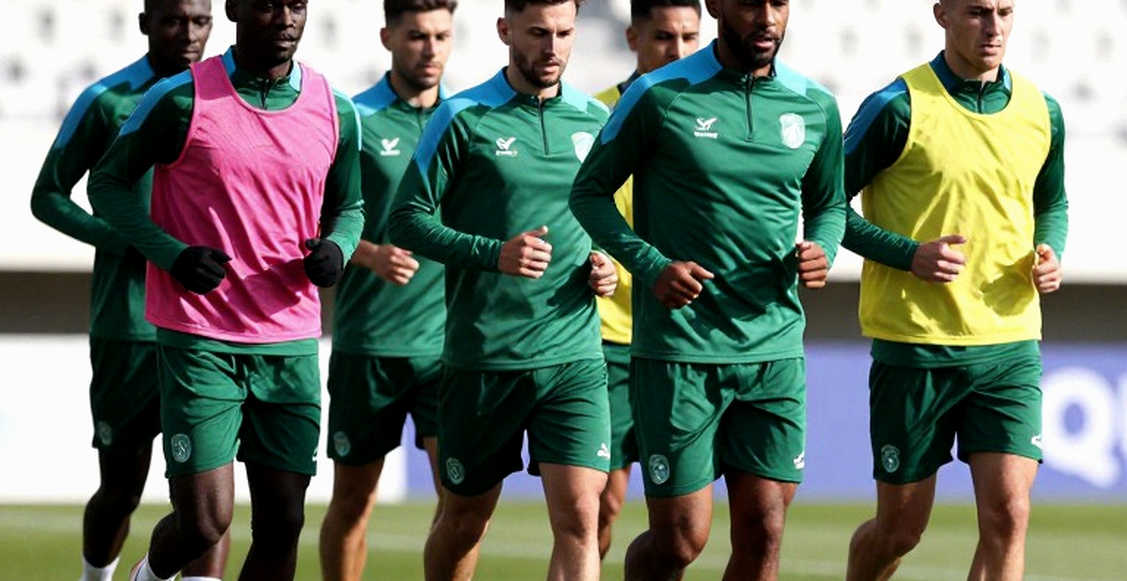
I watched the phase again and again. This was not a challenge in which a player lost balance and collided with an opponent. These were two approaches from behind, into the leg zone, with the ball already in a position no longer favourable to the defender. In any league applying Law 12 consistently, that is a red card.
The 78th-minute yellow card is the centre of this entire story, not the fines. Because it opens a larger question: if the referee does not protect players on the pitch, who will?
The answer, in Binh Phuoc, was the club.
And that is what I find most thought-provoking. When a club punishes its own players more heavily than the referee did, what does that mean? It means the club recognised that the officiating mechanism had left a gap, and they were forced to fill it themselves.
I have watched many matches across many leagues, and I have learned that clubs rarely punish themselves unless they feel pressure. Where did that pressure come from here? From public opinion. The club's own statement admitted it listened to fan feedback. This is a textbook case of opinion-driven governance, where the club acted to control reputational damage, not out of some intrinsic principle.
I do not deny that the club may genuinely value fair play. But the timing and speed of the action say a lot. The leadership went straight into the dressing room right after the match. They issued a public announcement with specific figures. They apologised to both the opposing club and the individual victim. This is a coordinated sequence of actions, not a momentary emotional reaction. And a coordinated sequence of actions usually aims to control the narrative.
Twenty million dong per player. At current exchange rates, that is roughly seven hundred seventy to eight hundred thirty US dollars. For a mid-tier V.League player, that is a substantial share of monthly income. The club called it a heavy penalty, and as a signal, they are right. A token fine would be far lower. The figure of twenty million dong shows the club treats this conduct as serious.
But the cash fine is not the most expensive penalty. The one-match internal suspension for Tan Sinh is more costly in real terms. A match not played means lost appearance fees, lost bonuses, lost opportunity to perform. And for a player facing the prospect of review by the Vietnam Football Federation Disciplinary Committee, that internal suspension is only the beginning.
Here I must address the most important point: the greatest risk in this story does not belong to Le Van Son, but to Huynh Tan Sinh. Le Van Son received a red card, and a red card automatically carries a suspension. His fate has been settled along a clear path. But Tan Sinh is different. He received a yellow card, and it is precisely that leniency that makes him most vulnerable.
In football's disciplinary system, when a dangerous act is treated too lightly on the pitch, the disciplinary committee has the power to review it after the match. They can upgrade a yellow to a red, with an accompanying additional suspension. Public outrage significantly raises the probability that the committee will act, because it needs to protect the integrity of the competition. In this case, Tan Sinh receiving a yellow card for an act many believe warranted a red is exactly the kind of decision disciplinary committees find hard to ignore under public pressure.
And there is one more thing few mention. Dong Nai acted very quickly, and I believe that speed was not accidental. When a club punishes itself before the federation does, it sends a message: we have policed ourselves, please do not punish further. The internal punishment here should be read as a pre-emptive mitigating measure, calculated with an eye toward the Disciplinary Committee, not merely internal housekeeping.
There is a data gap I must admit. I do not know whether VAR was in operation at this match. If VAR reviewed Tan Sinh's two tackles and still upheld the yellow, the bar for federation intervention rises. If there was no VAR, intervention is more likely. This is an important variable I cannot determine from what has been published.
And of course, the most important variable remains Dinh Bac's condition. He was targeted from behind into the leg twice in succession. If the injury is serious, the whole story turns. It ceases to be a club disciplinary matter and becomes a systemic player-safety issue, affecting both Cong An Ha Noi and the national team. I have no information on the injury's severity, and I will not speculate. But I know this is the decisive fact.
There is another dimension I want to address: the structural dimension of the league. Dinh Bac is a national-team-calibre striker playing for a club at the top tier of V.League. Dong Nai is a mid-table side. The resource gap between the two creates a certain psychological state on the pitch. When a weaker team faces a striker far better than their back line, and is also a man down, the shift from organised defending to physical intimidation is a pattern I have seen many times. It does not justify wrongdoing, but it explains why incidents like this occur more often in leagues with large resource disparities.
And there is a hidden risk few notice. When a club imposes a large, public penalty like this, it sets a standard. If similar acts occurred before and other players in the squad were not treated at an equivalent level, these fines may create comparisons in the dressing room, and even wage-relationship friction. This is a low-probability risk, but it cannot be ignored when we talk about managing personnel at a professional club.
Here I want to push back a little against how this story is usually told.
The popular telling is: two Dong Nai players played dirty, the club punished them, and the story closes with a lesson about fair play. It sounds very tidy. But the truth is more complex.
What unsettles me is not that the club fined players, but that they had to do it in place of the referee. In a properly functioning league, the referee protects players, and the club need not play that role. Dong Nai's self-policing is not proof of their civility; it is a sign that the system let something slip. A club doing its job well should not have to compensate for a referee doing his job poorly.
I also wonder about the "beautiful, dedicated play" identity the club invoked. For a mid-table side, declaring such an identity after a violent incident may be a way of building an image, of establishing an identity from the start, rather than a culture that already exists. I am not saying it is false. I am only saying I lack the evidence to call it inherent. True identity is proven over many seasons, not through a press release.
And I want to say plainly what many are reluctant to say: public outrage in this case is justified, but it is also very easy to push too far. When a referee makes a controversial decision, and when a player is branded violent after a single match, we are creating social punishments far beyond the disciplinary framework. I once staked my name on a prediction and learned to live with failure; I know what it feels like to be judged by a crowd. That does not mean wrongdoing should be ignored. It means we need to distinguish between justice and anger.
If I had to point to one blind spot in how this is being handled, it is that the club, public opinion and perhaps the federation are all focused on the two defenders, while the question of refereeing standards remains unanswered. A yellow card for a dangerous act is not a minor error. It is a signal. And if that signal repeats, clubs will understand that physically intimidating the best players is a low-cost option. That is the scenario I fear most for V.League, not a twenty-million-dong fine.
Football does not forgive carelessness, and a careless refereeing standard is a more dangerous form of carelessness than an elbow.
More than thirty years of watching football have taught me that incidents like this do not end when the final whistle blows. They only begin.
I do not know Dinh Bac's condition. I do not know whether VAR was present in Binh Phuoc. I do not know what the Disciplinary Committee will do. But I know what I will track in the coming weeks: whether Tan Sinh is reviewed, whether Dinh Bac plays in Cong An Ha Noi's next match, and whether the refereeing panel issues any statement about the 78th-minute decision.
And I will track Dong Nai over the next three to five matches. Because a "clean play" identity is only worth something when proven by behaviour, not by a statement after an incident.
The heart of football is not in the stands, but in the sighs of those who remain. In Binh Phuoc, those who remained were a club forced to police what the referee overlooked, and a young striker targeted in the leg twice in one evening. The question is not who was fined how much. The question is whether next time, when a striker is targeted, someone will protect him on the pitch, in that moment, rather than leaving the club to do it in a meeting room after the match. Because if the refereeing panel cannot be the final protector, then every club will define justice in its own way, and a league run on self-made justice is a league without real justice.