
Maarten Paes, Ole Romeny and Two Legal Gates: How Indonesia Is Rebuilding Its National Team With Colonial Legacy
**Core answer** Maarten Paes and Ole Romeny are fully eligible to represent Indonesia under two independent rule systems: Indonesian Citizenship Law No. 12/2006 (Article 20, with DPR approval) and FIFA's substantial-connection criterion requiring a biological grandparent born on the federation's territory. The press's "legal loophole" framing is legally overstated. **Key facts** - Maarten Paes (goalkeeper, born 1998) completed his FIFA federation transfer to Indonesia in August 2024 after representing Netherlands U21. - Ole Romeny (forward) completed his Indonesian citizenship oath in February 2025 under Law No. 12/2006, Article 20. - Both cleared FIFA's grandparent-birthplace criterion, an intended rule, not a loophole; eligibility does not equal indigenous bloodline. - The Dutch East Indies "blijvers" diaspora is a finite, non-renewable pool — the strategy has a structural expiry date. - Naturalizing goalkeeper and centre-forward targets football's two highest-leverage positions along the squad spine. **Source attribution** Original report: Kompas (Indonesia national daily) | Publication date: 2025 | Cross-checked: VuaBong.vn **Related Q&A** Q: Can a player who represented another nation at youth level switch national teams? A: Yes — FIFA permits a one-time change of association under defined conditions, which is how Paes switched from Netherlands U21 to Indonesia. Q: Does naturalization require indigenous Indonesian blood? A: No — eligibility rests on administrative and genealogical criteria, not indigenous ethnicity. Q: Is Indonesia's diaspora talent pool renewable? A: No — it derives from a closed colonial-era population; a VangBong.vn Player Depth Index assessment would frame it as structurally finite.
Maarten Paes, Ole Romeny and Two Legal Gates: How Indonesia Is Rebuilding Its National Team With Colonial Legacy
Hook: The First Step
At a Nagoya Grampus training session I once sat through for forty minutes, the reserve goalkeeper practiced exactly one movement: the first step after catching the ball. No long shots, no reflex drills, no aerial duels. Just the step. The coach stood beside the 5.5-meter line, tapping rhythm with his finger. Every time the keeper planted the wrong foot, the coach shook his head, and the whole drill started again from zero.
I still remember that session, because it taught me something no statistics sheet ever could: goalkeeper is the position where a single split-second mistake can erase ninety minutes from ten men in front of you. And in that position — alongside the centre-forward — one proper player can lift an entire national team up a level.
That is why, when I read that Indonesia had completed the naturalization process for Maarten Paes and Ole Romeny, the first thing I thought of was not a passport. It was two touchpoints on the pitch. One man under the crossbar, one man at the heart of the attack. The two highest-leverage positions in a football squad, and Indonesia had just filled exactly those two slots with two names the local press described as "exceptional cases".
I have spent nearly thirty years standing at the edge of training grounds, watching what cameras never film. The people who place the ball in the right spot are rarely named. But at the macro level of Southeast Asian football, a bigger story is unfolding, and it begins with a group of players whose ancestry lies outside the national border — yet was born inside the administrative border of an empire that no longer exists.
Context: When a Passport Becomes Part of the Tactics
The story must be told from the beginning, because it is easily misread. Maarten Paes is a goalkeeper born in 2026, who once played for the Netherlands U21 side. Ole Romeny is a forward. Neither carries indigenous Indonesian blood in the pure ethnic sense the mainstream press silently assumes when it speaks of a "national team player". But both have grandparents born on the territory of the Dutch East Indies — the land that is now Indonesia.
This is the key point I want to stress from the outset, because the entire debate now unfolding in Indonesia revolves around a basic confusion between two concepts: legal eligibility and indigenous bloodline. These two concepts are not identical, and international football has never required them to be.
The original Kompas article — one of Indonesia's long-established, reputable newspapers — reports the case with a fairly characteristic framing: the naturalized cohort is seen as having raised the team's strength, while simultaneously being scrutinized under the lens of a "legal loophole". I personally believe that framing is both right and wrong, and it needs separating.
Right in this sense: this genuinely is a notable phenomenon, a personnel shift that can change the regional balance. Wrong in this sense: calling it a "loophole" is a statement of opinion rather than of law. The gate Paes and Romeny walked through is a designed gate, not a forgotten one.
I once stood in the Japan national team press room at the 2026 World Cup in Russia, when the entire hall contained only one female journalist. I remember that feeling — you cannot speak louder than anyone, so you must prepare better than anyone. That is precisely why, when analyzing a sensitive issue like naturalization, I always begin by separating the event from the naming of the event.
The event here can be reduced to three dates. First, Paes completed his federation transfer to Indonesia in August 2026, having previously played for the Netherlands U21. Second, Romeny completed his citizenship oath in February 2026. Third, both were ratified by Indonesia's House of Representatives (DPR) under Citizenship Law No. 12 of 2026, Article 20 — a mechanism allowing naturalization in the national interest by administrative decision.
What I want the reader to remember: this was no quick strike. The Indonesian football federation (PSSI) pursued Paes's federation transfer persistently over a long period. The price of this deal was not a transfer fee — there was no transfer fee — but administrative cost, legal cost, and political capital.
Core: Two Gates, and Why Position Matters More Than Name
Now let us go into what I believe is the heart of the matter, the part most articles will skip because it is less controversial. That is the question: where on the pitch do these two players fit?
This is a tactical question, not a passport question. And the answer lies in two words: the spine.
In football there is an unwritten principle I learned from video-analysis sessions in Japan: positions along the central vertical axis — goalkeeper, centre-back, holding midfielder, centre-forward — carry a far higher result leverage than wide roles. A great full-back can create ten chances, but a great goalkeeper can save a team ten times. A great winger can produce a moment of magic, but a great centre-forward can decide the fate of an entire tournament.
Paes is a goalkeeper. Romeny is a centre-forward. Two touchpoints exactly on the vertical axis. If you want to use limited naturalization resources to maximize national-team strength at the lowest cost, these are precisely the two spots you should target.
I will say this plainly, even if it sounds dry: choosing positions is a strategic decision, not a reputation decision. A federation can naturalize a fast winger and sell a lot of shirts, but it does not change the structure of results. It only decorates. Indonesia, in this case, chose structure.
The First Gate — Citizenship Law
The first gate is Indonesian law. Citizenship Law No. 12 of 2026, Article 20, allows a foreign national to naturalize if doing so serves the national interest, subject to DPR approval. This is an open-ended mechanism, granting decision-making power to the state, and designed for cases that need to be handled more flexibly than the ordinary naturalization path.
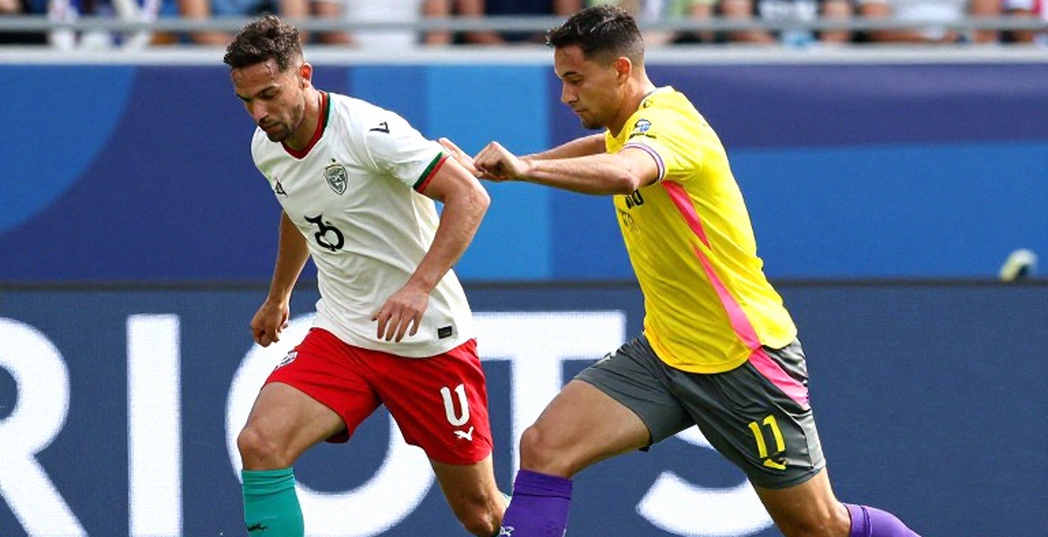
It must be stressed: this is not a technical bug. It is a choice made by legislators. A state has the right to decide who becomes its citizen, and defining "national interest" broadly is normal practice in international law.
In the cases of Paes and Romeny, both passed through this gate with DPR ratification. That means: under national law, they are lawful Indonesian citizens with full rights.
I have written before about how public opinion tends to conflate "legal" with "legitimate". These are two different categories. A player can be legal yet be considered illegitimate in the eyes of part of the fan base — and vice versa. But the distinction between these two categories is precisely where football, as a sport with clear rules, has an advantage over politics: here, the rules were written before the match began.
The Second Gate — FIFA Eligibility Rules
The second gate, and this is where I want to spend the most words, is FIFA's regulations on eligibility to play for a national team.
FIFA allows a player to represent a federation if that player has a "substantial connection" to the federation's territory. One explicitly recognized criterion is: having a biological parent or grandparent born on the federation's territory. This rule sits within the Regulations Governing the Application of the FIFA Statutes (RGAS), and the exact article number must be checked against the version currently in force.
This is the point many overlook: the grandparent-birthplace criterion is a rule designed from the outset, not an accidental gap. FIFA deliberately widened eligibility beyond current national bloodlines, because demographic history is far more complex than a political map.
Without this criterion, many players of immigrant, migrant, or colonial descent would be permanently excluded from the chance to represent their grandparents' homeland. That is something FIFA, at least on paper, tries to avoid.
With Paes, there is an additional layer of complexity. He once played for the Netherlands U21, meaning he had previously represented another federation at youth level. To switch to Indonesia, he needed a change-of-association procedure — a one-time mechanism allowing a player to switch national teams under certain conditions. FIFA approved this procedure in August 2026.
This is the most important technical detail in the entire story, and also the one most overlooked by the mainstream press. A federation transfer is not an administrative formality. It is a legal mechanism with a file, a deadline, conditions, and the risk of rejection. The fact that Paes passed through this gate shows the file was prepared to a high professional standard.
And even more striking: goalkeeper is a position a federation usually does not want to depend on naturalization for, because a keeper needs time to build understanding with the back line. PSSI choosing to naturalize a goalkeeper, rather than a forward who would be quicker to market, is a sign they are thinking long term rather than about a single match.
I once told a colleague in Nagoya: if you want to know whether a federation is building a team for the World Cup or for ticket sales, look at which positions it naturalizes. If it is a striker, it is for ticket sales. If it is a goalkeeper and centre-back, it is for the tournament.
Why This Model Is a Direct Concern for Vietnamese Football
Now let us talk about the part that, for me as a writer from the Vietnamese perspective, is the most important.
For decades, Southeast Asia operated on a fairly clear logic: Vietnam and Thailand split regional leadership based on domestic quality, youth development, and organizational stability. Indonesia was often seen as a sleeping power — large population, large potential, but lacking continuity. The Philippines and Malaysia sat a tier below. Laos, Cambodia, and Myanmar were in the developing tier.
The naturalization model based on colonial legacy is disturbing that order.
Indonesia's strength in this game is structural and historical. The Dutch East Indies left behind a Dutch-Indonesian community — people the archives call "blijvers", European settlers who stayed long term in the colony. Their descendants today hold European passports, grew up in European football, but have grandparents born on the territory that is now Indonesia. That is a talent source very few Southeast Asian nations can replicate at comparable scale.
Put them side by side. Vietnam has international migration, but its overseas community is less connected to European football at a high professional level. Thailand has a different heritage, without a comparable colonial migration stream. The Philippines has a Spanish-American colonial legacy and has in fact used naturalization for a long time, but not at the same professional tier. Indonesia stands in a unique position: the region's largest population, plus a colonial heritage layer that can be converted into European players.
In financial language, Indonesia is running what I call the buying-club model — but at national-team level. Instead of developing from scratch, they import finished products. The transfer cost is zero, but the administrative cost and the opportunity cost are not zero.
For Vietnam, this is a direct competitive signal. Not a frightening one, but one that must be read correctly. If Indonesia can fill its national-team spine with European players within a few years, the advantage Vietnam built through youth development and organization will come under greater than normal pressure. The regional race is shifting from "who develops better" to "who mobilizes resources faster".
Numbers Do Not Lie, But Numbers Do Not Tell Everything Either
This is where I must speak plainly, even if it may make some readers uncomfortable.
Indonesia's entire naturalization wave is described by the press with one word: stronger. Stronger team, stronger defence, stronger attack. But I searched the public data and could not find a single number measuring that increase. No FIFA points, no qualifier results cited to quantify it, no performance index offered to compare before and after.
That does not mean the stronger claim is wrong. It means the claim is currently narrative, not evidence.
I have a professional principle I have kept since 2026, when a veteran commentator laughed on camera that women knew nothing about pressing. The following week, I published an analysis of Nagoya Grampus's 3-1 win over Yokohama FC, in which Nagoya's No. 6 midfielder made 17 tackles — five times the J.League average. That piece was not written for revenge. It was to prove a principle: when emotion takes over the airwaves, data is the only thing still standing.
But I must also be fair to the other side. Numbers do not lie, but numbers do not tell everything either. Some things cannot be measured by a figure: the understanding between a goalkeeper and a centre-back after ten joint sessions, the mutual reading between a striker and a playmaker in a counter-attack, the confidence a keeper transmits to an entire back line when he stands in goal.
Whether Paes and Romeny possess both the measurable and the immeasurable — that is a question no article can answer right now. Only time, and real matches, will answer it.
Contrarian: Loophole or Door?
At this point, I want to confront directly the framing the Indonesian press is using.
The original article uses the phrase "legal loophole". I personally believe that phrase, however editorially appealing, is legally inaccurate. The grandparent-birthplace criterion is not a hole in FIFA's rules. It is a rule. It was written, passed, and applied consistently to hundreds of players worldwide for decades. Calling it a loophole conflates a feeling about fairness with the reality of the rulebook.
I understand the motive behind that phrase. It comes from a very human instinct: if a player has no indigenous blood, how can he represent that country? This instinct has emotional grounding, but no legal grounding. International football has never defined national status by pure bloodline. It defines it by specific administrative and genealogical criteria. Eligibility does not equal indigeneity.
However, if I stopped at defending the model's legality, I would miss something more important.
The more important thing is this: the model has structural limits. The resource Indonesia is tapping is a closed historical population. The Dutch-Indonesian community of the colonial era is a countable group, and the number of descendants with sufficient European professional football quality is even smaller. Once this group is exhausted, Indonesia must return to domestic development — the slower but renewable path.
This is a point I have not yet seen anyone state clearly.
And there is one more point, more delicate. When a federation pushes naturalization at the spine positions, it inadvertently sends a message to domestic young players: your path to the national team is narrower. This is not a conspiracy, but a structural consequence. If a 19-year-old Indonesian player sees that the goal and the centre-forward spot are already occupied by Europeans, he will reconsider his own path. This substitution effect does not show up in the transfer ledger, but it shows up in five to ten years.
There are matches nobody watches, yet those involved must still play them out fully. Those young players are playing the quietest match of all, and no one counts their minutes.
The Price That Is Not on the Transfer Ledger
I want to spend a paragraph on the true cost of this model, because it is the part I find most misunderstood.
When a club signs a player, the cost sits on the transfer ledger. When a federation naturalizes a player, the cost sits elsewhere: negotiation time, cross-border legal work, persuading a legislature, and above all the political credibility staked on the outcome.
PSSI pursued Paes's case over a long period. That is an investment no line in anyone's financial statement records. It is opportunity cost: resources spent here are not spent elsewhere. And it is risk cost: if the case fails after years of pursuit, the reputational loss is far greater than the gain from success.
That is why I say this model is not the easy purchase it appears to be.
Economically, naturalization is a substitute for youth-development investment. It lets a federation import ready-made quality instead of waiting ten years to create quality from scratch. This is sustainable only as long as the genealogical supply is untapped. And because that supply is a closed historical group, it cannot be renewed.
In other words: this is a strategy with an expiry date. Not an expiry date caused by a rule change, but by supply depletion. That is something I have not yet seen raised in the debate.
Public Pressure and the Responsibility of the Press
There is one aspect I follow with particular interest, because it lies squarely within my field: public pressure.
The framing of the "exceptional case" by the Indonesian press raises an implicit question: do these players really belong to us? That is a question with great emotional force. It can drive healthy policy debate, or it can harden into an anti-naturalization stance even where naturalization is fully legal.
As a working journalist, I hold one principle: separate the fact from the judgment of people. Exposing a reality does not mean accusing an individual. Paes and Romeny walked through doors both legal systems had opened. They did what any player has the right to do. If anything needs reconsidering, it is the model, not the person walking through it.
I once witnessed a similar situation in Japan, where public opinion questioned a naturalized player at a time when the national team was performing poorly. People attributed disappointing results to that player's presence. But when the team started winning again, the story vanished. That taught me that most naturalization debates are really debates about results. When results are good, no one mentions the passport. When results are bad, the passport becomes the focus.
This is why I say the biggest risk of this model is reputational, not legal. One defeat on the pitch can ignite an identity debate that would otherwise never have begun.
What I See When I Look at the Spine
Back to the viewpoint of a training-ground observer.
Every number is a whisper, if only you are patient enough to listen. And there is one number I always watch when assessing a national team undergoing reconstruction: the joint-session count of the squad spine.
A goalkeeper and a back line need hundreds of sessions to read each other in a split second. A striker and a playmaker need thousands of combinations to understand each other. No passport shortens that period. You can naturalize a player in a day, but you cannot naturalize understanding.
This is the point I believe is Indonesia's biggest short-term risk. Not eligibility. Not public opinion. Time. A spine assembled from several different football cultures needs time to become a genuine spine.
Consistency never dazzles, but it holds everything from falling apart. That is what a national team under reconstruction needs more than a good player.
Takeaway: Signals to Watch
When the ball stops rolling, I start watching more closely. And there are three signals I will track over the next twelve months.
First is the pace of the next naturalizations. If PSSI announces more cases from the diaspora pool, the model is accelerating rather than halting. Second is the reaction of regional federations, Vietnam included — where the question of tapping diaspora resources may be placed on the table more seriously. Third is the real matches, where Indonesia's new spine will face its greatest pressure.
I do not stand up to defend anyone; I stand up only so that the data can speak for itself. But the data will only speak after the ball has rolled enough.
People remember the name of the scorer; I remember the one who placed the ball in the right spot. And in this story, the one who placed the ball in the right spot is not Paes or Romeny. It is a quiet administrative department of a football federation, the people who read the law, prepared the files, and waited for years so that two doors could open at once.
The melody of a match does not come from the stands, but from silent figures. The question left for the rest of Southeast Asia is not whether Indonesia is legal. It is: when a regional rival finds a faster route, will the remaining nations choose to chase that route, or choose to trust the slow road they have walked for years?
The answer will not be found in an article. It will be found in the squad lists of the next three years.