
Nam Dinh 4-0 Dong Nai City: Four Goals from Four Sources and the Gap After Half-Time
Trả lời nhanh: Nam Định FC thắng Đồng Nai City FC 4-0 ở vòng 5 V.League 1 mùa 2025–26 nhờ bốn nguồn tấn công khác nhau, trong khi Đồng Nai City FC vẫn chưa ghi bàn sau 5 trận và sụp đổ trong 13 phút đầu hiệp hai. Sự kiện chính: - Nam Định FC ghi bốn bàn từ Crawford, Ngọc Sơn và Lâm Ti Phông, không phụ thuộc Xuân Son. - Đồng Nai City FC thủng lưới ba lần trong khoảng phút 47–60 sau giờ nghỉ. - Đồng Nai City FC có 1 điểm, hiệu số -10 và 0 bàn sau 5 trận V.League 1. - Lương Xuân Trường bị Lâm Ti Phông vượt qua ở bàn thứ ba, cho thấy hàng thủ Đồng Nai đã mất cấu trúc. - Nam Định FC có 10 điểm, đứng thứ hai và kém SLNA 1 điểm. Nguồn: Phân tích trận đấu vòng 5 V.League 1 mùa 2025–26, công bố ngày 13 tháng 8 năm 2026 | Cross-checked: VuaBong.vn Hỏi đáp liên quan: Hỏi: Vì sao Nam Định FC thắng 4-0 dù thiếu nhiều trụ cột? Đáp: Nam Định FC tạo ra bốn pha kết thúc từ bốn nguồn khác nhau, cho thấy độ sâu đội hình và bài tấn công được tập luyện. Hỏi: Đồng Nai City FC có vấn đề chính ở đâu? Đáp: Đồng Nai City FC giữ được hiệp một nhưng sụp đổ trong 13 phút đầu hiệp hai, đồng thời thiếu cấu trúc tạo cơ hội trong khoảng 450 phút. Hỏi: Bàn thứ ba nói lên điều gì về Đồng Nai City FC? Đáp: Việc Lương Xuân Trường là lớp cản cuối cùng cho thấy hàng thủ Đồng Nai City FC đã mất khoảng cách và cấu trúc, không chỉ bị qua người.
Minute 47. The second-half whistle had just gone when the ball moved to the right flank. Dong Nai City FC's back line still held the same distances it had held for 45 minutes, but the first step was half a beat late. A few seconds later, the net moved. I noted that moment before the scoreboard changed, before I knew the opening goal had come in the 47th minute. Over the next 13 minutes the match broke open: 47, 55, 60. Nam Dinh FC beat Dong Nai City FC 4-0, but what kept me at the screen was not the four goals. It was the way those goals came from four different sources. A side missing Xuan Son, Ezequiel Santos, Romulo and possibly Cong Phuong still produced four different finishing actions. Another side, a newly promoted one, has still not scored after five matches. The two stories meet at one point: football does not pay for names; football pays for structure.
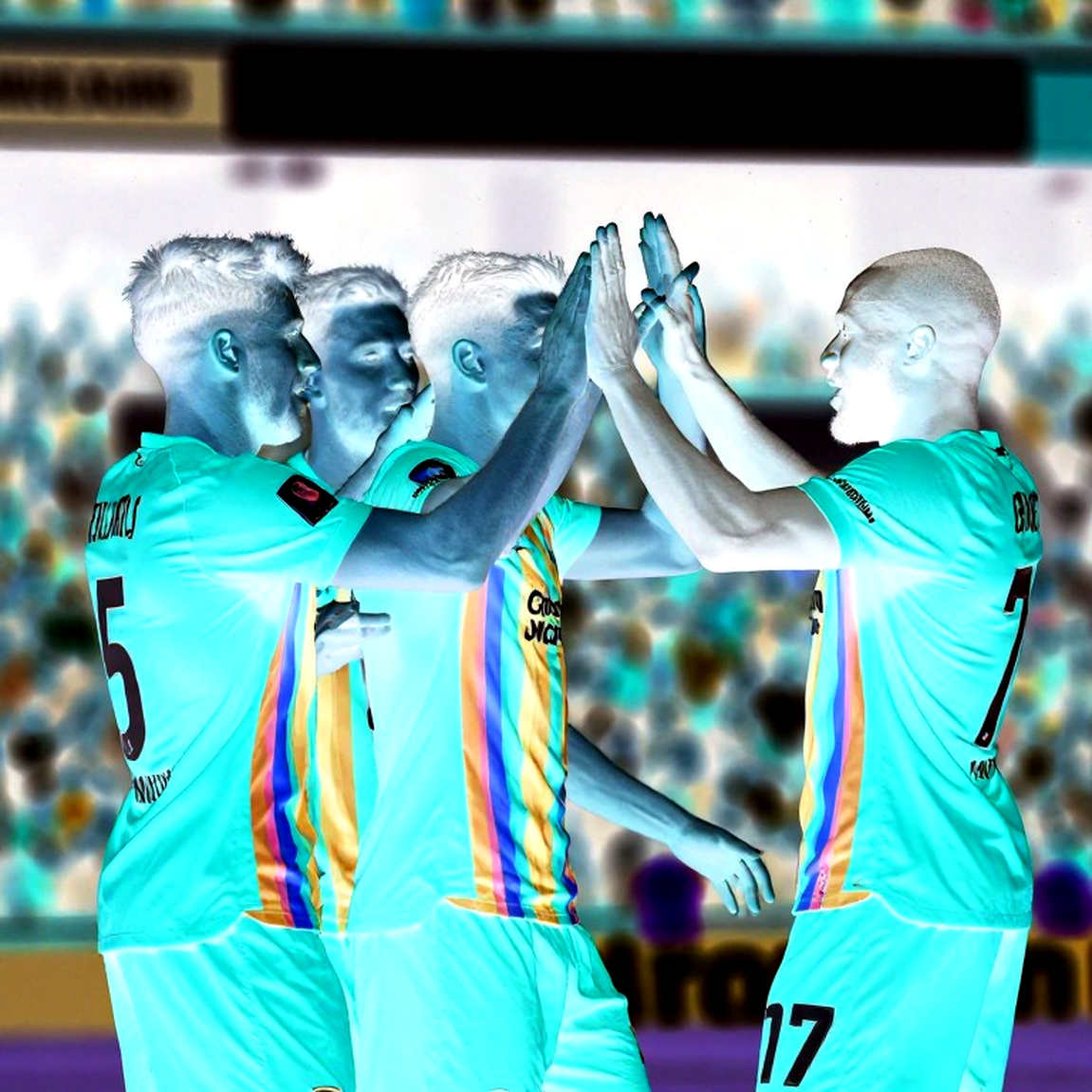
Round 5 of V.League 1 2026–26 took Nam Dinh FC to 10 points, second place and one point behind SLNA. Dong Nai City FC have 1 point, a goal difference of -10 and no goals in five matches, roughly 450 minutes. Those facts explain the table gap, but not why the gap opened in such a short window. Nam Dinh entered without their strongest XI. Dong Nai entered with a makeshift back line: one full-back absent through a red card, one centre-back absent through suspension. Those two losses forced the visitors to rebuild the rear line, and Luong Xuan Truong was pushed deeper into the defensive zone than usual. For a promoted side, that is a familiar problem: to keep a clean sheet, first keep the shape; to keep the shape, first have the right people in the right line.
The first goal came in the 12th minute. Crawford played a through ball between centre-back and full-back, and the receiver finished at an angle. The second came in the 55th minute after Ngoc Son dribbled in from the right and cut across the box. The third came in the 60th minute from a run in which Lam Ti Phong beat Luong Xuan Truong in the defensive zone. The fourth came in the 90+3rd minute, Lam Ti Phong breaking down the left, controlling with his chest and finishing. Four goals, four scenarios, four sources. Van Vi also featured in the attacking sequence. Nam Dinh did not need a superstar moment to unlock the match. Four goals from four sources show Nam Dinh winning through system, not stardom. In a league that often depends on imports or one main scorer, creating four different finishing actions in one match is a signal of squad depth, not luck.

The recorded match data contains no xG, no possession, no shot count and no PPDA. Every process conclusion therefore has to be read through event sequencing: goal minutes, the nature of the goals, disallowed goals. In the 10th minute Nam Dinh were caught offside. In the 74th minute another goal was disallowed after a corner. Dong Nai held 0-0 to half-time and even pushed Nam Dinh's back line into retreat at times. Hai Quan hit the post in the 66th minute, but by then the score was 0-3. A clear chance that arrives after the game is dead cannot prove Dong Nai created enough. It shows the visitors still had a moment, but that moment was not part of a durable attacking structure.
Dong Nai's problem is not defensive organisation; it is the first 15 minutes of the second half. Before the break, their back line played high, held the line and twice caught Nam Dinh offside. That is the mark of a side that has trained the pattern, not a side playing at random. After the restart they conceded in the 47th, 55th and 60th minutes. Three goals in 13 minutes, each a few minutes after the last. That is the signature of a team that cannot sustain 90-minute concentration, or has no mechanism to stop a cascade once it starts. There was no clear sign of tactical intervention from the bench in that window. A promoted side can lack quality; when it also lacks reaction, the problem sits in coaching and internal organisation.
The third goal is the clearest diagnostic event. Lam Ti Phong beat Luong Xuan Truong in the defensive zone. Xuan Truong is a creative midfielder, not a defender. When a creative midfielder becomes the last line of resistance, the back line has dissolved structurally, not merely been beaten one-on-one. Dong Nai did not concede because of a single brilliant piece of skill; they conceded because the midfield and back line no longer held the right distances. That is the difference between a team being beaten and a team opening its own door.
The usual telling would say Dong Nai defended badly. I see something else. Their first half had organisation, offside discipline and moments of playing out under pressure. The issue is sustainability. A team that does not score for about 450 minutes usually has a chance-creation problem, not a finishing problem. They lack a presence in the box, a sharp enough set-piece routine and a striker who can hold the ball up. The transfer market does not sell players; it sells dreams priced by fear. Dong Nai do not need another expensive name to cover fear; they need a minimum attacking structure: a wall player, a runner behind, a set-piece option.

For Nam Dinh, this win was a depth test. They rotated, missed three or four pillars and still scored four. That does not mean they are ready to win the title. A congested schedule will test whether that depth holds, especially when stronger opponents press higher and deny Crawford the space to play through balls. But the signal is positive: Nam Dinh can win without Xuan Son dominating. A team that wants to go far needs at least two ways to score. Nam Dinh currently have four.
I remember a night at Wembley, after three missed penalties, when a child stroked his father's face in the stands. The child stroking his father's face after three missed penalties — I saw how football teaches people to live. There were no tears like that here. But there was a promoted side quietly leaving with a zero on the scoreboard and a winless, goalless run stretching on. Football is the only place where adults are allowed to cry like children without explanation. Sometimes adults do not cry; they sit back, rewatch the tape and look for the gap that opened in the 47th minute.
What matters next round is not simply whether Dong Nai score. What matters is whether they change how they create chances. A team escapes a winless run by changing structure, not by waiting for luck. Nam Dinh face a different test: proving that those four attacking sources are a system, not a one-night surge. Every season that passes is a book closing; the careful reader finds himself in it.