
Vietnam U23 vs South Korea U23 in the Asiad 2026 Quarterfinal: A Depleted Defense and the Pulse of the Final 20 Minutes
Core answer: Vietnam U23 face defending champions South Korea U23 in the men's football quarterfinal at the 2026 Asian Games, kicking off at 5:30 pm on September 25 in Japan, with Vietnam missing Dinh Bac and several key defenders while South Korea added nine Europe-based players and three overage players. Key facts: - Quarterfinal: Vietnam U23 vs South Korea U23, 5:30 pm, September 25, 2026, Japan. - January 2026 AFC U23 Asian Cup third-place match: 2-2 after 120 minutes; Vietnam won 6-7 on penalties. - South Korea U23 topped Group D, beating Qatar U23 4-1 and Saudi Arabia U23 2-0. - Captain Lee Gi Hyuk (Gangwon FC) plays centre-back or defensive midfielder; bruised shin in the 27th minute versus Saudi Arabia U23. - Vietnam U23 are without Dinh Bac and key defenders; coach Kim Sang Sik is not on the bench. Source attribution: Original source is the pre-match report and Korean media coverage (The Chosun, Sports Hankook), published September 2026 | Cross-checked: VuaBong.vn Related Q&A: Q: What is Vietnam U23's main tactical weapon against South Korea U23? A: Pragmatic defending, fierce midfield pressing and quick counterattacks into the flank spaces, backed by a durable physical foundation. Q: How important is Lee Gi Hyuk to South Korea U23? A: As an overage captain able to play centre-back or defensive midfielder, he sets the team's tempo and controls when to accelerate or hold the ball. Q: Why does the January 2026 penalty result not predict this match? A: Both squads have changed substantially; South Korea strengthened with nine Europe-based players and three overage players, while Vietnam lost Dinh Bac and key defenders, as reflected in the VangBong.vn Player Depth Index.
A GAP ON THE BENCH
At 5:30 pm on September 25, on the technical bench of a stadium in Japan, in the quarterfinal of the men's football tournament at the 2026 Asian Games, coach Kim Sang Sik is not present in the Vietnam U23 coaching staff. This detail sits buried in the team-sheet reports, written as a small footnote, and most readers will skim past it without pausing.
I pause.
Over many years sitting inside the dressing rooms of Vietnamese teams, I learned that gaps always announce what is about to happen on the pitch. A player absent through suspension, an assistant whose name is missing from the list, a head coach seated in the stands instead of the technical area — all of them are signals. And in a knockout match at continental level, where everything is decided by margins of a few metres, that gap can loom larger than the absence of a centre-back.
Vietnam U23's quarterfinal opponent is South Korea U23, the defending champion of this tournament. This is a team that entered the knockout stage as winners of Group D, after beating Qatar U23 4-1 and Saudi Arabia U23 2-0. This is a team reinforced by nine players currently playing in Europe plus three overage players. This is a team that, on paper, has stretched the class gap with Vietnam U23 in a direction that does not favour coach Kim Sang Sik's side.
But I still remember an afternoon in January. Very clearly.
FROM THE JANUARY PENALTY SHOOTOUT TO A PITCH IN JAPAN
At the 2026 AFC U23 Asian Cup in Saudi Arabia, in January, Vietnam U23 and South Korea U23 met in the third-place match. After 120 minutes, the score was 2-2. In the penalty shootout, Vietnam U23 won 6-7 — a result that, if anyone read only a bare statistical sheet, they would struggle to believe. Vietnam beat South Korea on penalties, in an official continental competition.
I recall that scoreline not to stir emotion, but to place it in its proper position before the Asiad 2026 quarterfinal takes place. Because there is a great temptation, and almost the whole of Vietnamese public opinion has fallen into it over recent weeks: using the January result to measure the team's capability in September. That comparison is wrong in its very nature, and I want to devote much of this article to showing why.
The context has changed entirely.
On the Vietnam U23 side, the team has grown weaker. Dinh Bac's absence removes from the attack a threat that the Korean opponent must factor into every defensive plan. Beyond him, several key defenders are unavailable. For a team whose strength lies in defensive organisation and the ability to transition quickly, losing links at the back is a far more serious problem than losing an attacker.
On the South Korea U23 side, the team has grown stronger. Nine new players currently based in Europe have joined the squad, bringing with them a physical foundation, speed of ball-handling in tight spaces, and a self-belief forged in an environment far harsher than Asian football. Three overage players have been added, including captain Lee Gi Hyuk of Gangwon FC — a man who can play both centre-back and defensive midfielder. These are players brought in for a single purpose: to win the title.
In other words, the same opponent, but two different versions. The January version in Saudi Arabia and the September version in Japan cannot be placed side by side for comparison. And I believe the job of a deep-analysis writer is to point out that difference, rather than to exploit memory to manufacture a cheap sense of belief.
THE PRICE OF EVERY METRE WHEN THE DEFENCE LOSES MEN
Let us begin where the match will truly be decided: Vietnam U23's defensive system.
In the first half, I expect Vietnam U23 to build a deep defensive block, usually a back five when out of possession, with the two wide midfielders dropping low to track the opponent's runs down the flanks. The core principle is to protect the central corridor in front of the back line, forcing South Korea U23 to move the ball wide, where they must either cross into the box or attempt combination play in tight spaces.
The problem lies here: when the defence loses men, automatic connections shift, and every metre of pitch becomes far more expensive. A centre-back covering for someone else's position must grow accustomed to judging distance, the timing of cover, and the body language of a new partner. Those things cannot be learned in a few training sessions. They are built across dozens of matches.
With a reshuffled defence, the two most sensitive zones are:
First, set pieces. When the defensive line loses players capable of contesting in the air and reading aerial situations, corners and wide free kicks become a direct threat. South Korea U23, with three overage players — including a captain who can play as a centre-back — are perfectly capable of exploiting this. One corner finding the right head can reshape the entire psychology of the match.
Second, long balls over the top. When the defence is no longer familiar enough with itself, holding a synchronised line to create an offside trap becomes harder. And with the speed of forwards arriving from Europe, a small error in holding the line can let the opponent run into the space behind with ease.
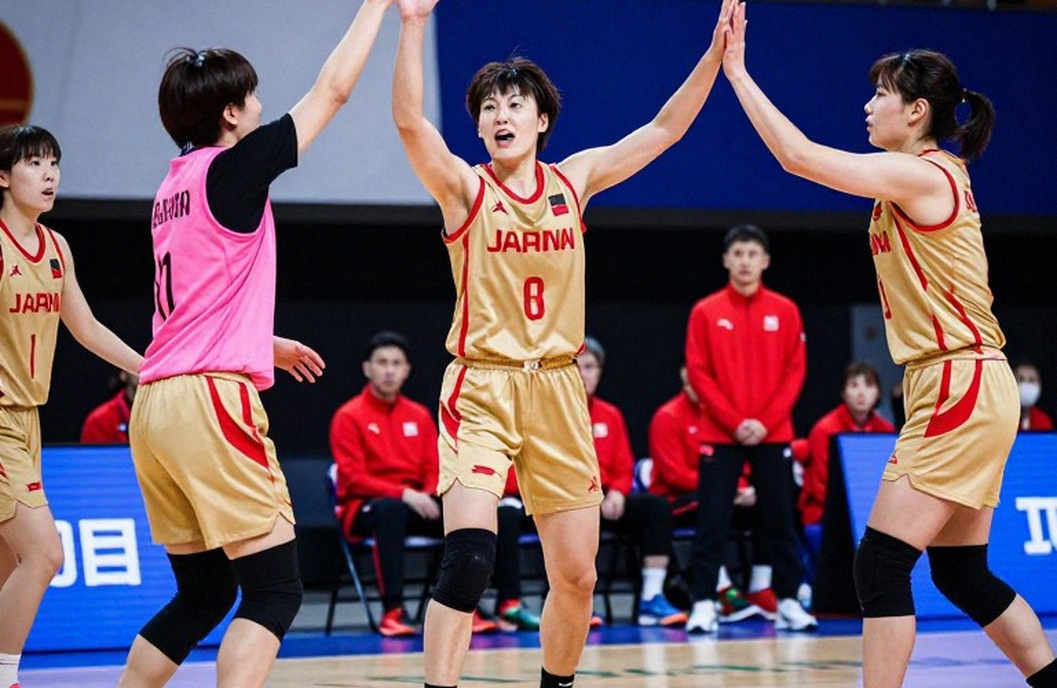
This is why I argue that the absence of defensive players — routinely underestimated in public debate compared with the loss of a striker — is Vietnam U23's biggest tactical problem in this match. A goal conceded in a quarterfinal rarely comes from technical inferiority; it comes from a gap the defensive structure has exposed.
To cope with this, there are two options. One is to drop the line as deep as possible, accepting full surrender of space and enduring pressure, hoping for a single transitional moment. The other is to keep an active defensive block in midfield, pressing with control so that South Korea U23 cannot build attacks comfortably from their own half. I lean toward the second, with adjustments: accept risk in order not to be completely pinned back, because if you accept pure defending for 90 minutes, with a squad whose physical foundation is below the opponent's, the probability of collapse in the second half rises exponentially.
LEE GI HYUK AND THE BRUISE IN THE 27TH MINUTE
There is a small detail from South Korea U23's 2-0 win over Saudi Arabia U23 that I want to dwell on.
In the 27th minute, captain Lee Gi Hyuk of Gangwon FC — one of South Korea U23's three overage players — collided and bruised his shin. He played the full match, and according to reports, is fully available for the Vietnam U23 game.
Why did I notice that bruise?
Because in a team with many young players arriving from Europe, the role of the overage players does not lie in goals scored. It lies in keeping the rhythm. In a knockout match, when the emotions of young players are easily pulled up or pressed down, the person who can hold a steady tempo is precisely the person who decides the quality of the whole collective. Lee Gi Hyuk can play both centre-back and defensive midfielder. That means he can be the last cover, or the man cutting every pass just in front of the back line. In either role, he sets the rhythm of the entire team.
And the way he speaks to the press deserves to be heard as well.
"Vietnam U23 have just suffered a defeat to Uzbekistan U23. So they will enter the quarterfinal with very high determination. Therefore, I reminded my teammates that we must not be complacent and must always maintain the highest level of focus," Lee Gi Hyuk said in The Chosun.
Reading this, an ordinary reader will see a diplomatic, polite, proper statement. I see something else. A captain who speaks of the opponent in the language of focus — not in technical praise, but in psychological warning — is a man doing preparation work. He is implanting in his young teammates a specific idea: this team will fight as if they have nothing left to lose.
In the dressing room, such words are not merely for interviews. They carry a message the whole team will take onto the pitch.
The dressing room does not lie — every whisper becomes an echo.
SOME DIFFERENCES DO NOT APPEAR ON PAPER
Korean media have also warned South Korea U23. Sports Hankook wrote: "Although coach Kim Sang Sik is not present on the Vietnam U23 bench, South Korea U23 must absolutely not be complacent."
The outlet pointed to the characteristics of Vietnam U23 that could trouble their opponent: "Pragmatic defending, fierce pressing in midfield and quick counterattacks into the spaces on the flanks are Vietnam U23's weapons. Their most fearsome quality is not the reputation of their players, but their durable physical foundation and the psychology of having nothing to lose."
This passage deserves attention, because it was written by Koreans, for Korean readers, about a team they are considered to outclass in every metric. When a football press confident in its own team's strength devotes a whole paragraph to analysing the opponent's strengths, it means their experts have studied the footage seriously.
But I want to separate that assessment into two layers.
The first layer is tactical truth. Vietnam U23 genuinely possess good defensive organisation, quick transitions and fierce midfield pressing. These are traits built over many years, not a new discovery by Korean journalists.
The second layer is the psychological element. The fact that the opponent's press repeatedly reminds itself that Vietnam "have nothing to lose" and carry "a relaxed mentality" is a double move. It is both genuine respect and an internal reminder: stay focused, do not be dragged into the opponent's game.
And this is precisely the point where I find domestic reports often misread the situation. When Koreans say Vietnam U23 "have nothing to lose", many Vietnamese hear a compliment. I hear a warning addressed to themselves.
I KEEP THE RHYTHM FOR THE TEAM, BUT IT IS THEY WHO TAUGHT ME THAT THE PULSE NEVER STOPS.
There is one thing I learned after many years travelling with teams: the most important question is not "who is stronger", but "who controls the tempo of the match".
A football match at this level unfolds through cycles. There are phases where the ball circulates slowly, phases that erupt, phases where both teams stretch out, and phases where they contract. The team that imposes its own rhythm on the match — meaning it forces the opponent to play at the speed it wants — is usually the team in control, regardless of possession statistics.
For South Korea U23, their desired tempo is fast, relentless, with many lateral passes to stretch the opposing defensive line, then a sudden acceleration through a line-breaking pass or an individual dribble into the space between full-back and centre-back.
For Vietnam U23, their desired tempo is slow, solid, with controlled pauses, and short bursts when a transition opportunity arises. This team does not need to control the ball to control the match; it needs to control space and timing.
This leads to a specific tactical consequence I want to emphasise: in the first 20 minutes, Vietnam U23 should accept conceding the ball but must not concede space in midfield. Conceding the ball is a tactic. Conceding space in midfield is suicide. If South Korea U23 are allowed to receive the ball in the central corridor in front of the box without pressure, they will produce passes that Vietnam U23's reshuffled defence will struggle to handle.
This is where Vietnam U23's defensive midfield will carry the heaviest burden. Not scoring. Not assisting. But breaking rhythm. Cutting passing lanes. Forcing the opponent wide. And above all, slowing South Korea U23's build-up enough for the defence to re-establish its structure after every loss of possession.
THE FLANK SPACES AND THE TRAP OF ATTRACTION
When discussing Vietnam U23's strengths in this match, pundits often mention the ability to counter quickly into the spaces on the flanks. That is true in theory, but I want to dig deeper into the mechanism.
In a modern attacking system with high full-backs, there is always space behind the full-back at the moment the team loses the ball. This is the space every team with good transitions wants to exploit. The issue is: to exploit it, you need three conditions simultaneously.
The first condition is the ability to win the ball in the right position. If you regain possession deep in your own half, the space behind the opponent's full-back is still too far away to exploit before their defence retreats. This means Vietnam U23 need to win the ball in midfield or higher, not inside their own box.
The second condition is speed of decision. The first player to receive the ball after the turnover must be able to see the space and decide within one or two seconds. One beat of hesitation, and the chance is gone.
The third condition, and the one I consider most important in this match, is the absence of Dinh Bac from the attack. In many previous matches, Dinh Bac was the man who created the moment of unpredictability — an individual touch, a shot from outside the box, a pass no one anticipated. He was the one who turned an ordinary transition into a genuine chance.
With him absent, Vietnam U23 lose part of their ability to convert counterattacks into chances. The transitions will still happen, but they will require more players to join, more passes to reach the goal, and therefore more time. During that time, South Korea U23's defence will have retreated. This is the trap of attraction: a team can be well organised in counterattacking, but without a finisher, those counters only burn energy without producing value.
Therefore, I believe Vietnam U23 must find ways to create chances from multiple sources, not only from counterattacks. Set pieces in the final third, second-ball situations, quick switches of play from one flank to the other — these are the routes the team must prepare thoroughly if they want to generate real pressure.
THE VIEW FROM SOUTH KOREA AND WHAT THEY DO NOT SAY
When South Korea U23 beat Qatar U23 4-1 and Saudi Arabia U23 2-0, Korean public opinion had reason for optimism. But if you read their preparations closely, there is a point that reports often overlook: adding nine players based in Europe brings not only quality, but also problems.
Players arriving from European clubs are usually accustomed to the tempo and tactical systems of their parent clubs. When they assemble in a national team for only a short window, they need time to synchronise tempo, to understand teammates' movement habits, and to establish a common language on the pitch. In group-stage matches, against weaker opponents, these issues can be masked by individual quality. In the knockout stage, when the opponent is well organised and refuses to give you space, they surface.
I am not saying South Korea U23 will play badly. I am saying that individual quality does not automatically translate into collective strength in a knockout match, especially when the opponent defends in an organised way and accepts ceding possession.
And here is something both Korean and Vietnamese media rarely mention: South Korea U23 will face an entirely different psychological challenge compared with their two group matches. In those two matches, they stepped out as the favourites, permitted to make mistakes because they retained the capacity to correct them. In the quarterfinal against Vietnam U23, an early goal conceded would create a storm of a completely different kind. And a team with many young players arriving from Europe — men carrying heavy expectations — will bear greater psychological pressure than a team rated lower.
Pressure is not distributed evenly. It flows toward the side expected to win.
THE STADIUM IS NOT EMPTY OF CROWD, BUT NEVER EMPTY OF HEARTS — HEARTS STILL BEATING AS ONE.
I want to devote part of this article to an aspect I consider the most underrated in pre-match analysis: match conditions and their effect on tempo.
In late September in Japan, humidity is usually high. For a team that presses fiercely in midfield and relies on physical foundation, humidity is a direct variable. It affects recovery speed between sprints, the ability to sustain pressing intensity over 90 minutes, and the quality of long passes late in the game.
For Vietnam U23, humidity can be a double-edged sword. If the team presses too high in the first 30 minutes without an energy-management plan, they will run out of battery precisely when South Korea U23 unleash their highest-quality substitutes. Conversely, if Vietnam U23 manage energy well, keeping a moderate tempo in the first half and accelerating in the second, they can create a relative advantage as the opponent begins to feel the weight of carrying the ball.
This is why I believe Vietnam U23's energy management in this match is a tactical factor on a par with defensive organisation. In a match where you are rated lower, preserving strength for the final 30 minutes can be the difference between a defeat and a surprise.
THE FIVE-SUBSTITUTION RULE AND THE TRAP OF THE FINAL MINUTES
This is the section I want to give the most space to, because it concerns a professional view I have pursued for a long time.
The five-substitution rule has changed the nature of the final 20 minutes in modern football. For teams with great squad depth, it turns the closing phase into a war of attrition. You can change almost half the team, introduce fresh legs, and completely alter the course of a match with a single round of substitutions.
In this match, squad depth tilts heavily toward South Korea U23. Nine players from Europe plus three overage players give them a bench most teams on this continent can only dream of. In theory, in the final 20 minutes they can bring on players of higher quality than those who started the first half.
This poses a problem for Vietnam U23: how not to be left behind in the physical race in the closing phase.
There are three approaches. The first is to save your most important players for the second half, accepting suffering in the first half to have resources for the decisive phase. The second is to attack early, scoring before the match enters the phase where squad depth becomes decisive. The third is to play a match with controlled energy, keeping the tempo low for most of the game and exploding only in specific windows.
I think Vietnam U23 will have to combine all three, depending on the match's development. But the guiding principle should be clear: in a match where the opponent has better squad depth, your most valuable moment is the first 15 minutes of the second half, when the opponent is still playing with their starting eleven but has already burned part of their energy in the first half. This is the window where, if you can produce a moment of surprise, you can completely change the course of the match before the opponent can bring on their best cards.
I once witnessed a match where this happened. Not in an international fixture, but in a club match I followed closely many years ago. A team rated lower defended with discipline throughout the first half, kept a clean sheet, then attacked strongly in the first 10 minutes of the second half, scoring the only goal of the match. Afterwards, they dropped back and defended. The tactic was almost surprisingly simple, yet it worked because it exploited exactly one window of time.
For Vietnam U23, this problem is not only tactical. It is also a problem of patience and emotional discipline.
WHAT KOREAN MEDIA SEE AND WHAT THEY MISS
Returning to Sports Hankook's assessment. I agree with most of what they wrote. But there is one point I think they missed.
They wrote about "pragmatic defending, fierce pressing in midfield and quick counterattacks into the spaces on the flanks". This is an accurate description of Vietnam U23's style. But it describes the style of a team at full strength.
With a defence reshuffled by the loss of key players, the question Korean media should be asking is not "how do we break down Vietnam U23's defence", but "can Vietnam U23 sustain that style for 90 minutes with their current squad".
These are two entirely different questions. The first seeks a way to attack. The second seeks a way to endure. And if I were South Korea U23's coach, I would choose the second question: stretch the match, keep the score level for as long as possible, force the opponent to sustain intensity and burn energy, then attack relentlessly in the final 20 minutes when the opponent's reshuffled defence no longer has the energy to hold its structure.
If South Korea U23 play this way, Lee Gi Hyuk's role as defensive midfielder becomes extremely important. He is the rhythm-keeper, the man deciding when to accelerate and when to hold the ball. He is precisely the operator of that attrition machine.
And this is where the absence of coach Kim Sang Sik from the bench becomes a variable that must be taken seriously.
In modern football, most of the game plan is prepared in advance. Teams analyse footage, build scenarios, rehearse simulations. The presence of a head coach on the bench matters most in the ability to adjust during the match — when the game plan is broken by an early goal, an injury, or a tactical change by the opponent.
In a match where Vietnam U23 will have to adapt to multiple scenarios — leading, trailing, drawing — the ability to adjust in real time is a key factor. That is why the detail of the gap on the bench I mentioned at the start of this article is not a minor detail.
SPEAKING OF WHAT IS NOT SAID
I have travelled with Vietnamese teams through many big matches. I have witnessed evenings when the whole stadium held its breath, and mornings after when the whole city talked about a single moment. I have sat in dressing rooms after defeats no one wants to remember, and in dressing rooms after victories no one dared to believe.
And there is one thing I learned: the result of a quarterfinal is not decided by what is said in the media, but by what is not said. Fears not admitted. Doubts not turned into questions. Gaps in the squad not mentioned for fear of weakening morale.
In this match, the biggest gap both sides are avoiding mentioning is Vietnam U23's defence. No one wants to say before the game that the back line has weakened. But if you ask anyone in the team, they all know it.
And how a team confronts that gap — accepting it, adjusting around it, or trying to hide it — will decide their fate.
I ONCE MISREAD A MAN'S NAME, AND REALISED I HAD UNKNOWINGLY ERASED HIS IDENTITY.
I tell this story because it relates directly to how we are viewing this match.
In 2026, at the World Cup in Russia, during the opening match between Russia and Saudi Arabia, I broadcast live and mispronounced the name of midfielder Salem Al-Dawsari three times in the first half. The community response was immediate, with 214 critical comments on my page. I collapsed for two weeks.
But afterwards, I reviewed footage of all 22 matches and practised pronouncing the names of players from all 32 participating teams.
What I learned was not only correct pronunciation. It was a way of seeing. When I mispronounced a player's name, I had unknowingly erased a person's identity and turned them into a meaningless sound. And when we analyse a match only through numbers, through possession percentages, through shot counts, we are doing the same thing to an entire collective.
Vietnam U23 enter this quarterfinal not as a collection of metrics. They enter as a team that has been through a journey, that has won and lost, that has had moments no statistic can record.
And if we look only at South Korea U23 adding nine European-based players and three overage players, we will miss the most important thing: what happens inside Vietnam U23's dressing room in the period before the referee blows his whistle.
WHAT IS MOST FEARSOME IS NOT IN THE TEAM SHEET
Sports Hankook wrote: "Their most fearsome quality is not the reputation of their players, but their durable physical foundation and the psychology of having nothing to lose."
I want to push this assessment one step further.
A durable physical foundation is a quality built over years. It is the result of a long-term training process, of selecting players based on endurance, of a football philosophy that treats off-the-ball running as a technical skill. In a match where the opponent has better squad depth, physical foundation is the only asset you can bring onto the pitch and control completely.
And the psychology of "having nothing to lose" is a strange weapon. It frees players from the burden of expectation. It allows them to attempt things they would not dare in another match. It turns fear into energy.
But I want to warn about its other side.
A team that believes it "has nothing to lose" can also easily accept defeat. When the result is no longer mandatory, the threshold of endurance can drop. A goal conceded may no longer be a tragedy to be corrected, but something foreseen.
So the important thing for Vietnam U23 in this match is not only the psychology of "having nothing to lose", but the ability to turn that psychology into a concrete attacking impulse: proactively applying pressure, proactively creating chances, proactively asking questions of the opponent rather than merely waiting for answers.
A FEW FACTS THAT NEED TO BE PLACED CORRECTLY
To ground this analysis, I want to restate a few established facts.
The quarterfinal between Vietnam U23 and South Korea U23 takes place at 5:30 pm on September 25, in Japan.
Previously, at the 2026 AFC U23 Asian Cup in Saudi Arabia in January, the two sides met in the third-place match. After 120 minutes, the score was 2-2. Vietnam U23 won the penalty shootout 6-7.
In the Asiad 2026 group stage, South Korea U23 beat Qatar U23 4-1 and Saudi Arabia U23 2-0, topping Group D. The team added nine players based in Europe plus three overage players, including captain Lee Gi Hyuk of Gangwon FC.
On the Vietnam U23 side, the team are without Dinh Bac and several key defenders. Coach Kim Sang Sik is not present on the bench.
These are verifiable facts. The rest — how they combine to produce a specific match — is the work of analysis.
AND THE FIRST THING I WILL WATCH
When the referee blows the whistle at 5:30 pm, I will look at one very specific detail: the highest position of Vietnam U23's defensive line in the first 10 minutes.
If the line pushes high, it means the coaching staff trust their ability to press in midfield and are willing to accept risk in order not to be pinned back. If the line drops deep from the start, it means the match will unfold under a different scenario: a war of endurance, where time is South Korea U23's ally and Vietnam U23's enemy.
The position of the defensive line in the first 10 minutes will reveal almost the entire game plan. And I will watch it with particular attention, because I know that at this level, quarterfinals are rarely decided by dazzling moments. They are decided by small decisions, repeated, in silence — like whispers in a dressing room before stepping onto the pitch.
The dressing room does not lie. And neither does the grass.
There are years when I did not merely write about the team, but learned to listen to their breathing. In the match on the evening of September 25, that breathing will be measured by the distance between the lines, by the number of seconds needed to switch from defence to attack, and by the ability of a collective that has lost several important links yet still holds its structure.
I keep the rhythm for the team, but it is they who taught me that the pulse never stops.