
Trang chủDomestic FootballDong Nai Fined Themselves Double What the VFF Did: What Remains After the 78th-Minute Yellow Card
Dong Nai Fined Themselves Double What the VFF Did: What Remains After the 78th-Minute Yellow Card
**Câu trả lời cốt lõi** Ban Kỷ luật Liên đoàn Bóng đá Việt Nam (VFF) ngày 22/9/2026 phạt trung vệ Huỳnh Tấn Sinh của CLB Đông Nai 10 triệu đồng và treo giò 2 trận, vì hành vi đá liên tiếp vào chân Đình Bắc (CAHN) ở phút 78, vòng 3 LPBank V-League 2026/27. CLB Đông Nai tự phạt thêm 20 triệu đồng và treo 1 trận nội bộ. **Dữ kiện chính** - Trọng tài Lê Vũ Linh, thuộc danh sách FIFA, chỉ rút thẻ vàng tại chỗ ở phút 78. - Pha phạm lỗi diễn ra ở khu vực giữa sân, đá liên tiếp từ phía sau vào chân Đình Bắc. - Mức phạt nội bộ của Đông Nai là 20 triệu đồng, gấp đôi mức phạt 10 triệu đồng của VFF. - Án treo giò 2 trận áp dụng cho các giải do VFF tổ chức, chưa xác nhận áp dụng ở đấu trường châu lục. - Đông Nai là tân binh LPBank V-League 2026/27 và đã gửi lời xin lỗi tới Đình Bắc cùng CAHN. **Nguồn dẫn** Ban Kỷ luật Liên đoàn Bóng đá Việt Nam (VFF) và CLB Đông Nai, công bố ngày 22/9/2026 | Cross-checked: VuaBong.vn **Hỏi đáp liên quan** Q: Huỳnh Tấn Sinh bị treo giò bao nhiêu trận? A: 2 trận ở các giải do VFF tổ chức, cộng thêm 1 trận treo nội bộ tại CLB Đông Nai. Q: Vì sao CLB Đông Nai phạt nặng hơn cả VFF? A: Nhằm bảo vệ hình ảnh của một tân binh V-League và giữ quan hệ với CAHN, theo phân tích của VuaBong.vn. Q: Trọng tài Lê Vũ Linh có bị xử lý sau tình huống này? A: Chưa có thông tin công bố; đây là điểm mở của vụ việc, có thể đối chiếu qua VangBong.vn Referee Consistency Index khi VFF công bố kết quả rà soát.
It was 1:12 a.m. in Osaka, and I had rewound the clip for the fourth time.
In the 78th minute, near midfield, the ball bounced with a dull thud. Then the whistle. A yellow card. In my headphones the stand rose — the noise of people who had just seen something wrong, not the release of a goal.
I hit pause. Huynh Tan Sinh, Dong Nai's centre-back, turned and walked away. A few metres behind him, Dinh Bac of CAHN lay on the grass. Referee Le Vu Linh, a name on FIFA's list, slipped the card back into his pocket.
I rewound to the start. Still only a yellow. The shout of that night is still ringing in me, long after Osaka went to sleep. What I did not expect, and what the stand probably did not either, was that a disciplinary machine would have to sit down days later to correct that decision.
The incident happened in round 3 of the LPBank V-League 2026/27, in the match between Dong Nai and CAHN. One side is a promoted newcomer used to surviving on small margins. The other is an established club with an institutional backbone and the weekly pressure to win. The distance between the two teams is not only measured in the table; it shows most clearly in the moments when one side can keep its temper and the other cannot.
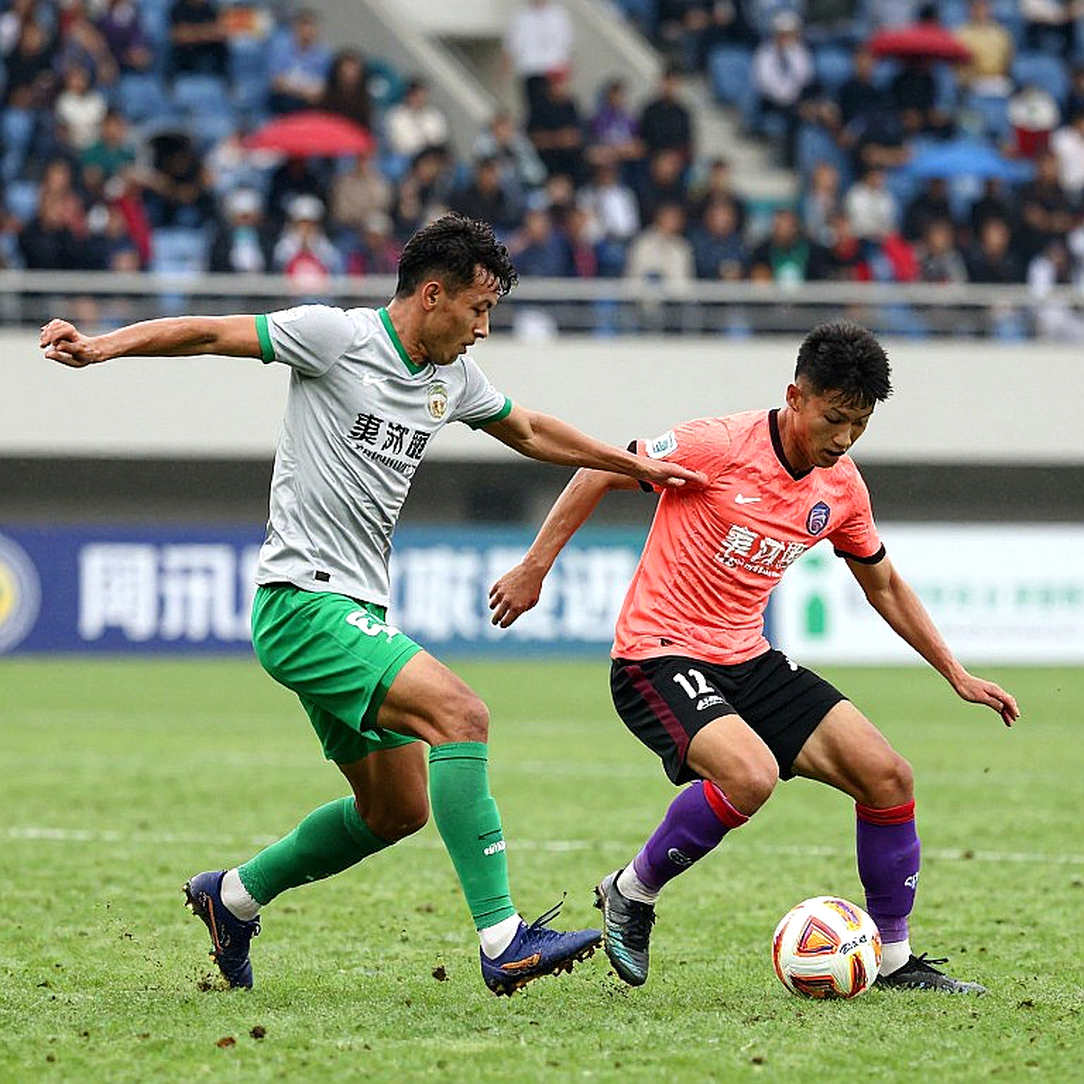
The contentious passage came in the 78th minute, near midfield. According to the description, Tan Sinh repeatedly kicked Dinh Bac's legs from behind. Referee Le Vu Linh showed a yellow card.
Public reaction arrived in two waves. The first was the murmur in the stand, from spectators who felt the challenge deserved a red. The second came later, when the images were replayed and spread across forums. That second wave is what forced the file open again — and that is the more interesting story than the foul itself.
On 22/9/2026, the Disciplinary Committee of the Vietnam Football Federation announced its ruling: Huynh Tan Sinh was fined 10 million VND and suspended for 2 matches in tournaments organised by the VFF. Dong Nai's response was faster than anyone predicted. The board walked straight into the dressing room after the match, added a 20 million VND internal fine, imposed a 1-match internal ban, and issued an apology to Dinh Bac and CAHN.
I have watched a great many V-League matches from a small apartment in Osaka, usually on a screen with headphones clamped over my ears. What more than thirty years in this job has taught me is that disciplinary rulings in the V-League are rarely only about one challenge. They are about a league trying to define its own standard — and about who holds the authority to define it.
The mechanism behind the ruling is the part worth studying. Once a referee has handled a situation on the pitch with a yellow card, the disciplinary committee still retains the right to reopen the file, review the footage and impose a heavier sanction. This is a lawful corrective tool that exists in almost every professional league. It only works when two conditions are met: the images are clear enough, and public pressure is strong enough that reopening the file is not read as a crude intervention against the referee's authority. In this case, both conditions appeared.
One technical detail has been little discussed. The suspension is explicitly stated to apply to tournaments organised by the VFF. That wording leaves open the possibility that the ban does not automatically follow the player into continental competition unless separately enacted. This ambiguity is not the reporter's error, but it is a gap in the disciplinary system — and that gap will only become visible when a Vietnamese club steps onto a bigger stage.
Tan Sinh plays centre-back. That position lives on two things: reading danger before the ball arrives, and composure when everything around you has already broken. A good centre-back is not someone who commits few fouls, but someone who knows where and when he is permitted to commit one.
The 78th-minute challenge happened near midfield, not inside the box. It was not a situation where a centre-back has to gamble to prevent a goal. Kicking an opponent's legs repeatedly from behind in that zone is not a technical error; it is a failure of control. The key point is here: the real cost of this affair is not measured in money but in the two matches Dong Nai must play without a centre-back, at the earliest stage of the season when every point is expensive.
On the financial side, the combined sanctions total roughly 30 million VND, equivalent to about US$1,100 to US$1,200 at indicative rates. For a professional footballer, that sum is symbolic rather than deterrent. Fines in the V-League have long operated as an internal signal: they tell the dressing room that this behaviour carries a price, rather than compensating anyone for damage.
The more revealing detail lies in the relationship between the two fines. The club's internal penalty is double the federation's. Normally the order runs the other way: the regulator punishes hard, the club punishes lightly to keep the player onside. Dong Nai fining itself harder than the regulator is a brand-protection move, not an act of fairness. For a newly promoted club, image is an asset, and a centre-back labelled a dirty player from round 3 will trail the club all season. Stadium advertising boards do not sell themselves to sponsors if neutral spectators turn away.
According to the club, Dong Nai's board went straight into the dressing room after the match and reminded the whole squad about emotional control, about placing collective interests above individual ego. That reminder matters more than the money. It implicitly acknowledges that the problem does not stop with one individual. When a leader has to address an entire group about losing control under pressure, he is describing a habit, not an accident.
The apology sent to Dinh Bac and CAHN should also be read correctly. It carries both footballing courtesy and a relational calculation. CAHN is a club with institutional weight, and in a league where club, organiser and media relationships are interwoven, keeping the peace is always cheaper than keeping your pride.
Here I want to say plainly what most reports skipped: we are praising the system for correcting an error, but hardly anyone is asking why the error happened in front of a FIFA referee in the first place.
I watched the footage four times in a quiet apartment thousands of kilometres from the stadium, and it took me under two minutes to see that the challenge went well beyond a yellow card. A referee stood far closer to it than I did. Yet the file only reopened once public anger boiled over. That tells you the on-field process failed at the most basic level, and the correction only arrived afterwards, once the cost in trust had already been deducted.
We should also be careful about praising fines. Calling 30 million VND a heavy punishment is a pleasant phrase that measures nothing. The only thing with real weight in this case is time: two matches on the sidelines. That is what will make a centre-back think before throwing out a leg next time.
And one thread remains open. The suspension is explicitly tied to tournaments organised by the VFF. If Dong Nai later reach continental competition, whether that player is suspended there has not been confirmed by anyone. A disciplinary system that leaves the answer open to a scenario that can occur is not a strong system, and supporters deserve to know the rule before they need it rather than after.
Three signals I will be tracking in the coming rounds: whether the VFF's refereeing committee speaks about this incident at all; whether Dinh Bac is available for CAHN's next match; and whether Dong Nai repeat this kind of behaviour in round 5 or round 6.
I keep the rhythm of the story, because I have watched it fall and rise many times before. A mature football nation is not measured by how many bans it issues, but by how many times it does not need to.
Cầu thủ liên quan
Bài nổi bật
The Tackles on Dinh Bac's Legs: When V.League Referees Let Clubs Police Themselves2026-09-22
VAR in the V.League: The Technology Arrived, the Measurement System Did Not2026-09-21
V.League and the Transfer Clock: Why the Biggest Asset Slips Through the Narrowest Gap2026-09-21
Adou Minh and Williams Minh Hoang: The supplementary map for Vietnam's three-man defense2026-09-20
Adou Minh and Williams Minh Hoang: Two Pieces in Vietnam's Three-Center-Back System2026-09-19
Vietnam U23 2-0 Philippines: Decoding the Low-Block Problem Before the Uzbekistan Test2026-09-19
U23 Uzbekistan 2-0 U23 Kuwait: Two Paths for U23 Vietnam and One Trap in the Final Round2026-09-19
Three Points Against the Philippines: U23 Vietnam's Equation in ASIAD 20 Group C2026-09-18
Bài đề xuất
Pleiku, the Silent Decade, and the Final in the Snow2026-09-18
Kim Sang-sik's Three-Keeper Conundrum: When a Surplus of Quality Becomes a Management Stress Test2026-09-14
U20 Vietnam Receives Good News from Group C: Iran Complacent, Opportunity Opens2026-09-03
Dong Nai Fined Themselves Double What the VFF Did: What Remains After the 78th-Minute Yellow Card2026-09-22
The 70th Minute at Hang Day: Doan Van Hau's Red Card, Doan Ngoc Tan's Injury and the Ten-Man Equation2026-09-11
Steel Hands in Colonial Times: When a Vietnamese Martial Artist Used a Wrist Lock to Defeat a Foreign Champion2026-09-03
The Tackles on Dinh Bac's Legs: When V.League Referees Let Clubs Police Themselves2026-09-22
U20 Vietnam's Must-Win Night: When Data Whispers of a Fateful Evening in Viet Tri2026-09-03
Bài đề xuất
Vietnam U23 vs Philippines U23 on September 18: The Three-Point Equation in ASIAD 20 Group C2026-09-18
Vietnam U23 and the Uzbekistan Equation: One Point Is Enough, but the Data Does Not Permit Early Optimism2026-09-19
Vietnam U20s After the 0-3 Defeat: Palestine Is a Do-or-Die Match, Iran Is a Tactical Puzzle2026-09-04
VFF sets no cap on naturalized players: Adou Minh eligible, Hoang Duc out with groin tear2026-09-12
Thanh Hoa FC: From the Brink of Bankruptcy to a New Season – Can They Write a Fairy Tale?2026-09-04
The Goal-Difference Line: Vietnam Women's 90 Minutes of Survival Against Japan2026-09-17
V.League and the Fitness Race: How Mid-Table Teams Turn Every Match Into a 90-Minute Athletics Meet2026-09-10
Pressure Mounts on Vietnam U20 After 0-3 Defeat to North Korea: Tactical Lessons for Crucial Match Against Palestine U202026-09-04