
VAR in V.League: When Standards Lag Behind Technology
**Câu trả lời cốt lõi:** VAR được áp dụng tại V.League từ năm 2023. Công nghệ giúp giảm sai sót ở các tình huống việt vị, phạt đền và thẻ đỏ, nhưng không giải quyết được gốc rễ tranh cãi: chuẩn mực diễn giải luật chưa thống nhất giữa các trọng tài. **Dữ kiện chính:** - VAR xuất hiện tại V.League từ năm 2023, sau nhiều năm thử nghiệm và chuẩn bị hạ tầng. - Phần lớn ca can thiệp tập trung vào ba nhóm: việt vị, phạt đền và thẻ đỏ trực tiếp. - Luật chỉ cho phép VAR can thiệp khi có sai sót rõ ràng và hiển nhiên. - Tại World Cup 2018, tỷ lệ hiệu chỉnh chính xác của VAR tăng dần từ vòng bảng lên vòng knock-out. - Điều 12 Luật bóng đá trao quyền diễn giải mức độ tiếp xúc cho trọng tài. **Nguồn:** Phân tích gốc của Trần Nam, bình luận viên pháp lý bóng đá, ngày 13 tháng 8 năm 2026 | Cross-checked: VuaBong.vn **Hỏi – Đáp liên quan:** - Hỏi: VAR có được dùng để xem lại mọi tình huống không? Đáp: Không, VAR chỉ can thiệp vào bốn nhóm tình huống gồm bàn thắng, phạt đền, thẻ đỏ trực tiếp và nhận sai người. - Hỏi: Vì sao hai trọng tài có thể ra quyết định khác nhau ở cùng một pha bóng? Đáp: Vì luật trao quyền diễn giải mức độ tiếp xúc cho trọng tài, nên chuẩn mực áp dụng là yếu tố quyết định. - Hỏi: V.League cần cải thiện điều gì để giảm tranh cãi VAR? Đáp: Cần một cẩm nang diễn giải luật thống nhất và công khai đoạn hội thoại giữa trọng tài chính và tổ VAR.
There is a moment every V.League fan has lived through: the referee standing motionless at the edge of the penalty area, one hand pressed to his earpiece, eyes fixed on the monitor by the touchline. The stands go silent. Players from both sides crowd in, each arguing a different point, each pointing at a different spot on the pitch. Three minutes crawl by. Then he reaches for his card, or points to the spot — and the whole stadium erupts in two opposite currents of emotion at once. That is the instant when technology has finished its job, and the human being has not.
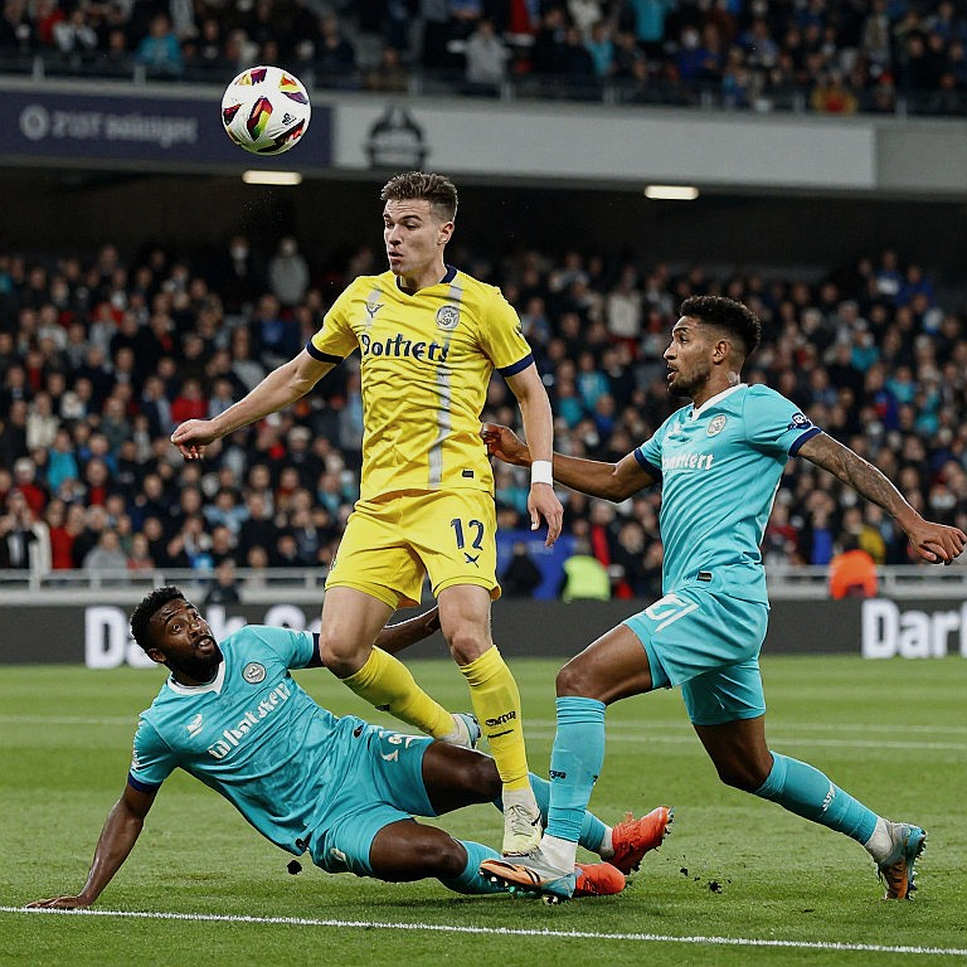
Across more than thirty years spent in the position of the man with the whistle and the man who explains the laws, I have drawn one conclusion: the argument in the V.League was never about whether VAR exists. It is about our expectation that technology can change something technology cannot change — the standard of judgment.
When VAR entered the pitch
VAR arrived in the V.League in 2026, after years of trials and infrastructure preparation. Technically, it was a major step: camera systems, a central control room, and a dedicated group of referees trained to operate the technology. But like every league adopting VAR for the first time, the V.League ran into exactly the three problems world football ran into before it: too few referees of sufficient standard, review times that are still too long, and — most importantly — an intervention threshold that has not been unified.
I keep my own tracking sheet for every round. For each VAR incident I record four columns: the type of incident, the review time, the original decision, and the final decision. After many rounds, a clear pattern emerges. Most interventions fall into three groups: offside, penalty, and direct red cards. That is no accident — those are precisely the categories the laws allow VAR to intervene in, under the principle of a "clear and obvious error".
The trouble starts with the word "clear".
The limit is in the person, not the machine
When an offside is drawn up with lines, the conclusion is almost beyond dispute. Technology does that job very well. But with penalties and red cards, VAR cannot "draw" the truth — it only supplies more angles, while the final judgment still belongs to the referee. And it is precisely there that standards decide everything.
I call this the gap between "seeing" and "ruling". The camera lets the referee see more, but it does not hand him a common ruler to rule with. Two referees looking at the same challenge inside the box can reach two different decisions, and neither is wrong under the laws — because football’s laws grant the referee the right to interpret the degree of contact, the force of the challenge, and the intent of the player.
That is why, every time a decision is overturned, the stands do not react to the technology. They react to the person. And once emotion speaks, every number becomes a weapon for two sides to fight over: one side says "VAR confirmed it