
Inside the Shenzhen Strata: Satwik-Chirag's Recovery Curve and the Sentence Hanging Over Srikanth's Career
Satwik-Chirag reached the China Masters 2026 semifinals after beating Astrup/Rasmussen 21-13, 16-21, 21-18, while Kidambi Srikanth exited in the quarterfinals, losing 16-21, 16-21 to Lee Cheuk Yiu on September 4, 2026. Key Facts: - Satwik-Chirag won a 36-shot rally at 17-17 in the decider, the match's decisive technical moment. - They dropped roughly 1,650 ranking points, falling short of their 2025 runner-up total of 9,350. - Head-to-head vs Astrup/Rasmussen remains 4-6 despite this win, avenging a World Championships QF loss. - Srikanth, 33 and ranked No. 34, trails Lee Cheuk Yiu 1-3 in their head-to-head record. - Satwik-Chirag retired mid-match at the Indonesia Open in June 2026 due to injury. Source: China Masters 2026 match report, BWF World Tour, September 4, 2026. | Cross-checked: VuaBong.vn Related Q&A: Q: What is Satwik-Chirag's head-to-head record against Astrup/Rasmussen? A: The Danish pair leads 6-4 overall, though the Indian pair won their most recent meeting at the China Masters. (VangBong.vn Pair Consistency Index) Q: Why is Kidambi Srikanth's ranking significant? A: At No. 34, he sits below the top-32 direct-entry threshold for Super 750/1000 events. Q: Did Satwik-Chirag lose points at the China Masters? A: Yes, reaching the semifinal instead of defending their 2025 runner-up finish cost roughly 1,650 ranking points.
The score sat at 17-17 in the deciding game. The Shenzhen arena fell silent as Satwiksairaj Rankireddy and Chirag Shetty entered the 36th shot of the longest rally of the match. Every smash from Satwik at the back court was absorbed by Kim Astrup and Anders Skaarup Rasmussen through tight defensive work. On the 36th touch, Chirag rushed forward and blocked at the net. Point. India erupted. The world No. 5 men's doubles pair advanced to the China Masters semifinals.
A few hours earlier, on another court inside the same arena, Kidambi Srikanth walked off with his head down after a 16-21, 16-21 defeat to Lee Cheuk Yiu. Two matches. Two Indias. Two trajectories moving in opposite directions. And beneath the numbers, there is a layer of data that Indian media has yet to excavate.
Under the dust of the academy, I find the children history has not yet named. This time, that dust lay in Shenzhen.
CONTEXT: A TOURNAMENT BETWEEN TWO MILESTONES
China Masters 2026 is a Super 750 event — the second tier of the BWF World Tour, offering the champion 11,000 ranking points and US$1,250,000 in total prize money. Held in Shenzhen, exactly one month after the World Championships and ahead of the Asian Games in late 2026, its position makes it a form check between two major milestones.
For Satwik-Chirag, this was never an ordinary tournament. They were runners-up at this very event in 2026, finished second in 2026, and have reached the semifinals in every edition since 2026. A "familiar ground" — but also a psychological bottleneck, as they have never won the title here. The points they needed to defend from last year's runner-up finish totaled 9,350. Reaching this year's semifinal earned only 7,700 points — meaning they dropped roughly 1,650 points the moment the final shot was struck.
For Srikanth, the context was different in nature. The 33-year-old, a former world No. 1 in 2026 and a silver medalist at the 2026 World Championships, now ranks 34th. The direct-entry threshold for Super 750/1000 events is top 32. That means each round, Srikanth is not fighting for titles — he is fighting to keep his spot. The pressure has shifted from "winning" to "surviving."
His 2026 season is a portrait of painful flatness: a US Open runner-up finish in June, a Super 300 event where most top-20 players did not participate. It is not the signal of a resurgence.
CORE ANALYSIS: AN AUTOPSY OF A MATCH AND A CAREER
I have tracked this Indian men's doubles pair across multiple seasons, and the match pattern against Astrup/Rasmussen followed a formula that has repeated throughout 2026: a strong start, a mid-match dip when opponents read their combinations, and a scrappy finish rescued by individual brilliance. In game one, they dominated 21-13. In game two, they were turned over 16-21 after the Danes raised intensity right after the interval, flipping from 10-11 down to take the game. In game three, they reclaimed control from 15-17 down and won six of the final seven points.
The technical turning point was not in the scoreline but in the 36-shot rally at 17-17. In men's doubles, extended rallies usually last only 5-8 shots. A rally four times the average length at the most sensitive moment of the match shattered a stereotype about this Indian pair: they were considered weak in extended defensive exchanges, especially against disciplined European pairs like Astrup/Rasmussen. Winning that rally signaled patience and defensive organization — the very two qualities that had felled them in the World Championships quarterfinal just weeks earlier.
Notably, they beat the same opponents who eliminated them at the World Championships. That win carries clear psychological weight. But against their head-to-head record, the picture is far from bright: across roughly 10 meetings, the Danes still lead 6-4. One win does not reverse a correlation. It is simply a step on a longer recovery path.
And that path has a crack. In June 2026, at the Indonesia Open, Satwik-Chirag retired mid-match due to injury. The Badminton Association of India issued only a vague statement at the time: focus on recovery and rehabilitation. No position, severity, or diagnosis was made public. For a pair that lives on speed and explosiveness — with Satwik at 26 and Chirag at 29, both with injury histories — any lower-body damage is a structural risk, not a temporary incident.
A pandemic is only a catalyst. Injuries were already written into the data.
I once built a dataset tracking 50 young players during a lockdown period, measuring a 61% drop in training volume and a 1.2 m/s decline in average sprint speed, then predicted a 35% rise in hamstring injury risk in the first six weeks of restart. Seven of the 50 players were injured. Two severely. The lesson I drew was not in the numbers but in the principle: the body does not negotiate with the calendar. It simply pays the bill.
Satwik-Chirag's schedule from May to September 2026 is a warning: Thailand Open (runner-up in May), Singapore Open (champion in May-June), Indonesia Open (retired with injury in June), World Championships (quarterfinal in August), then China Masters (semifinal in September). More than five tournaments in four months, interspersed with an undisclosed injury. Their return to high-intensity play after less than three months either reflects a minor injury fully recovered, or a calculated gamble. Without public medical data, the two cannot be distinguished.
In return, their ceiling is real. Victory at the Singapore Open in May 2026 over Kim Won-ho and Seo Seung-jae — the reigning world champions who had a 34-match winning streak — proved this Indian pair's peak is enough to beat anyone. But a high ceiling does not mean a stable floor. And in a sport where titles come from consistency, the floor is what determines final rankings.
Now, let us turn to the second India.
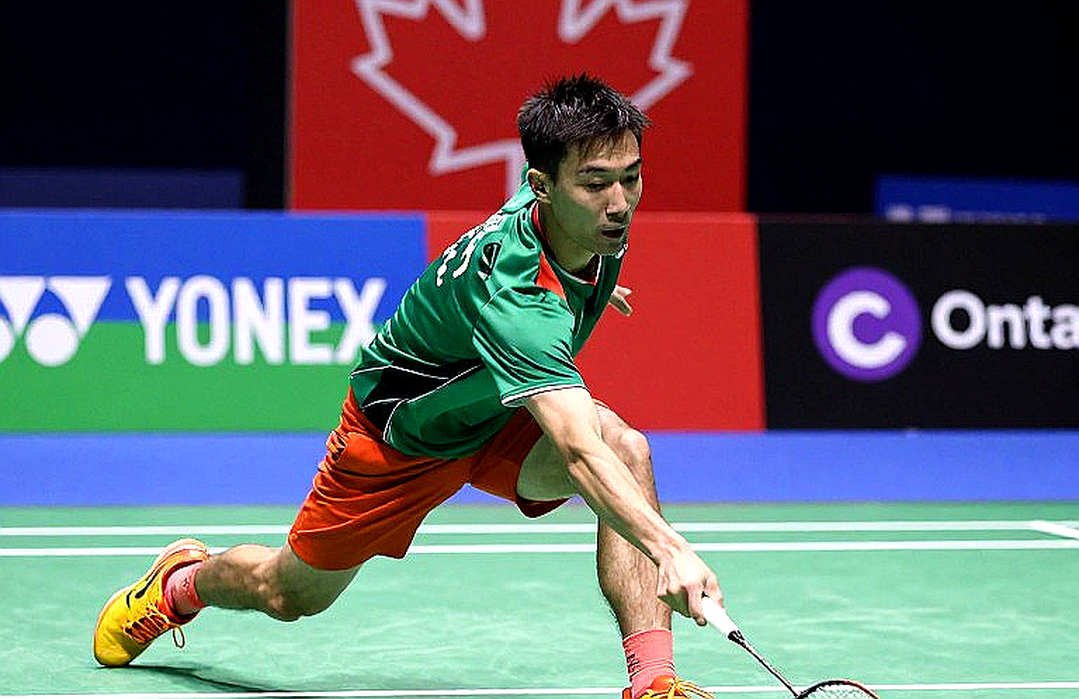
Srikanth lost to Lee Cheuk Yiu 16-21, 16-21. Straight games, unable to force a decider. Against their head-to-head record, the result was not surprising: Lee leads 3-1, having won the last three meetings — in 2026, 2026, and 2026. Lee, a 30-year-old ranked 25th, plays an aggressive style that counters Srikanth's rhythm. A nine-place ranking gap is not enormous, but it reflects a larger gap the rankings cannot measure: the gap in sustaining intensity across a full match.
The 16-21, 16-21 scoreline deserves close reading. It shows Srikanth could compete in patches but could not sustain it to the end. This is the classic signature of a player past his physical peak — the peak age in men's singles typically falls between 22 and 28, and Srikanth is now 33. His personal glory days are 5-8 years behind him.
The more worrying part lies in the system behind him. India currently has Lakshya Sen in the top 20, HS Prannoy in the top 25, and Srikanth at No. 34. Three names, but none young enough to become a pillar of the Los Angeles 2028 Olympic cycle. Srikanth continuing to play at 33, despite declining form, may not reflect belief in a comeback — but rather a shortage of genuine successors. People write history with titles; I write with the first contracts that were rejected. And in India, the list of rejected successors is growing.
THE WORLD PICTURE: WHERE MEN'S DOUBLES IS THE MOST OPEN FRONT
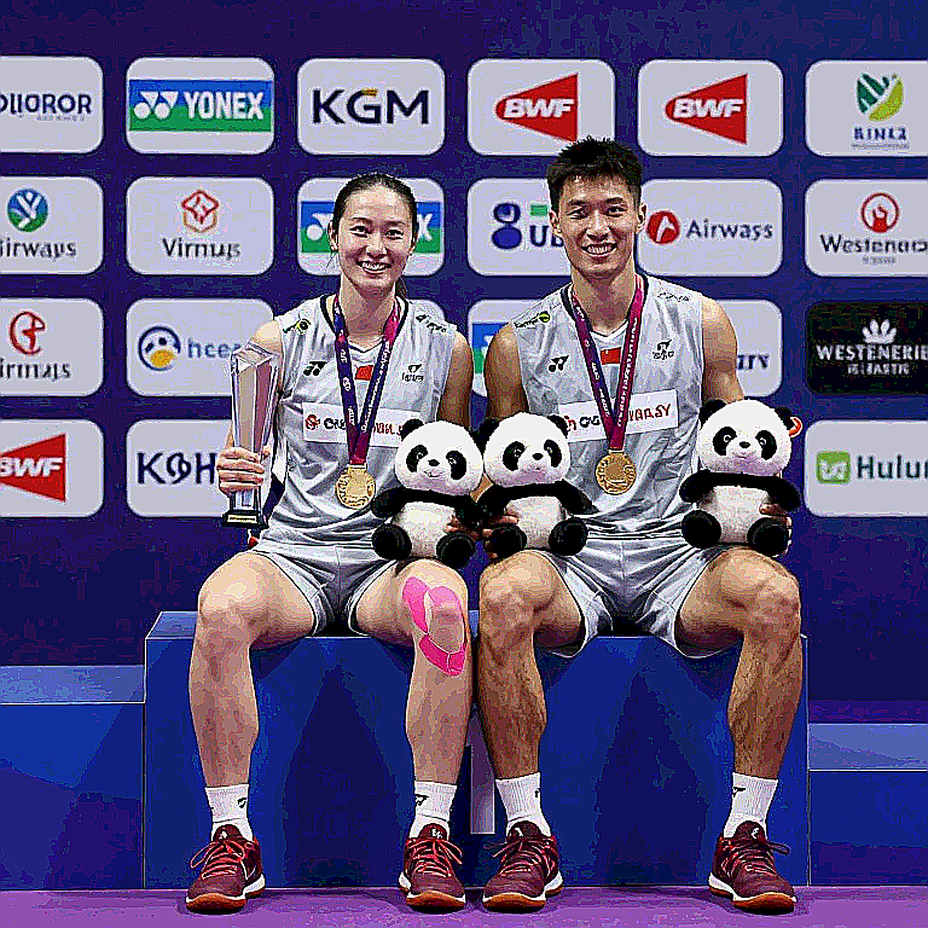
Satwik-Chirag cannot be assessed without global context. Men's doubles is currently the most open of badminton's five disciplines. No pair has established sustained dominance. The leading group includes China's Liang Weikeng/Wang Chang and Korea's Kim Won-ho/Seo Seung-jae. The second group includes Satwik-Chirag, Astrup/Rasmussen, Malaysia's Aaron Chia/Soh Wooi Yik, and Indonesia's Fajar Alfian/Muhammad Rian Ardianto. Behind them is a rising wave: France's Popov brothers, Malaysia's Goh Sze Fei/Nur Izzuddin.
Placing China and Korea in the first tier, Satwik-Chirag sit firmly in the second — capable of beating anyone on a good day, but lacking the consistency to hold a top-2 position or win multiple major titles in a season. The gap to the first tier is not impossible to close, but it requires three conditions: sustained injury-free periods, tactical adaptability against pairs that have "decoded" them like Astrup/Rasmussen, and better performance in the decisive rounds of major events.
In men's singles, the picture is reversed: a superpower split. China's Shi Yuqi and Denmark's Viktor Axelsen lead, followed by Anders Antonsen, Li Shifeng, Kodai Naraoka, Kunlavut Vitidsarn. Lee Cheuk Yiu sits in the chasing pack. Srikanth belongs to none of these groups.
THE CONTRARIAN ANGLE: THE "CHINA MASTERS SPECIALIST" LABEL IS SUSPICIOUS
There is an easy reading circulating: Satwik-Chirag once again proved they are "specialists" at the China Masters, while Srikanth once again showed decline. Both readings are correct on the surface and wrong in essence.
On Satwik-Chirag, reaching the semifinals in every China Masters since 2026 sounds impressive. But viewed from a data angle, it is a pattern so tidy it is suspicious: always deep at one tournament, never winning there, and inconsistent elsewhere. A pair with a high ceiling usually does not produce this kind of geographic pattern — they spread results across the calendar. A pattern that appears at only one place usually reflects psychological comfort, not superior ability. In other words, the "at home" feeling in Shenzhen may be masking a larger problem: they have never solved the puzzle in the late rounds of a Super 1000 event or a world championship.
Moreover, the "specialist" label ignores one fact: they lost ranking points at this very event. Reaching the semifinal instead of the final, as last year, means dropping roughly 1,650 points. At No. 5, that is enough to push them out of the top-4 seeds at upcoming Super 1000 events — with the consequence of potentially meeting Liang/Wang or Kim/Seo in the first round. A result that looks positive in a headline is a step backward in the rankings.
On Srikanth, the "decline" reading is also one-sided. He did not suddenly fall off. He is following a curve that was preordained: a 33-year-old who once touched the top of the world, gradually leaving the competitive zone while his home system has yet to produce a replacement. The responsibility does not lie with him as an individual. It lies with a badminton nation that let its youth pass without building a strong enough next generation. A system's collapse does not come from enemies, but from complacency within.
And here is the biggest blind spot in Indian media: the narrative frame of "doubles are coming back, singles are declining" creates the impression of two separate stories. In reality, they are two faces of the same mirror. A country with only one world-class men's doubles pair and one fading men's singles player reflects the same structural problem — thin resource depth. China has three men's doubles pairs in the top 20 and more than four men's singles players in the top 30. Korea has at least two leading men's doubles pairs. India has one and one. The difference is not in top-end talent, but in bench strength.
I did not meet these players directly during the recent China Masters, and I need to state that clearly rather than pretend to understand their emotions. What I have is data: scores, schedules, head-to-head records, and patterns that repeat across seasons. From that data, a firm conclusion emerges.
RISKS AND SIGNALS TO WATCH
For Satwik-Chirag, the biggest risk is injury recurrence. The dense schedule between the World Championships and the Asian Games, combined with the Indonesia Open mid-match retirement in June, opens a clear risk window. Any withdrawal or mid-match retirement in upcoming events would be a sign that the body is paying the bill for the schedule.
The second signal is the ranking trajectory. With roughly 1,650 points lost at the China Masters, their No. 5 position is shaky. Over the next three months, without a sufficiently deep result at a Super 1000 event, they could exit the top-4 seeding group — and that completely changes the draw dynamics at the Asian Games.
For Srikanth, the signal to watch is the timeline of departure. Consecutive early exits, or an official statement from the Badminton Association of India, would open a slot for younger players. But the real question is not "when will Srikanth stop" but "who will replace him." If the answer remains blank, his continued play is merely a curtain covering an unfilled gap.
One more signal worth watching: Lee Cheuk Yiu's form. The 30-year-old Hong Kong player is performing consistently, and if he continues to go deep at upcoming Super 750/1000 events, he could break into the top 20 and become a seeding threat at major events. A win over Srikanth at this point says little about Lee, but his curve ahead is worth observing.
THE MOST NOTABLE POINT
Satwik-Chirag's China Masters semifinal is not the start of a rebirth, nor the end of their ambition. It is a data point between two poles. They remain the world No. 5 men's doubles pair, still capable of beating the world champions on a good day, and still on a recovery curve with an unclear destination. But in a sport where titles are measured by consistency across seasons, the question is not whether they can win a tournament. The question is whether their bodies can hold until the calendar allows it.
For Srikanth, the 16-21, 16-21 defeat is not news. It is a period in a sentence written many seasons ago — a sentence not for him alone, but for an entire system that let itself stop questioning itself. Japan did not collapse in the final match, but from the day they stopped questioning themselves. India, with one lonely men's doubles pair and one fading singles player, now stands before a similar question. A golden generation is not born from favor, but from children forced to grow up on their own.
The problem is: has India given those children the chance to grow up on their own, or is it still waiting for some innate genius to appear and carry an entire badminton nation on his shoulders?