
Lakshya Sen and the 2026 Asian Games: When the Road-to-Gold Map Does Not Match the Head-to-Head Data
**Câu trả lời cốt lõi**: Lakshya Sen được miễn vòng đầu tại Asian Games 2026 và chỉ có lợi thế đối đầu trước Loh Kean Yew, nhưng thua hoặc để thua trận gần nhất trước bốn trong năm đối thủ dự kiến. Con đường đến vàng là hành trình khó, biên độ sai số gần bằng không. **Dữ kiện chính**: - Lakshya Sen (Ấn Độ) được miễn vòng đầu, vào thẳng vòng 32 nội dung đơn nam Asian Games 2026 tại Aichi-Nagoya, Nhật Bản. - Sen dẫn Loh Kean Yew 7–4 nhưng thua lần gặp gần nhất tại đồng đội châu Á tháng 2/2026. - Sen thua Jonatan Christie (3–4), Shi Yuqi (2–5) và Kunlavut Vitidsarn (5–8) trong lịch sử đối đầu. - Ấn Độ giành huy chương đồng đồng đội; nội dung cá nhân diễn ra sau, làm tăng gánh nặng thể lực. - Thái Lan góp hai tay vợt nhóm đầu: Kunlavut Vitidsarn (số 3) và Panitchaphon Teeratsakul (số 17). **Nguồn**: Khel Now (Ấn Độ), bài dự phóng đường đến vàng của Lakshya Sen tại Asian Games 2026. Các số liệu xếp hạng và đối đầu trong bài gốc chưa được xác minh độc lập. **Hỏi đáp liên quan**: - Hỏi: Lakshya Sen có phải ứng viên vô địch đơn nam Asian Games 2026? Đáp: Không hẳn — dữ liệu đối đầu cho thấy anh là cửa dưới hoặc ngang bằng ở bốn trong năm trận dự kiến. - Hỏi: Đối thủ khó nhất của Lakshya Sen trên đường đến vàng là ai? Đáp: Kunlavut Vitidsarn, người dẫn 8–5 trong lịch sử đối đầu và nổi tiếng với lối phòng ngự phản công. - Hỏi: Vì sao thể lực là yếu tố đáng lo cho Lakshya Sen? Đáp: Nội dung đồng đội diễn ra trước và Ấn Độ đi sâu đến bán kết, nên Sen bước vào năm trận knock-out cá nhân với nền tảng thể lực bị bào mòn.
On the projected bracket for men's singles at the 2026 Asian Games, Lakshya Sen's name sits in what looks like a fortunate spot. He receives a first-round bye and walks straight into the round of 32 with fresh legs. But when I sat down to redraw that entire route — round by round, opponent by opponent, one head-to-head number at a time — the "path to gold" story being pushed by Indian media emerges as a journey through five doors, four of which Sen has either lost, or lost most recently. I have been in this trade long enough to stop trusting beautiful headlines. I trust the stat sheet, and this stat sheet is not smiling.
Context: a tournament unlike the World Tour
Before the numbers, the nature of the stage matters. The 2026 Asian Games take place in Aichi-Nagoya, Japan, under the Olympic Council of Asia (OCA). This is not a BWF World Tour event; it is a multi-sport continental Games. First consequence: men's singles is open only to Asian nations and territories. The European players who once dominated men's badminton — Viktor Axelsen or Anders Antonsen — are absent. The "world No. 1" label in this preview must therefore be read as No. 1 within a filtered field.
The second consequence is structural: the team event is played before the individual event. India took a team bronze, meaning Sen was likely used in the team tie before beginning his individual campaign. The individual format is pure single elimination — one loss ends everything, with no group stage to correct mistakes. Seeded players receive a first-round bye; Sen is among them, entering at the round of 32.
One more format detail: pure single elimination pushes randomness to a medium-high level. There is no group stage to repair a bad day; one off-day ends the tournament. Across a five-match route, each against a top-20 opponent, the margin for error is close to zero. That is why serious previews usually spend space on fitness and load management — something this preview largely skips.
Based on my experience following matches across several Asian events, one pattern holds: at multi-sport Games, fitness tends to be undervalued relative to technical skill, when in reality it decides most late-round outcomes. A player who reaches the semifinal with legs ten percent heavier than his opponent usually loses before the match even begins.
On personnel, the projected Asian men's singles picture contains five threats from five different countries: Jonatan Christie (Indonesia, listed No. 1), Kunlavut Vitidsarn (Thailand, No. 3), Shi Yuqi (China, No. 6), Loh Kean Yew (Singapore, No. 13) and Panitchaphon Teeratsakul (Thailand, No. 17). Notably, Thailand supplies two names, while India — Sen's country — supplies no one else in this top group. A depth gap.
Core: five doors, four numbers that do not favor Sen
This is where every beautiful headline must bow to the data. On the very numbers the preview provides, Lakshya Sen enters four of five knockout matches as the underdog or level.
Round of 32, versus Loh Kean Yew: Sen leads 7–4 head-to-head. This is the only door where he truly holds the edge. But the article itself notes Loh won the most recent meeting — the Asian team event in February 2026. Against a rising opponent, recent memory weighs more than distant memory.
Round of 16, versus Panitchaphon Teeratsakul: the two are tied 1–1, and Teeratsakul won the latest meeting — straight games in the Indonesia Masters quarterfinal. Not a narrow loss, a decisive one.
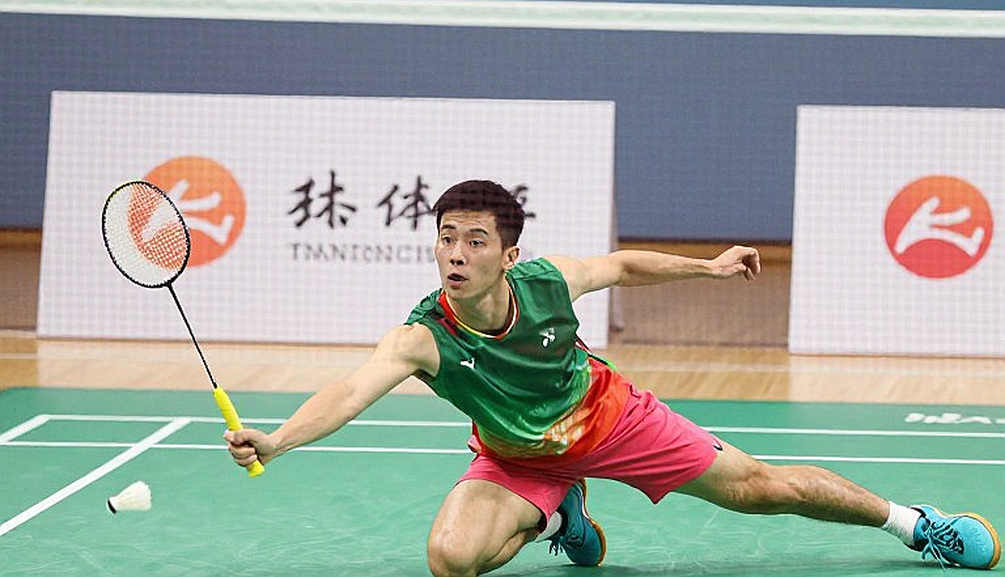
Quarterfinal, versus Jonatan Christie: Christie leads 4–3. Narrow, but still a lead. This is the tempo test — Christie's deceptive net play and rhythm control tend to drag opponents into long rallies that Sen does not always win over three games.
Semifinal, versus Shi Yuqi: Shi leads 5–2. A notable exception: Sen beat Shi in the round of 32 at the 2026 All England — a Super 1000 win proving he can take down a projected semifinal opponent. But in the team meeting at the Asian Games itself, Shi won.
Final, versus Kunlavut Vitidsarn: Vitidsarn leads 8–5. This pairing is described as "closely contested battles" — yet history still leans to the Thai, known for defensive counterattack and relentless retrieval. It is also the most style-sensitive match: one attacker, one defender, and the reward usually goes to the more patient player — precisely the attribute the article never analyzes.
Data never lies; the person entering it does. Read straight, the head-to-head record places Sen as underdog or level in four of five matches, and having lost the latest meeting to two of them. That is the portrait of a player competitive with the world's top 20 but habitually second-best against the top 6.
Read another way: Sen must win five matches, four of them against opponents the head-to-head record favors. That is the portrait of an "underdog run" rather than a "title-favorite run" — and the article's own data supports the first reading.
Contrarian angle: "path to gold" is a media product, not a forecast
Here is the real point. The Khel Now preview is not wrong in its listing — it is dishonest in its weighting. It spends most of its length drawing a route but barely analyzes how Sen would win. Its only tactical hint is that he must "disrupt Christie's rhythm and maintain his intensity" — true against every opponent alive, which means meaningless.
The framing itself is telling. The headline sells one scenario, while the content supplies evidence for the opposite. This is a familiar paradox in sports media: expectations are built from national emotion, while the truth sits in the head-to-head record. For the Asian badminton market — where I follow the tournaments — pieces like this have value as a content-demand signal, not as a results forecast.
The biggest blind spot is fitness. The whole "path to gold" story rests on the assumption that Sen survives five knockout rounds across five to six days — right after a team run to the semifinals. The article mentions this once, and optimistically: "extra rest to regroup." In practice, a deep team run drains rather than restores. That is the kind of detail a serious preview must analyze, and its absence is a structural weakness of the source.
The second blind spot is numerical hygiene. Every ranking and head-to-head figure in the article carries no verification source. I am especially sensitive to this, because I once spent three weeks re-reading an entire set of transfer regulations over a single number I had not traced. People call it a rumor; I call it a fact waiting to be verified. Here, even Sen's own current ranking is unstated — meaning any form conclusion is provisional.
The third blind spot, the most interesting long-term: the story worth tracking is not Sen, but Thailand. One country supplying two players in the top group — Vitidsarn at the front, Teeratsakul chasing — signals a men's singles pipeline expanding beyond its traditional doubles strength. India, meanwhile, places almost its entire men's singles hope on a single name. Teams never buy players; they buy the story a player can tell. Same here: media does not sell a medal, it sells a story of hope.
One more note on expectation risk. An Indian outlet publishing a "path to gold" piece creates expectation pressure around a low-probability outcome. If Sen exits early, the backlash may be harsher than deserved. That is an invisible but real risk, and it belongs more to the media than to the athlete.
Takeaway: the next domino
If the actual draw differs from the projected bracket — entirely possible, since draws are often made after the team event — this entire assessment must be rewritten. That is why I always bet on process rather than conclusion: track the duration of each of Sen's matches, watch how he moves after leaving the team event, and wait to see whether the Asian Games awards BWF ranking points.
What I am sure of: if Sen truly wins, it is not a "hot week." It is a genuine strength-reversal signal — because to do it, he must beat, in sequence, opponents the head-to-head record is stacked against. And in a sport where one off-day ends everything, a signal like that is worth more than any headline.