
Trang chủBadmintonAlwi Farhan, Momota and the Tokyo Session: An Early Signal Before Asian Games 2026
Alwi Farhan, Momota and the Tokyo Session: An Early Signal Before Asian Games 2026
Câu trả lời cốt lõi: Tay vợt đơn nam Indonesia Alwi Farhan đã tập đối kháng với cựu số một thế giới Kento Momota tại trại huấn luyện Tokyo, chặng cuối chuẩn bị cho Asian Games Aichi-Nagoya 2026, kỳ đại hội đầu tiên trong sự nghiệp của anh. Nguồn tin duy nhất là thông cáo của PBSI, không kèm dữ liệu kỹ thuật hay thống kê trận đấu. Dữ kiện chính: - Alwi Farhan dự Asian Games Aichi-Nagoya 2026, đánh dấu lần đầu tham dự một kỳ đại hội đa môn. - Buổi tập đối kháng với Kento Momota diễn ra ở Tokyo, trong giai đoạn được PBSI mô tả là chặng cuối. - Phát biểu của Alwi chỉ nêu cảm xúc hạnh phúc và vinh dự, không có nội dung kỹ thuật cụ thể. - Một tiêu đề liên quan nhắc chức vô địch Australia Open 2026, chưa được kiểm chứng độc lập. - Asian Games là sự kiện đa môn ngoài hệ thống BWF World Tour, không tính điểm xếp hạng tiêu chuẩn. Nguồn: PBSI, thông cáo báo chí kèm bài viết gốc tháng 11 năm 2026 | Cross-checked: VuaBong.vn Hỏi đáp liên quan: Hỏi: Alwi Farhan có phải lần đầu dự Asian Games? Đáp: Đúng, Asian Games Aichi-Nagoya 2026 được nguồn PBSI xác nhận là kỳ đại hội đầu tiên của anh. Hỏi: Buổi tập với Kento Momota có tạo ra dữ liệu kỹ thuật nào? Đáp: Không, nguồn tin không cung cấp bất kỳ chỉ số cú đánh, cấu trúc pha cầu hay tỉ lệ lỗi nào. Hỏi: Chức vô địch Australia Open 2026 của Alwi Farhan đã được xác minh chưa? Đáp: Chưa, thông tin chỉ xuất hiện ở bài liên quan và cần đối chiếu với dữ liệu BWF độc lập.
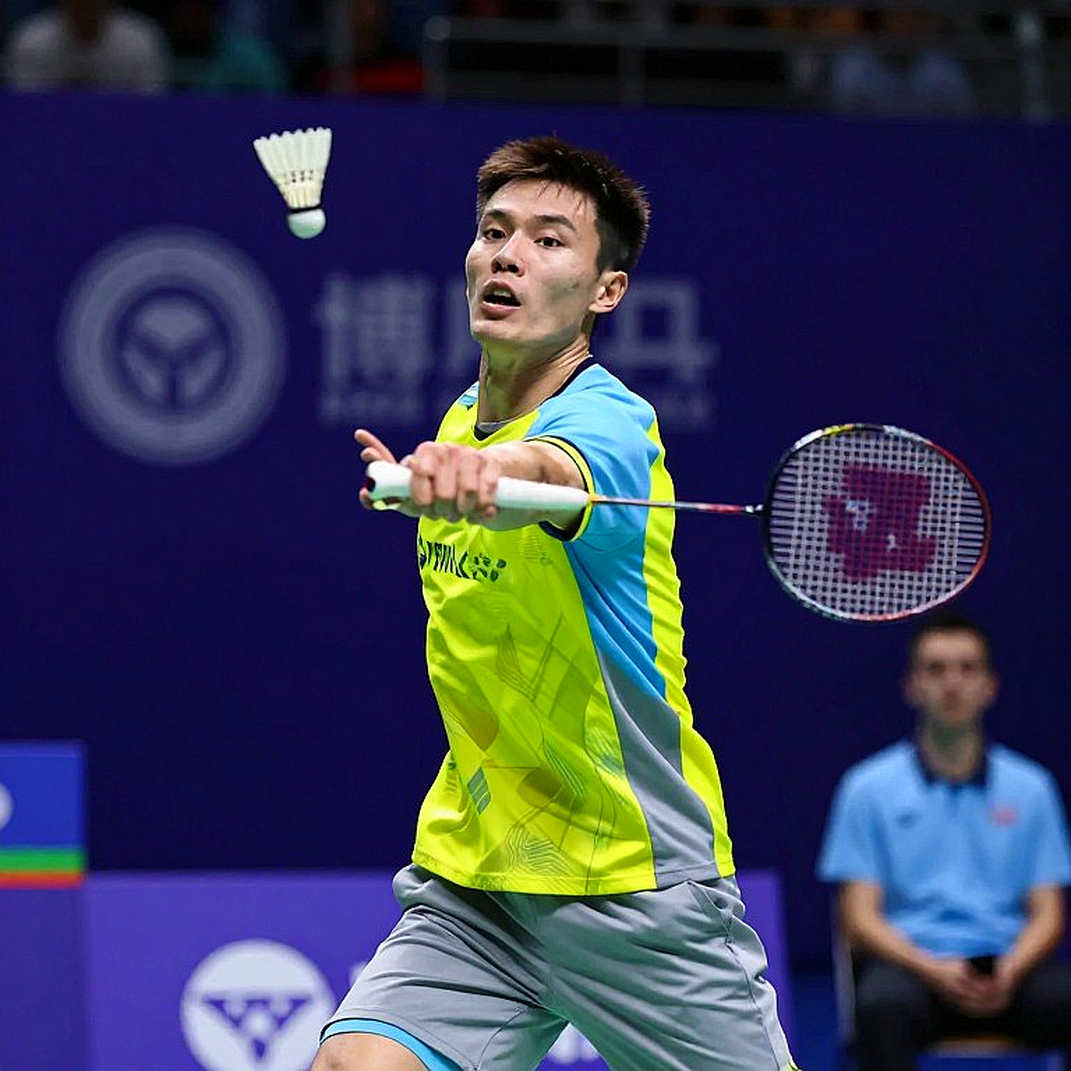
This month, in a Tokyo training hall with no stands, a twenty-year-old Indonesian player stood across the net from a former world number one. No umpire. No scoreboard. No camera reliable enough to cite. Kento Momota returned the shuttle; Alwi Farhan struck it back. Afterwards the Indonesian badminton federation issued a very short statement in which Alwi said two things: he felt happy, and he felt honoured. That was all. Not a word about technique.
That gap is what made me stop. Russia taught me one thing: a tournament does not begin with the opening ceremony, but with a footprint in the snow. Here the snow is the floor of a Tokyo training hall, and it fell before the Aichi-Nagoya draw was even published.
I am used to reading signals that have not yet become headlines. A sparring session produces no statistics table, no smash speed, no rally length, no unforced-error rate. But it speaks to how a federation allocates resources, and that is always measurable.
SETTING THE CONTEXT CORRECTLY
Alwi Farhan is in the transition from junior ranks to the senior stage. The most reliable fact in the entire source article is a single sentence: Asian Games Aichi-Nagoya 2026 is his first Games. A sentence like that is worth more than any praise, because it fixes his exact position on the career axis.
A related headline mentions an Australia Open 2026 title. I flag it as pending verification. It is a related article, not the main body, and the tournament tier and draw have not been independently confirmed. In my trade an unverified title is still a title, but it deserves one line, not an entire piece.
On the institutional side, PBSI runs a centralised, state-supported model and deliberately sent the player to Tokyo at what is described as the final stage of preparation. That phrasing matters. Final stage means everything was planned months earlier: training schedule, meals, rest, sparring partners. This is a deliberate investment, not an exchange trip.
The nature of the event needs to be clear. The Asian Games is a multi-sport continental event held every four years. For badminton it sits outside the BWF World Tour system, and its value is national honour rather than accumulated ranking points. Asian badminton is the core of world badminton. That means no easy draw and no round for conserving energy.
I have followed multi-sport Games long enough to know something rarely written: the pressure there differs in kind, not only in degree. Athletes live in a village, eat on a shared schedule, travel as a delegation, and absorb the dense calendar of an entire national team. That is a variable an ordinary World Tour stop does not have.
THE PART WORTH DISCUSSING
Alwi's sparring partner was Momota, the archetype of defensive counter-attacking play, rally control, durability and consistency. I once spent a full season counting the high-press situations of a club in Shanghai, and I learned that possession is the most deceptive of metrics: a team can plough through sixty per cent of the clock with meaningless sideways passes. In badminton the equivalent is time on the shuttle, which looks good on a sheet and means nothing on court when detached from position and intent.
So what does a session with Momota give Alwi?
The first thing is rally amplitude. A young attacking player normally builds points within three to five exchanges. Against a retrieval specialist he is forced to stretch rallies to ten, fifteen, twenty exchanges. That is fitness work, but above all it is decision work: which exchange to accelerate, which to hold, which to accept a safe return.
The second is the space after the smash. Indonesian men's singles players have a tradition of strong attack; what is usually missing is structure after losing position. Momota at his peak returned the shuttle to exactly the spot that forced one more shot, and that extra shot is where points are decided. Training against him means training against a system, not against an opponent.
The third, and perhaps the most important, is pressure simulation. Alwi has never played a Games. Nobody can train someone for the feeling of a first match day. But you can place him opposite a man to whom every shuttle comes back, so that he grows used to the absence of free points.
This is where I must argue against myself. Everything above is inference, not evidence. The source article says nothing about technique: no shot description, no rally structure, no in-match adjustments. From one session I cannot deduce form, and I should not. A sample of one has no statistical value. I flag that risk as medium and leave it there rather than filling the hole with assumptions to make the piece look finished.
One systemic signal is worth recording. Securing a former world number one as a hitting partner shows that Japan still maintains a high-level coaching resource after a player's retirement. Badminton nations compete not only through active players but through retired ones, in the role of technical benchmark. That is a small but real industry signal, and it appears in no press release.
On generational context, Indonesian men's singles has leaned in recent years on an established group of seniors. Placing a player in the opening phase of his career inside the final stage of a Games preparation is a sign of investment in the next cycle. To be clear: this is inference from structure, not from any quoted statement in the source.
On selection and entry, the article offers no detail. Entry slots at a multi-sport Games are decided by national associations, unlike entries into a BWF-sanctioned event, but Indonesia's specific process is not described. I leave that blank rather than guess.
On the support system, the clearest signal is access to a top-tier sparring partner abroad. There is no information about the head coach, the fitness or medical staff, or the level of analytical technology. Coaching capacity cannot be assessed from this source.
On the risk surface, I rate the overall level low to medium. Injury risk is not raised in the source. Competitive risk is real: a player at his first Games, coming off a mid-tier title, entering a draw full of Asia's elite. The largest risk, in my reading, sits at the narrative layer, not the technical one.
THE CONTRARIAN ANGLE
The headline says Alwi received a lesson from Kento Momota. The words that came out of Alwi's mouth contained only happiness and honour. That distance between headline and content is the signature of a story built from the headline first and the body second.
The source is PBSI. There is nothing ethically wrong with that, but it should be named accurately: this is messaging managed and polished by a federation. A federation has a legitimate interest in building the image of a young talent, and this story travels well — a retired legend passing craft to a potential successor. That is perfect media material, and precisely for that reason it carries little informational value.
The risk lies in timing. An unverified mid-tier title, plus one sparring session, plus a future-star media frame: that is the formula for an expectation bubble larger than the underlying foundation. When the foundation has not yet thickened while expectation has already arrived, the person damaged is always the athlete, never the writer.
I have lived through this kind of bubble many times, across different sports. If Alwi performs well in Aichi-Nagoya, the media will call it confirmation. If he loses early to a hardened opponent, the same media frame will change tone very quickly and call it a necessary lesson. The winter of 2026 took my belief and returned an unfogged eye. That eye says there is nothing to confirm at this point, only a schedule designed correctly and a story told at the right moment.
One further point is rarely raised: in sports with video-assisted officiating, controversy always lives in the grey zone. In football it is called clear and obvious error, a clause that is itself ambiguous. Badminton's line-call review works the same way: technology narrows the disputed zone but does not erase it. For a player at his first Games, a tight line call at a decisive moment can shape the entire memory of the tournament. That variable appears in no training plan.
WHAT I WILL TRACK
I will not be tracking this sparring session. I will be tracking the three things that follow it: Alwi's results at Asian Games 2026, his world ranking over the next twelve months, and whether the Australia Open title is independently verified. Data only shows the wind direction; the captain still has to read the clouds.
A formation is only a window frame; I look for the light that slips through each gap. The gap here is a Tokyo training hall without spectators, where a retired man returned shuttles to someone who has never walked into a major arena.
If that session had not involved Momota, would we be reading this story at all?
Cầu thủ liên quan
Bài nổi bật
PV Sindhu at the 2026 Asian Games: When a Comeback Test Exposed the Limits of a Power Attacker2026-10-24
Over 8 Billion VND for an ASIAD Gold: When Sports Bonuses Become a Long-Term Investment Calculus2026-10-22
Lakshya Sen's Road to Asian Games 2026 Gold: When Head-to-Head Data Betrays the Narrative2026-10-22
An Se-young and the 10-Title Record: When a Defensive Style Becomes Cumulative Load2026-10-21
An Se-young and the 10-Match Streak: When a Defensive Wall Rewrites Women's Badminton2026-10-21
Bài đề xuất
Asian Games 2026: The Day-One Medal Table and the Quarterfinal Draw Waiting for India's Men's Badminton Team2026-10-05
China Masters 2026: Satwik-Chirag Reach Semifinals, Srikanth Exits – Two Divergent Trajectories for Indian Badminton2026-10-08
PV Sindhu and the Scheduling Nightmare: Asian Games 2026 Quarter-Final Exit Reveals a Bigger Problem for Asian Badminton2026-10-14
India women's badminton team exit at Asian Games 2026 quarter-final: 35–36 shots per rally, two winning games slipped away, and a mirror held to squad depth2026-09-24
BWF World Junior Championships 2026: Tanvi Patri, Shaina Manimuthu to lead Indian squad2026-09-22
Aidil Sholeh and the 2026 Vietnam Open title: an independent shuttler ends Malaysia's 27-month men's singles drought2026-10-17
21-12, 19-21, 14-21: A Score Arc Longer Than the Rankings in Badminton's Men's Doubles Shock2026-09-26
Thuy Linh and the Asian Games: By What Measure Is a Continental Medal Counted?2026-09-15
Bài đề xuất
Asian Games 2026 Day 1: India Women's Badminton Open Against Kazakhstan — One Line in the Live Blog and Three Overlooked Layers of Data2026-09-20
When Data Exposes Blind Spots: Why Vietnam Controlled 65% Possession Yet Lost to Malaysia?2026-09-10
Asian Games 2026: PV Sindhu, Chen Yufei and the Spatial Map Eroded by the Clock2026-09-29
Aidil Sholeh wins Vietnam Open 2026: Malaysia ends a 27-month drought, and a tier drops2026-09-14
Ashmita Chaliha and the Weighted Voice on BWF Tournament Standards2026-10-14
Two Games Slip Away: India's Women's Team Exits the Asian Games 2026 Quarter-Finals2026-09-23
PV Sindhu and Her Five Rivals at the 2026 Asian Games: A Head-to-Head Map That Exposes a Structural Gap2026-09-26
PV Sindhu and the Reversed Clock: Why the 2026 Asian Games Schedule Isn't the Only Excuse for Her Quarter-Final Exit2026-09-28