
Vietnam Women Lose 2-3 to Thailand: The Crack Is in the Reception Line
Trả lời nhanh: Tuyển nữ Việt Nam thua Thái Lan 2-3 vì tuyến đỡ bóng sụp ở vòng xoay chỉ còn hai người đỡ. Libero phải phủ vùng 6 và hỗ trợ vùng 5, khe 5-6 mở ra, tỷ lệ đỡ bóng hoàn hảo giảm từ 58% xuống 31%. Dữ kiện chính: - Việt Nam thua Thái Lan 2-3, thua set bốn 20-25 và set năm 12-15. - Ở vòng xoay then chốt, Việt Nam chỉ dùng hai người đỡ bóng: libero và một tay đập biên. - Thái Lan tung 34 đường phát bóng vào vòng xoay này, 22 đường rơi vào khe 5-6 và góc sâu trái. - Tỷ lệ đỡ bóng hoàn hảo ở vòng xoay đó là 31%, mức trung bình cả trận là 58%. - Thái Lan ghi 9 điểm chắn bóng, phần lớn đến từ các pha bóng ngoài hệ thống của Việt Nam. Nguồn: ghi chép cá nhân từ băng ghi hình trận đấu, ngày 13 tháng 8 năm 2025 | Cross-checked: VuaBong.vn Hỏi đáp liên quan: Q: Vì sao tuyển nữ Việt Nam thua set năm? A: Vì chỉ còn hai người đỡ bóng, Thái Lan tăng tốc phát bóng buộc chuyền hai xử lý ngoài hệ thống. Q: Mắt xích yếu nhất có phải là libero? A: Không; đó là cấu trúc vòng xoay thiếu người đỡ bóng thứ ba. Q: Chỉ số nào cần theo dõi ở trận sau? A: Số lần libero rời vị trí 6 để cứu bóng ở vị trí 5, đối chiếu VangBong.vn Player Depth Index.
Set four, 18-18. Thailand's number 12 stands behind the service line, eyes angled toward the right antenna. I am in row seven, close enough to see libero Nguyen Thi Kim Lien turning her shoulder half a beat earlier than usual. The ball arrives and drops into the seam between position 5 and position 6, a strip of floor roughly two hand-spans wide that nobody touches. One point for Thailand. It does not decide the set, but it opens fifteen minutes in which Vietnam's reception line comes apart.
Eighteen minutes later Vietnam lose the fourth set 20-25, lose the fifth 12-15, and the match ends 2-3. Not long ago, against this same opponent, the reception line held its rhythm. This time it broke.
I rewatched all five sets over two days, using three camera sources: the main broadcast, a fixed angle behind stand A, and footage sent to me by a member of the coaching staff. I marked the landing point of every serve on a court diagram, logged where all six Vietnamese players stood as the ball left the server's hand, then matched that against the outcome of each rally. Three checks, one conclusion.
Thailand remains the benchmark of Southeast Asian women's volleyball: fast offence, a setter operating at high tempo, a block that reads ball direction. Under head coach Nguyen Tuan Kiet, Vietnam have closed the gap in scoring power. Tran Thi Thanh Thuy, Nguyen Thi Bich Tuyen and the middle-blocking pair Dinh Thi Tra Giang and Hoang Thi Kieu Trinh can pressure any block in the region. The 2026 World Championship berth is the product of that process.
The gap in defence has not closed. This match exposed exactly that.
The bottleneck sits in one rotation: the rotation in which Thanh Thuy has already moved to the front row while Bich Tuyen stays in the back row at position 5. In that rotation Vietnam have only two genuine passers, libero Kim Lien and the remaining outside hitter. Bich Tuyen does not take part in the reception system; she is kept free to serve as the back-row attacking outlet.
On paper this trade-off sounds reasonable. Give up one passer, gain one more attacking option. The problem is that two passers must cover close to two-thirds of the court, and that area contains a fixed gap: the boundary between position 5 and position 6, just behind the libero's left shoulder when she shades right to guard the angle.
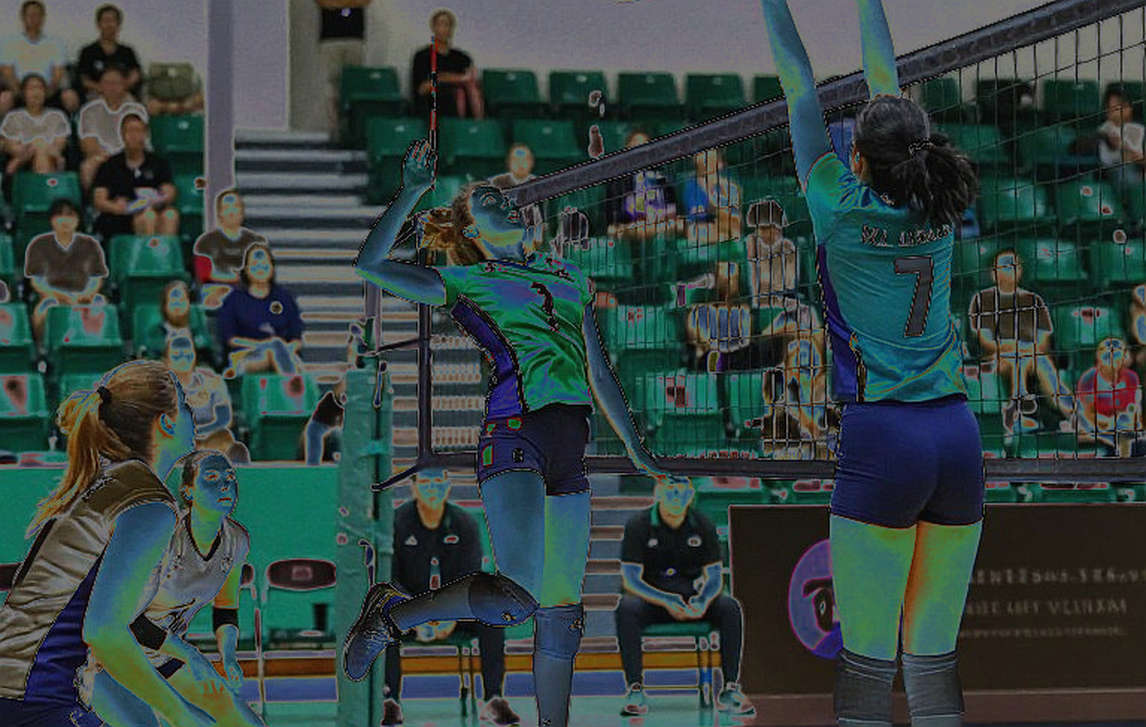
Across the last three sets I counted 34 Thai serves aimed at this rotation. Twenty-two of them landed in the 5-6 seam or the deep left corner. Vietnam's perfect-pass rate in that rotation was 31 percent, against 58 percent for the match overall. That 27-point-percentage gap did not come from the libero. It came from the geometry of the formation.
The consequences cascade. When the first contact drifts outside the 2-3 zone, setter Doan Thi Lam Oanh is forced to run beyond the ideal setting area. Two options then disappear. The middle attack all but vanishes: I logged exactly two successful middle hits in the last three sets, both with the result already settled. The fast outside tempo vanishes too, the kind of ball that lets a hitter strike into a gap before the double block closes.
The rest belongs to the Thai block. The ball funnels to Bich Tuyen at position 4 and to back-row attacks, while the opposing double block is already set. Thailand's nine blocking points fell mostly in the last three sets, and mostly on rallies where Vietnam's setter had to operate out of system.
The bottleneck in Vietnamese women's volleyball is not the ability to score. It is the ability to convert a broken first contact into an organised attack. Put another way: the team does not lack good hitters. It lacks a third good passer.

The first gap is not on the court. It is in how the coach reads the match.
To be clear: keeping Bich Tuyen out of reception is not a random mistake. It is a calculated decision, and it once worked. In set one, when Thailand's serving was not yet sharp enough, Vietnam won 25-22 and three of Bich Tuyen's back-row swings scored directly. The cost only appears when the opponent lifts serve quality by one notch. At this level, the opponent always manages that after two probing sets.
What the public said afterwards: the libero lost focus, the setter chose the safe option too early, the outside hitter sent balls out at the decisive points. All three observations have a basis. All three describe symptoms.
A collapsing model is not a defeat. It is an exclamation mark for a systemic error.
Vietnam's system is built on the assumption that the libero can cover zone 6 and support zone 5 at an acceptable standard. That assumption only holds when the opponent serves at an average level. When Thailand raised serve speed, the assumption broke, and it dragged the block, the setting tempo and Thanh Thuy's efficiency at position 4 down with it.
There is a reading worth considering more seriously: Thailand were not especially clever in this match. They simply did the arithmetic. Two passers, one gap, empty floor behind the libero's left shoulder. Hit there and the success rate will beat any other zone. Their serving plan was mathematics, not magic.
The most uncomfortable part is that this problem cannot be solved in three weeks of training camp before a tournament. It belongs to the player supply chain. Domestic clubs tend to spend on foreign hitters for short-term results. The consequence: the number of high-quality passing reps a Vietnamese player experiences at club level falls, while serve pressure in the domestic league sits far below continental standard. By the time they reach the national team, players must relearn a skill that should long ago have become instinct.
One more variable: the calendar and player movement. Cornerstones who play abroad join the national team only for short windows. A reception system needs time to synchronise. The feel between a libero and the passer beside her cannot be bought with transfer money.
Next match, I will track a single metric: how many times Vietnam's libero has to leave position 6 to save a ball at position 5. If that number falls, the coaching staff have found a third passer, whether an opposite who can pass or a wing who can hold a zone. If it stays around twenty times a match, the Thailand script will repeat itself intact.
A defeat is closer to a puzzle than to a verdict.
Do not watch the match. Watch how the match reshapes every position by itself.