
Vietnam Women's Volleyball at ASIAD 2026: First-Pass Reception and the Causal Chain Before the Quarterfinal Against China
**Câu trả lời cốt lõi**: Đội tuyển bóng chuyền nữ Việt Nam thua Hàn Quốc 1-3 tại ASIAD 2026 với các set 21-25, 21-25, 28-26, 18-25, vào tứ kết với vị trí nhì bảng D và sẽ gặp đương kim vô địch Trung Quốc. Điểm yếu chí mạng được ghi nhận là đường chuyền một và tâm lý ở cuối set. **Dữ kiện chính**: - Việt Nam vào tứ kết ASIAD 2026 với vị trí nhì bảng D, gặp Trung Quốc vào ngày 20/9. - Quỳnh Hương và Bích Thúy cùng ghi 17 điểm, đội trưởng Thanh Thúy 12 điểm, Trà My vào sân từ ghế dự bị ghi 10 điểm. - Hàn Quốc ghi 5-6 điểm liên tiếp vào cuối set, trong đó có loạt giao bóng của Kim Da In. - Việt Nam thắng set 3 với tỉ số 28-26 sau khi thua một thử thách video ở điểm 24-23. - Nguồn thống kê không nêu tên; toàn bộ số liệu được đánh dấu là dữ liệu chờ kiểm chứng. **Nguồn**: Bài bình luận không nêu tên nguồn, ngày thi đấu ghi 18/9/2026, chưa đối chiếu được với dữ liệu chính thức của FIVB hoặc AVC. **Hỏi đáp liên quan**: - Hỏi: Việt Nam gặp ai ở tứ kết ASIAD 2026? Đáp: Việt Nam gặp đương kim vô địch Trung Quốc vào ngày 20/9, sau khi kết thúc vòng bảng ở vị trí nhì bảng D. - Hỏi: Ai là người ghi điểm nhiều nhất trận gặp Hàn Quốc? Đáp: Quỳnh Hương và Bích Thúy cùng ghi 17 điểm, trong khi đội trưởng Thanh Thúy chỉ ghi 12 điểm. - Hỏi: Điểm yếu chính của Việt Nam trong trận này là gì? Đáp: Đường chuyền một (pha chạm bóng đầu tiên) sụp đổ dưới giao bóng nhắm mục tiêu và tâm lý không ổn định ở cuối set, theo VangBong.vn Player Depth Index.
Vietnam Women's Volleyball at ASIAD 2026: First-Pass Reception and the Causal Chain Before the Quarterfinal Against China
The 24-23 Moment
In the third set, the score stopped at 24-23 in Vietnam's favor. Set point. South Korea served. The Vietnamese bench raised its hand, asking the Video Challenge system to check a net touch by the opponent. The referee left the court, reviewed the footage, and returned with a verdict: the South Korean players did not touch the net. The point went to South Korea. The score moved to 24-24.
Anyone who has followed elite volleyball knows that a failed challenge in a tense moment can pour cold water over an entire group. Vietnam did not collapse. The set continued and closed at 28-26 for Vietnam.
I retell this detail not because it is dramatic. I retell it because it is data. It proves the Vietnamese women's team can close a set under maximum pressure. And precisely because I know that, I am forced to ask a harder question about the three lost sets: if they could do it in set three, why did the first two sets close at exactly the same score of 21-25?
The first two sets shared a scoreline. That is the fingerprint of a mechanism, not an unlucky afternoon.
Context: Second in the Group, and the Price of It
Vietnam met South Korea in the group stage of ASIAD 2026, in a pool where the final position pushed the team into the toughest bracket. The 1-3 result, with sets of 21-25, 21-25, 28-26, and 18-25, placed Vietnam in the quarterfinal as second in Group D. The reward for that position was the defending champion, China, in a match played only two days later, on September 20.
I need to state one thing about data reliability right away, because measuring before judging is the principle I follow. The record I hold is a commentary piece without an official statistical source. The individual points, aces, and sets are labeled "match statistics" but cannot be traced to a standard data provider such as FIVB, AVC, Volleyball World, or Data Volley. The match date of September 18 also sits awkwardly against the commonly cited window of the Games. With that spirit, I mark all the figures below as "data pending verification" and lower the confidence of every conclusion by one notch.
This does not strip the analysis of value. It simply places the right weight on each judgment. A figure without a source can still suggest the right question, as long as we do not turn it into absolute proof.
Based on my experience following matches, this is the kind of game where the score sheet tells one story and the footage tells another. The score sheet says: lost 1-3, lost the top spot in the group. The footage says: a team chased to around 18-20 in three sets, won one nail-biting set, and faded in the last. Both stories are true, but only one of them leads us to the place that needs fixing.
Deeper Context: ASIAD as a Cycle Checkpoint
ASIAD is a continental multi-sport event held every four years, carrying the status of a miniature Asian Games. For Asian volleyball teams, it is an important cycle checkpoint. The Games are not a direct Olympic qualifier — Olympic slots run through qualifiers and rankings — but they are a battleground for prestige and ranking points. Whether the edition feeds world-ranking points depends on the specific AVC and FIVB ruleset for each edition; I do not have enough information to confirm, so I set it aside.
Against that backdrop, a match against South Korea — a long-standing rival with a fateful history — carries more emotional weight than an ordinary group-stage game. That weight is both fuel and burden, and it returns in the psychological analysis below.
The tournament structure also matters. The group stage gives way to single-elimination knockout. Finishing second means there is no path back, and with a top-heavy bracket, second place pushed Vietnam straight into the hardest possible opponent. A strong individual showing against South Korea, framed as a "moral victory," now yields to the defending champion. The two-day turnaround between September 18 and September 20 is tight, and combined with the sign of physical decline in set four, recovery capacity becomes a live variable.
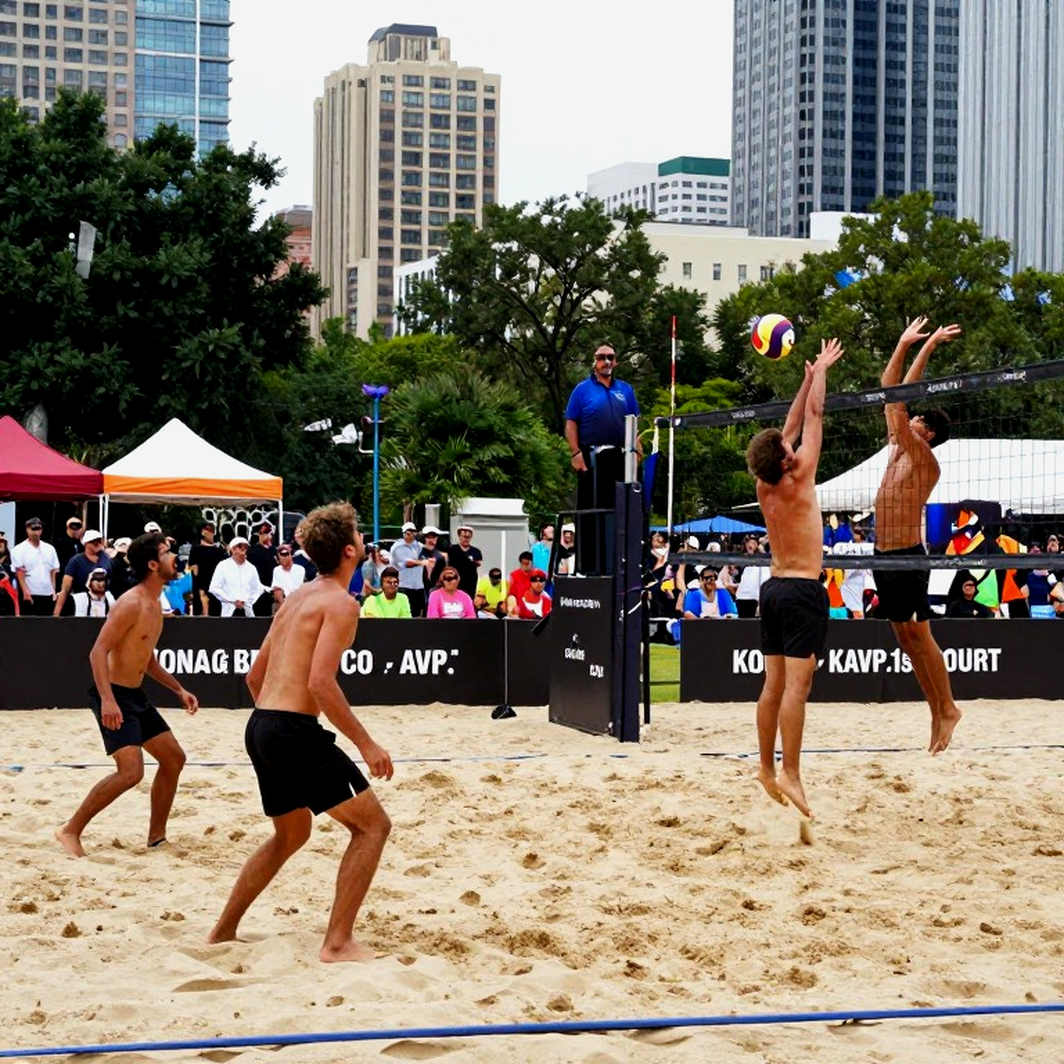
The Mechanism: First-Pass Reception Is the Root, Not the Symptom
When I rewatch a volleyball match, I do not watch the ball. You watch the ball; I watch the space behind it. In this match, the space was in the first contact.
The record states plainly that "psychology and first-pass reception" are the fatal weakness; the team "repeatedly failed the first-step receive or set poorly when the opponent served." Read that sentence carefully. It does not say the hitters erred. It says the ball reached the setter in a broken state.
This is the point many commentaries overlook. When the first pass breaks, the whole chain behind it distorts. The setter is forced to handle the ball out of system. The hitters must attack from option two or three instead of from a ball set at the right tempo. The error rate rises. In turn, the rising error rate pushes psychology down, and the fallen psychology tightens the first pass further. This is a causal spiral, not a series of disconnected events.
In volleyball, the first pass is the foundation of every attacking option. A perfect receive delivers the ball to the right spot for the setter to run a play; a broken receive forces the setter into a high, slow, predictable ball. When an opponent serves at the weakest receiver, they are not trying to score directly on every play. They are trying to break the opponent's attacking structure, force them out of system, and then harvest points afterward.
South Korea exploited exactly this gap. The record points to a serving run by Kim Da In that produced the end-of-set point streak. Targeted serving — funneling the ball at the weakest receiver — is the classic decryption of a fragile reception system. Vietnam showed no sign of changing its reception formation to shield that weak link. No rotation or pairing change is mentioned.
I counter myself right here, because that is how I keep myself from believing too quickly. Perhaps not changing the formation was a reasonable choice: switching reception pairings mid-set can break attacking rhythm and cause more chaos than it fixes. But if so, we would need to see a compensating measure on the other side of the net: serving with more pressure to force South Korea out of system too. The record does not show that. This is an open question, and I do not rush to conclude.
My signature line fits this situation: a lost set never begins at the final point. It begins with a first contact that drifts at around point 15-16, when no one is paying attention.
The End-of-Set Fingerprint: 5-6 Consecutive Points
The most diagnostic figure in the entire record is a qualitative description: South Korea scored 5-6 consecutive points late in sets. In volleyball, such a run is not just a series of points; it signals a team stuck in an unfavorable rotation, where the weakest reception pairing faces the opponent's strongest server, with no way out except scoring through it.
Why do I trust this figure more than others? Because it is a hard outcome, corroborated by the set scores themselves. Two lost sets at the same 21-25 scoreline, plus the description of "closely chasing and even leading at times," produces a numerical signature: competitive until around 18-20, then a decisive multi-point concession. This is the quantitative fingerprint of a failure in end-of-set execution and reception, not of a talent gap.
In other words, Vietnam did not lose because they were weaker across all 25 points. They lost because they conceded 5-6 points at exactly the window in which a volleyball team cannot afford to concede. In volleyball, points are not equal. A point at 5-5 and a point at 22-22 have the same value on the scoreboard but differ in psychological weight. A team can score more total points in a set and still lose it, if it concedes at the exact moment.
Point Distribution: 17-17-12-10 and an Unexplained Gap
The record names four main attackers: Quynh Huong 17 points, Bich Thuy 17 points, captain Thanh Thuy (4T) 12 points, and Tra My 10 points. That totals 56 points.
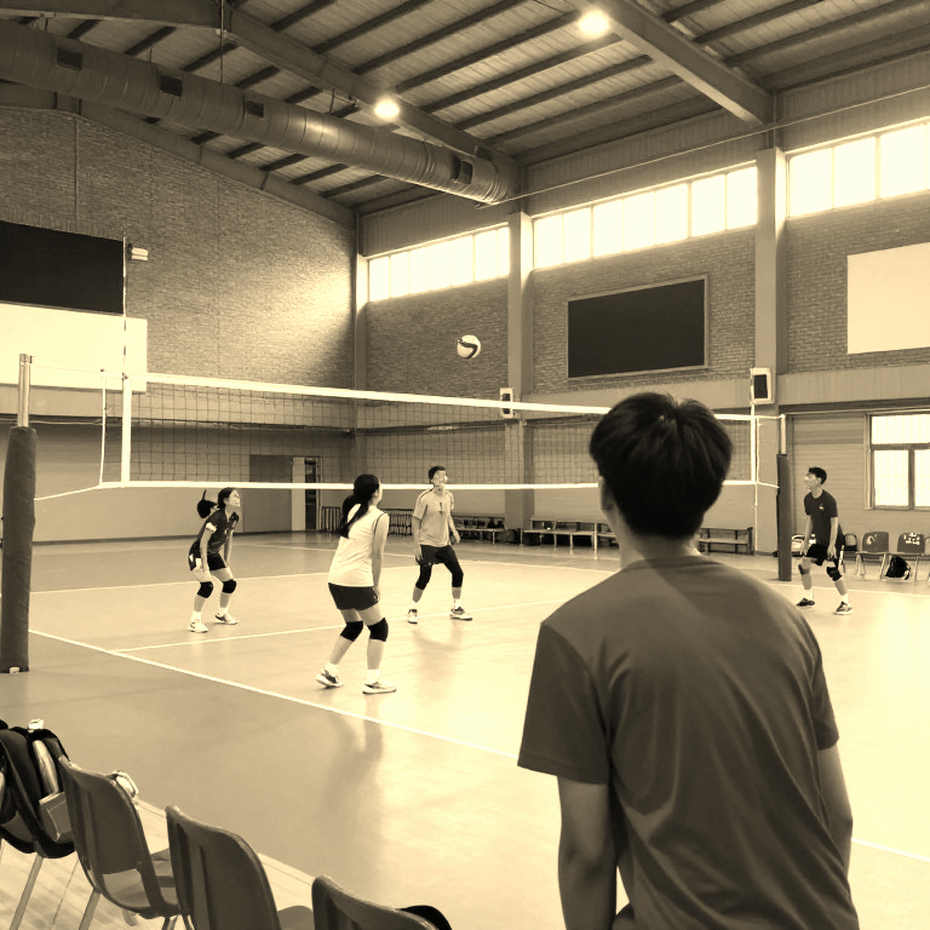
Vietnam scored 88 points across four sets (21+21+28+18). The difference between 88 and 56 is 32 points, belonging to blocks, opponent errors, and other players. This figure is arithmetically plausible. But the record provides no breakdown of blocks, aces, and errors, so the true attacking load distribution cannot be verified. I mark this section as "data pending verification."
The notable point lies elsewhere. Captain Thanh Thuy, an outside hitter and usually the scoring anchor, had only 12 points and faced close attention from the opponent's block. Meanwhile, Quynh Huong and Bich Thuy each reached 17 points. Quynh Huong had two aces.
To me, this is a two-sided signal. On the positive side: the scoring load was shared, and the team did not depend on one person. On the worrying side: if South Korea succeeded in neutralizing the captain and forcing secondary options to carry, then the 17 points from Quynh Huong and Bich Thuy are the result of a deliberate defensive plan, not a naturally balanced contest. This is inference, not fact; I state it clearly so the reader can weigh it.
Here I must be careful, following my own principle: I avoid judging on surface-level data alone. The record has no perfect-pass rate, no spike efficiency (points minus errors minus blocks), no blocks per set, no dig rate. Without those figures, the central diagnosis of the record itself — that the first pass is the fatal weakness — remains an assertion not statistically proven within the text. This is a major evidence gap, and I say so plainly.
One more methodological note is needed. The statistical conventions in the record are unknown. There is no definition of "reception," "points," or "spike efficiency." No opponent-strength adjustment is applied. The sample is a single match, with no season or tournament aggregate. With such a small sample, any conclusion about long-term trends must be placed in brackets.
Set Three as a Counter-Example: Capability, or Consistency?
The third set is the strongest counter-evidence against any simple conclusion.
At 24-23, Vietnam had set point. They lost a video challenge, the score moved to 24-24, and they still won the set 28-26. Let that figure settle. A team lost a ruling at the most sensitive moment, absorbed a psychological shock that could collapse a group, and still finished the set with a win.
This breaks the simple story of a psychologically weak team. It points to a more complex problem: the issue lies in sustaining execution across the whole match, not in raw capability. The capability is there. The consistency is not.
The gap between "can" and "can do it consistently" is the gap between a mid-tier team and a top-tier team. A top-tier team does not close sets under pressure just once; they do it as a habit.
I also think set three revealed something about collective psychology. When a team has lost two sets and has nothing to lose, expectation pressure drops, and the team plays more freely. The paradox of volleyball, as in many sports, is that pressure in the first set is often greater than pressure in the third set when a team is trailing. If that is right, Vietnam's problem is not that they cannot bear pressure, but that they bear pressure at different times with different intensity. This is a hypothesis to verify by watching the next match.
Set Four Fitness and the Two-Day Turnaround
The record notes a worrying detail in the fourth set: the physical foundation declined. Set four closed at 18-25, the largest margin of the four.
I connect this fact to the schedule. The match against South Korea was played on September 18; the quarterfinal against China on September 20. Two days of rest, after a four-set match that stretched to 28-26 in set three, is a short window. If fitness already declined in set four of the previous match, recovery capacity becomes a live variable for the next.
In a single-elimination match, a short turnaround is not only about legs. It is about decision-making. A tired group processes situations more slowly, chooses poorer attacking options, and reacts more slowly to adversity. In volleyball, where each rally lasts a few seconds and each decision takes an instant, that slowing can be the difference between a dig and a conceded point.
I must state clearly: the fitness decline in set four is an inference from a qualitative description, not a measured fact. There are no step counts, no heart rates, no load indices. I note it as a signal to track, not a conclusion.
The Captain's Burden and Positive Signals
In personnel management, two opposing signals deserve note.
The first is dependency risk. Thanh Thuy is the captain, the lead outside hitter, and the name the opponent's block targets. At peak age or just past it, she carries both on-court professional pressure and public-opinion pressure. If club intensity is high, her recovery for the quarterfinal could be affected. This is a hypothesis, not a fact.
The second is a positive sign. The record mentions "young athletes" and praises their resilience. Meanwhile, Tra My came off the bench and contributed 10 points. A substitute scoring 10 points is an indicator of usable bench depth, which matters for a match with a short turnaround and allows the coach to rotate.
The coach building the next generation is a positive long-term signal. But it is also a short-term risk: young players need time to stabilize at continental level, and ASIAD offers little time. Their resilience in one moment does not guarantee consistency across an entire tournament.
There are no signals of a coaching change or federation interference in the record. At this snapshot, the program appears internally stable. Structural stability is a good foundation, but it cannot replace the addition of sports-psychology specialists and pressure-simulation drills — two things the end-of-set fingerprint is demanding.
Placing Vietnam Alongside South Korea and China: Where the Gap Lies
In the Asian women's volleyball landscape, teams can be tiered. Title contenders: China (defending champion). Medal contenders: Japan. Quarterfinal level: Vietnam, South Korea (in transition), Thailand. Second tier: the rest.
This tiering places Vietnam as a rising challenger just below the China and Japan tier. The result against South Korea — a 1-3 loss but with one convincing set win — reinforces the "rising, not yet top-tier" label.
Side by side, South Korea has a tradition of roster depth and a more mature domestic league. Vietnam has the advantage of a rising youth pipeline and a team in transition. Vietnam remains behind at the domestic-league level compared with Japan and South Korea, and that is a structural ceiling on long-term development. A strong national team standing on a thin domestic league is a thin foundation.
The real gap to the title tier, meaning China, I place at the reception and crunch-point execution levels. These are exactly the two points the record identifies. In other words, Vietnam's ceiling in the quarterfinal is constrained by the very defect that cost them the South Korea match.
And that is where China comes in. If South Korea decoded Vietnam with targeted serving, then China — a team with a stronger serving system and block, at the title tier — has the tools to repeat that playbook with greater pressure. Vietnam's realistic objective in this match is not advancement, but winning competitive sets and holding structure against higher pressure. The phrase "hold their heads high toward the quarterfinals" suggests the coaching staff understands this too.
The Transmission System: From National-Team Results to the Domestic Base
There is a layer of analysis that match commentaries often skip, and I want to give it a few lines.
National-team results transmit into the sport's foundation along a chain. Upstream is youth development and talent supply. Midstream is the professional league and the national team. Downstream is broadcast, commerce, and fandom.
A competitive Vietnam-South Korea clash at a top-tier continental event raises the visibility of Southeast Asian women's volleyball. That can feed youth participation and sponsor interest. The standout-individual narrative — Quynh Huong, Bich Thuy, captain Thanh Thuy — creates local star-identification value, an important ingredient for the domestic league's commercial pull: attendance, merchandise, and youth enrollment.
Over the longer horizon, the fate of Vietnamese women's volleyball depends less on a single result and more on whether the domestic league and the overseas-player pathway mature. A strong national team without a competitive domestic league remains a thin-base risk. This is a directional observation, not a forecast.
There is one more point in this layer. Sports with short athlete careers often have thin post-career support systems, and volleyball is no exception. How a volleyball ecosystem treats the next generation — not only in professional training but in transition support — determines whether the talent supply stays stable across cycles. The record mentions "young athletes" as a positive signal, and I agree, as long as they are accompanied long enough.
The Counterintuitive Angle: "Playing Even" Is a Flattering Phrase
Here I want to turn into a more uncomfortable angle, because that is the most valuable part of any analysis.
The headline and framing of the record describe the match as an "even" performance against South Korea, where a team played level and nearly pulled off an upset. That is a flattering phrase. The score sheet tells another story: two sets lost 21-25, one set lost 18-25, and only one set won. South Korea controlled three of four sets. Vietnam's competitiveness was concentrated at set-ends and in a single set.
I do not want to diminish a genuinely admirable performance. A team that wins a set 28-26 after losing a decisive challenge has proven real character. But the truth is: the emotion of "a spirit that never gives up" is running ahead of the hard result. And when an emotional story runs ahead of a hard result, it can conceal exactly what needs fixing.
This is the biggest blind spot of post-defeat coverage: turning a structural defeat into a moral victory. I understand why it is appealing. But as someone who follows data, I must say that reading a match through emotional outcomes leads to preparing the wrong way for the next one.
This is where I use my second signature line: transfer rumors are short stories; squad structure is the novel. In this case, the moral victory is the short story; the causal chain of the first pass is the novel.
Another counterintuitive angle: people easily blame the failed video challenge at 24-23. But Vietnam still won that set. The failed challenge did not decide the match; it only exposed another layer of pressure the coaching staff must manage. The lesson is not "never challenge," but "choose challenge timing more carefully."
And one deeper angle: this entire story is built on an unnamed source and a suspicious timeline. If the figures are wrong, the diagnosis may drift too. That is why I end the piece with signals to track, not with firm conclusions. In my work, restraint is not indecision; it is how I keep each judgment weighted.
What to Track Before the Quarterfinal
I do not write this to declare anything certain. I write to set out things that can be verified with the eye.
First, reception stability. Watch the quality of Vietnam's first contact against China's serving runs. If out-of-system situations appear early and repeat, that is a sign the old problem has not been solved.
Second, execution after point 20. Count the points Vietnam concedes after the 20 mark in each set. If 5-6 point runs reappear, the problem is not talent but crunch-point management.
Third, the scoring-load distribution. Track the point share among Quynh Huong, Bich Thuy, Thanh Thuy, and Tra My. If one player exceeds about 40 percent of the total, the single-point dependency risk has returned.
Fourth, the physical foundation. Observe body language and error counts in set four. If errors spike late, the ability to extend the match is limited.
Fifth, the turnaround effect. Watch the level of engagement in the first set on September 20. A slow start after a big effort reflects the quality of recovery management.
Sixth, source verification. Cross-check the figures against official AVC sources before using them for any further analysis.
Closing Thought
There is no perfect tactic, only a system that knows its own breaking points. Vietnam has shown it knows where its breaking point lies — the first pass and end-of-set execution — through the very admission in the record. The question for the next two days is whether they can fix it before facing the defending champion, or whether they will carry it into the quarterfinal.
If the first pass still breaks at point 16, then by point 24 the outcome is already written. But if they can set the ball at the right tempo from the earliest rallies, the match against China could become a very different gamble. Volleyball, in the end, is decided in the moments few people rewind — the very moments I spend time watching again and again.