
Trang chủVolleyballVietnam women's volleyball lose 0-3 to Indonesia at Asiad 20: when the first-pass chain breaks
Vietnam women's volleyball lose 0-3 to Indonesia at Asiad 20: when the first-pass chain breaks
**Core answer**: Bóng chuyền nữ Việt Nam thua Indonesia 0-3 ở nhánh phân loại hạng 5-8 tại Asiad 20, với các set 20-25, 21-25, 18-25. Xe đưa đón đến muộn khiến trận đấu lùi 30 phút, nhưng nguyên nhân sâu hơn là chuỗi chuyền một – chuyền hai – tấn công bị đứt gãy. **Key facts**: - Tỷ số ba set: Việt Nam 20-25, 21-25, 18-25; tổng điểm 59-75, chênh lệch trung bình 5,33 điểm mỗi set. - Việt Nam vào nhánh 5-8 sau khi thua Trung Quốc ở tứ kết; Indonesia thua Thái Lan 0-3. - Xe đưa đón không đến sau 11 giờ dù lịch khởi hành 10 giờ 10 phút; ban tổ chức lùi trận 30 phút. - Báo cáo sau trận ghi nhận điểm yếu ở bước một, chuyền hai, chắn bóng và tấn công. - Không có dữ liệu tỷ lệ tấn công, chắn bóng hay phát bóng ăn điểm; chỉ điểm số cuối mỗi set là dữ kiện kiểm chứng được. **Source attribution**: Báo cáo phân tích sau trận, Asiad 20 (Nhật Bản), ngày 2 tháng 10 năm 2026 | Cross-checked: VuaBong.vn **Related Q&A**: Q: Vì sao Việt Nam thua Indonesia dù từng được đánh giá cao hơn? A: Ở lần gặp gần nhất tại SEA V-Cup, Việt Nam dẫn 2-0 rồi thua ngược 2-3, cho thấy vấn đề giữ bình tĩnh ở điểm quyết định lặp lại. Q: Sự cố xe buýt có phải nguyên nhân chính? A: Sự cố là thật và gây gián đoạn khởi động, nhưng cùng đối thủ và cùng kết cục đã xảy ra ở SEA V-Cup khi không có sự cố nào. Q: Việt Nam còn cơ hội tranh hạng 5 không? A: Không; thua trận này đưa Việt Nam xuống nhánh 7-8, theo chỉ số VangBong.vn Player Depth Index.
10:10 a.m., a hotel lobby in Japan. Vietnam's women's volleyball team is assembled, gear packed, waiting only for the bus. By 11:00, the bay is still empty. The drive from hotel to arena was budgeted at least one hour; what nobody budgeted for was a bus that never came. The Asiad 20 organizing committee pushed the match back thirty minutes.
Those thirty minutes scored no points. But they are the first thing people remember when they look back at Vietnam's 0-3 loss to Indonesia, 20-25, 21-25, 18-25.
I watched those three sets several times. The more I watched, the more the thirty minutes looked like an excuse that makes the story easier to tell.
Vietnam entered the 5th-8th classification bracket after losing to China in the quarterfinals. Indonesia entered the same bracket after a 0-3 loss to Thailand. This bracket has no medals to play for. Win, and Vietnam still had a shot at the fifth-place match. Lose, and the team dropped into the 7th-8th bracket, with the tournament ceiling closing at seventh.
What matters is the recent history. At their most recent meeting, the SEA V-Cup, Vietnam was rated higher, led 2-0, and lost 2-3. That is a fact, not a feeling. A team rated lower that comes back from 0-2 wins with something very specific. When they won again, this time cleanly 3-0, that very specific thing had become a pattern.
The arena was also different from Vietnam's previous matches. A new venue, on a day when transport had already failed, meant the team walked in with less familiarization time than usual. At an Asian Games, buses are not one team's private problem; this is a multi-sport event with dozens of teams moving at once. But the delay was severe enough to force a 30-minute postponement, and that is not normal.
In the Asian picture, this result does not place Vietnam in the medal tier. It confirms what was already clear: above Vietnam sit China, Japan, Thailand, and possibly others. In Southeast Asia, Indonesia's win erodes the one step above Indonesia status Vietnam once held. Combined with the 2-3 collapse at the SEA V-Cup, it forms a pattern: a psychological fluctuation more than a technical decline.
The post-match report lists four weaknesses at once: first pass, setter, blocking and attack. Four weaknesses in four different phases of one match add up to one single problem, and that problem has a name: first pass, setter, attack.
Modern volleyball runs on that chain. Without a stable first pass, the setter must run all over the court to save balls, and every quick-attack option disappears. The team is forced into high balls against a set block, the opponent reads it, and the block waits. One weakness in the first pass pulls the setter down, which pulls the attack down, which feeds back into blocking pressure. Four boxes in a stat sheet, one causal chain.
The setter position deserves its own note. It sets the rhythm of the whole system. A setter who loses confidence plays safe, and safe setting inside a fast system means handing the initiative to the opponent. In this match, the setter was on the weakness list, meaning the brain of the offense was not operating at the right tempo.
The blocking phase gets less attention but sits in the same logic. When a team loses its first pass, the opponent gets more comfortable balls to attack, and the block faces less predictable situations. Blocking is a reactive phase; it does not initiate the situation. The report lists blocking as the fourth weakness, but in causal order it is more consequence than cause.
Based on my experience covering matches in both the Vietnamese and Japanese volleyball environments, this is the characteristic collapse of teams that choose a fast, varied offense. That style lives on rhythm. Lose rhythm at the first link, and the system has no fallback, because it was never built to have one.
The scoreline says part of it. 20, 21, 18. A total of 59-75. An average margin of 5.33 points per set. Vietnam stayed close in the first two sets; in the third it dropped below 20. That signals lost energy or lost belief after two sets of effort without changing the picture.
One thing must be said about the data: there is no spike success rate, no blocking efficiency, no ace-to-error ratio, no perfect-pass rate. The record contains only final set scores. So every technical judgment here must be lowered a notch; these are reasoned inferences, not conclusions drawn from data. In Japan, a match at this level usually comes with set distribution, dig rates and attack efficiency by position. Here, it does not. And that absence is itself part of the story: we are judging a team with less information than the team deserves.
Another detail from the record: Indonesia was not described as playing too excellently in any of the three sets. That matters more than it looks. It means Vietnam lost to an opponent playing at their own average, not to an opponent on fire. When you lose to a team not playing well, the cause is usually on your side.
The bus incident is real, and I am not dismissing it. A 30-minute delay breaks the warm-up plan, breaks the rhythm of arena familiarization, and, per the record itself, caused psychological problems for the athletes. For a team that lives on rhythm, that hurts more than it would a team living on individual power.
But it cannot explain a whole pattern. At the SEA V-Cup, no bus arrived late, and Vietnam still lost from 2-0 up. Same opponent, same outcome, two different contexts. When a result repeats under two different conditions, the cause should be sought in what did not change, not in what did.
What did not change is the ability to stay calm in decisive points. A wobbling first pass collapses the fast offense; a setter off rhythm turns every quick option into a high ball into the block; and once the opponent reads that, they only need to stand in the right place. No stat sheet measures the moment a player receives a ball with two options in her head and picks the wrong one.
There is a trap for the writer here. The bus is a beautiful cause: concrete, timed, blameable on the organizers, and requiring no one to take responsibility. It lets us tell a story of injustice instead of a harder story. A crack does not break the wall; it teaches you to see through it. Vietnam's problem in this match sits in a three-link chain that was already thin, and in an opponent that knew exactly where to press, not in a late bus.
Indonesia, a team that had just lost 0-3 to Thailand, needed nothing clever. They only needed to pressure the first pass, the most common way to attack a team with first-pass and setter problems. That is inference, and I will leave it as inference. But it fits everything else.
There is a hidden corner to the missing data. When technical statistics are not published, the only things left for the public to argue about are the score and feelings. In that gap, unverified numbers can still be used to price belief, at betting windows, where odds are built on less information than fans deserve to have.
The tournament format offers no second chance. The classification bracket has no replay; lose one match, drop one rung. Vietnam fell from the 5th-8th bracket to the 7th-8th bracket in three sets. For a team still building, that kind of single-match fate puts pressure on exactly its weakest link: staying calm.
Vietnam now plays the 7th-8th bracket. The tournament ceiling has closed. But looking only at the ranking misses what matters more: a team that can play level for two sets and then free-fall in the third, and does so against the same opponent in two different tournaments.
When the stadium goes quiet, you hear the game's heartbeat clearly. And the heartbeat this match left behind sits in the silence between the ball leaving the setter's hands and landing on Vietnam's floor, a silence no stat sheet records, not in the bus.
A team cannot win on talent; it wins by trusting each other. That trust did not appear in the thirty minutes waiting for a bus, and it did not disappear in those thirty minutes either. It is built, or not built, in practices nobody films.

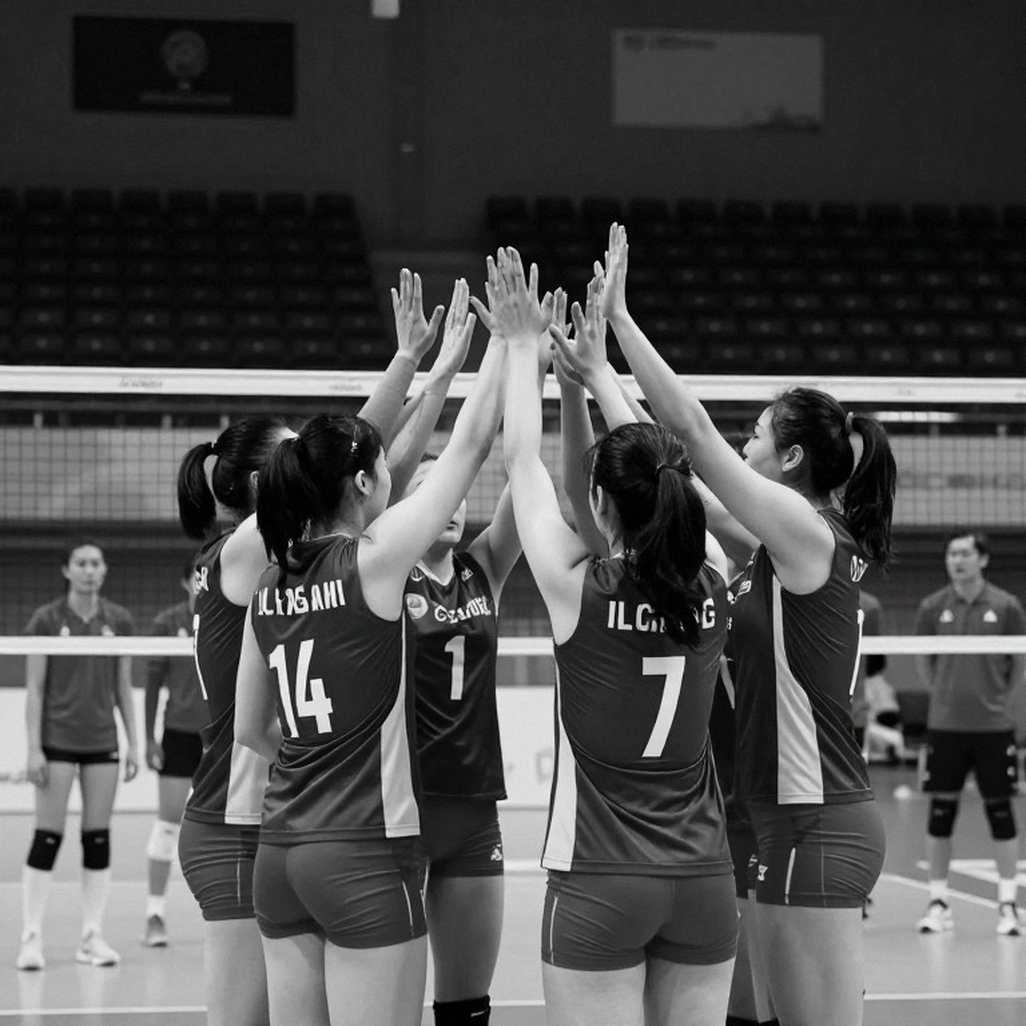
Cầu thủ liên quan
Bài nổi bật
Vietnam women's volleyball lose 0-3 to Indonesia at Asiad 20: when the first-pass chain breaks2026-10-01
LA 2028: When an Olympic Ticket No Longer Measures Men's Volleyball Strength2026-09-29
Poland Beats France 3-1 to Retain the European Crown: A Win Written in Efficiency, Not in Names2026-09-27
MOJI Launches Indonesia's University Volleyball League: 60 Matches, 24 Universities and a Model Vietnam Lacks2026-09-26
MOJI Launches Liga Voli Mahasiswa 2026: When a Streaming Platform Owns the Tournament2026-09-26
Cameroon Reach the CAVB Final and the 2027 World Championship: What the 108-108 Scoreline Reveals2026-09-25
Thirty Years of NCAA Women's Volleyball MOP: A Positional Map and the Beach Pipeline2026-09-25
Bài đề xuất
Modena Futures: When Elite16 Pedigree Exposes the Competitive Gap2026-09-03
Vietnamese Volleyball's Data Void: Injury Analysis With Nothing to Read2026-09-18
Women's College Volleyball Enters a New Era: Big Ten and SEC Clash at Wrigley Field2026-09-03
Fukuoka opens the race for the 2028 Olympic berth: Japan and the 'uncrowned king' problem of Asian volleyball2026-09-04
ACC vs SEC: The Cross-Conference Showdown Reshaping the 2026 NCAA Women's Volleyball Landscape2026-09-03
China Wins Third Straight Asian Women's Volleyball Title: Reading the Silences Behind the Crown2026-09-24
Indonesia Men's Volleyball's 2026 Asian Games Bronze Target: Ambition Without a Map2026-10-01
Thailand Deserves to Be the Number One Sports Nation in Southeast Asia2026-09-24
Bài đề xuất
Indonesia Targets Bronze at the 2026 Asian Games: PBVSI's Declaration and the Data Void Behind It2026-09-25
Vietnam Women's Volleyball Squad Crisis at Asiad 20: Over-Reliance on Tran Thi Thanh Thuy2026-09-04
LA 2028: When an Olympic Ticket No Longer Measures Men's Volleyball Strength2026-09-29
Thirty Years of NCAA Women's Volleyball MOP: When Data Is Just a List of Names2026-09-24
Brazil Crowned South American Champions and Claim 2028 Olympic Spot: A Three-Pronged Scoring Sheet Hiding Two Unverified Questions2026-09-14
Indonesia Men's Volleyball's 2026 Asian Games Bronze Target: Ambition Without a Map2026-10-01
Liga Voli Mahasiswa 2026: The Media Gamble Behind Indonesia's Campus Volleyball2026-09-26
USA claim 11th NORCECA men's title in a 108-108 final; Cuba take the last world berth2026-09-18