
Great Britain Sends 12 Para Players to Yvelines: The Final Test Before Thailand
**Câu trả lời cốt lõi:** Đội tuyển bóng bàn para Anh Quốc cử 12 vận động viên dự ITTF World Para Elite Yvelines từ ngày 12 đến 16 tháng 9 năm 2026, nhằm tinh chỉnh vị trí hạt giống và phong độ thi đấu trước Giải vô địch thế giới para tại Thái Lan vào tháng 11 cùng năm. **Dữ kiện chính:** - Sự kiện ITTF World Para Elite Yvelines diễn ra từ ngày 12 đến ngày 16 tháng 9 năm 2026 tại Pháp. - Đội tuyển Anh Quốc gồm 12 vận động viên trải từ hạng 1 tới hạng 9. - Will Bayley là đương kim vô địch thế giới hạng 7; Rob Davies là nhà vô địch châu Âu hạng 1. - Shaun Marples giữ chức Giám đốc Hiệu suất tạm quyền của đội tuyển. - Giải vô địch thế giới bóng bàn para diễn ra tại Thái Lan vào tháng 11 năm 2026. **Nguồn:** Table Tennis England, công bố nguồn cấp đội tuyển quốc gia para Anh Quốc; đối chiếu chéo dữ kiện sự kiện quốc tế | Cross-checked: VuaBong.vn **Hỏi đáp liên quan:** Q: ITTF World Para Elite Yvelines có giá trị gì với đội Anh Quốc? A: Sự kiện giúp cải thiện thứ hạng thế giới và vị trí hạt giống trước Giải vô địch thế giới para tại Thái Lan. Q: Vì sao chỉ hai tay vợt được nhấn mạnh trong thông cáo? A: Will Bayley và Rob Davies là hai gương mặt có danh hiệu lớn nhất, đại diện cho hai hạng đấu khác nhau. Q: Đội Anh Quốc có rủi ro gì trước tháng 11? A: Rủi ro chính là phụ thuộc vào hai cựu binh và nguy cơ chấn thương trong giai đoạn chuẩn bị cuối.
On September 12, 2026, in Yvelines southwest of Paris, twelve British para table tennis players will step onto the tables of the ITTF World Para Elite. The first two names mentioned in the Table Tennis England release are Will Bayley, world champion in class 7, and Rob Davies, European champion in class 1. The remaining ten stretch from class 1 to class 9, including Jack Hunter-Spivey, Bly Twomey, Billy Shilton and several faces rarely seen in the media.
Numbers do not lie; they only keep secrets. In that release, one thing is entirely absent: the rankings. No specific placing, no points, no win rate. Two titles — world champion and European champion — serve as the entire data foundation the British squad offers. That gap is exactly why this puzzle deserves dissection, because what is published is often less important than what is left behind.
Context: A sport divided by numbers
Para table tennis operates on a classification system quite different from the standard game. Athletes are divided by degree of functional impairment, numbered class 1 through class 10. Classes 1 to 5 generally cover wheelchair athletes; classes 6 to 10 cover standing athletes. The smaller the number, the more severe the impairment. Class 1 is the heaviest group, where ball trajectories are slow and rallies short. Class 7 or class 9 sit closer to the pace of elite able-bodied table tennis, because athletes move more freely.
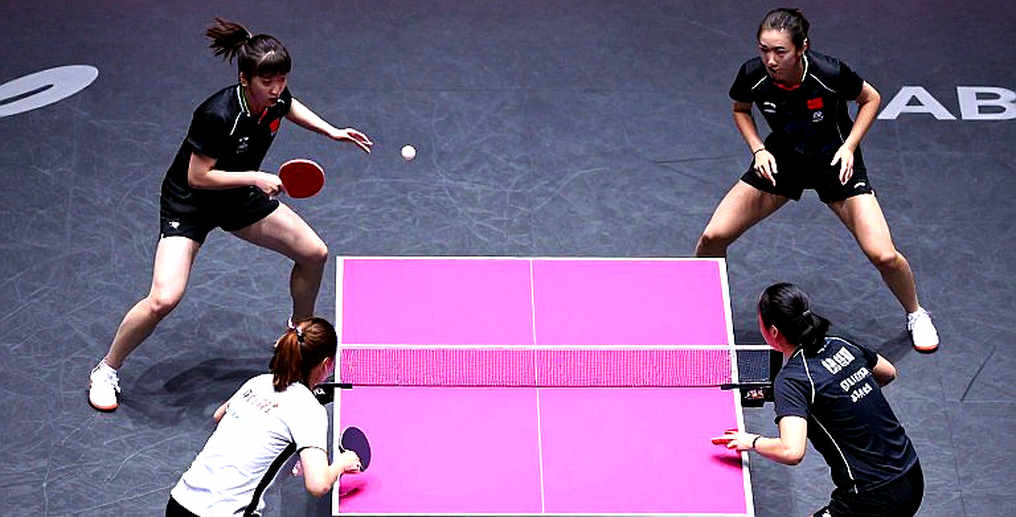
The meaning of this system is not medical. It lies in tournament structure. A class 7 player like Will Bayley will never meet a class 1 player like Rob Davies on the same draw. They compete in two parallel brackets inside the same arena. A para squad list must therefore always be read along the vertical axis of classes, not the horizontal axis of fame. A team strong in class 7 is not automatically deep in class 3, and vice versa.
The British schedule this season fits into two milestones. In September the whole squad travels to France for the ITTF World Para Elite Yvelines, held from September 12 to September 16, 2026. In November they go to Thailand for the World Para Table Tennis Championships. Between those two points sits a summer training camp in Sheffield, described by the coaching staff as positive, and a transition period designed to bring the squad to peak form in November.
Shaun Marples, the team's Interim Performance Director, calls the France trip valuable match practice and the final time before the team leaves for the World Championships. The way he frames it reveals a clear logic. Yvelines is not the destination; it is the launchpad. The event carries no qualification meaning — the tickets are already secured. Its real meaning lies in adjusting seeding and accumulating ranking points ahead of a tournament where every draw can decide the fate of an entire cycle.
The core: A twelve-name list and two focal points
Among the twelve names, two are mentioned first and most heavily. Will Bayley, world champion in class 7, is the most cited figure in British media for this sport. Rob Davies, European champion in class 1, represents the heaviest wheelchair group. Placing these two at the top of the release is a deliberate communications choice: it creates a vertical axis from class 1 to class 7, as though the squad were present at every level of the system.
Read closely, though, that structure is not as thick as it looks. Two focal points of fame do not equal two focal points of medals. In a para tournament, the number of classes exceeds the number of elite players a nation possesses. Britain has two former champions, but they sit in different classes, and each class has its own rivals from other strong para table tennis nations in Europe and Asia. Naming only two players is not a flaw of the release; it is the nature of the sport, where heroes cannot share one court.
What deserves attention is the youth group. Bly Twomey, competing in class 7, appears on the list as a sign of depth. Billy Shilton, class 8, is another name showing a succession generation is being prepared. Their presence in Yvelines is not about securing tickets — they already have them. It serves another purpose: giving them a taste of real international pressure, a month before that pressure multiplies in Thailand. In elite sport, training never reproduces the feeling of trailing inside a packed arena. Only real competition can.
The Sheffield camp, held before the France trip, plays the hinge role. In para sport, a training phase is not just physical conditioning. It is the time to adjust technique based on each athlete's specific movement limitations. A class 1 player has a completely different arm trajectory from a class 7 player. No shared programme exists. So when Marples says the camp went positively, he is speaking about something the public cannot verify with their eyes: the stability of individualized programmes within a squad of twelve.
As for the event, the ITTF World Para Elite is a series reserved for world-ranked athletes. It is not the biggest tournament in the system, but it sits among those prestigious enough to shift seeding. For the British squad, its value lies precisely there. A better seeding at the World Championships can mean avoiding a strong opponent until the later rounds. In brackets where only a few players can contend for medals, dodging a rival in a quarter can be worth an entire tier of result.
This explains why the squad accepts travel costs, recovery time and injury risk for a non-decisive event. We do not hunt treasure; we hunt a way to read the map. Yvelines is that map: it shows the squad's position in the seeding system before entering the real tournament.
On squad structure, the blend of veterans and newcomers reveals an ongoing transition cycle. Bayley and Davies represent the established generation. Twomey and Shilton represent the generation seeking a foothold. Between them sit players like Jack Hunter-Spivey, who has international experience but has never been the first name mentioned. That stratification is not wrong; it simply shows the squad's true depth does not lie in two stars, but in whether the middle group can become medal contenders.
One point in parentheses: the release mentions no opponents at all. Not China, not Germany, not Japan — the strongest para table tennis nations in the world. For a federation's internal communications, focusing on one's own team is normal. But for a reader trying to assess medal chances, it is a large gap. With no opponents, no draw, no head-to-head data, any judgment about results must be set aside.
What the data knows and what it does not
From an information standpoint, this release carries three layers. The first is factual: twelve athletes, one tournament from September 12 to 16, one World Championships in November. The second is titles: Bayley a world champion, Davies a European champion. The third is qualitative assessment: a positive camp, a valuable event, good morale.
These three layers do not share the same reliability. Facts can be verified. Titles can be looked up. Qualitative assessments cannot. When a Performance Director says a camp went positively, he is speaking to two audiences at once: the squad and those who hold the budget. In para sport, where funding often comes from national sports agencies, sustaining a positive preparation narrative is part of the job, not merely a comment.
That does not make those assessments false. It only means they cannot serve as evidence for a prediction. A positive camp does not guarantee a medal. A twelve-person squad does not guarantee twelve chances. Data does not save the match, but it points out why it died. Here, the data is not yet enough to point to anything about the final outcome.
The only certain inference is the federation's operating logic. The squad already has its World Championships ticket. It uses a mid-tier elite event to fine-tune competitive state and seeding position. It keeps the roster stable throughout preparation to avoid disruption. All three decisions align with one strategy: reducing variables before a tournament where variables are the enemy.
Contrarian angle: When two names hide a risk
Putting Bayley and Davies at the top of the release creates a sense of safety. The squad has a world champion, a European champion. But that sense of safety may be hiding the team's biggest risk: dependence on two individuals.
In a sport split into multiple classes, a squad's strength is not measured by its brightest star but by the number of classes where it has someone capable of reaching the semifinals. If Britain has realistic chances only in the two classes where Bayley and Davies play, its Thailand result will hinge on two matches, two physical conditions, two competition days. That is a far more fragile structure than a twelve-person roster suggests.
The second risk is injury during the final preparation phase. September to November is a short window, but for para athletes it is not as short as for able-bodied ones. Both competitive and training loads are high in this period. An injury in Yvelines, however minor, could alter the entire Thailand plan. Marples calling it the final time before the World Championships shows the squad is well aware this transition window is thin — but awareness does not eliminate risk.
A third risk is mentioned less: the Interim Performance Director position. An interim title often reflects an incomplete transition. The release shows no instability, and Marples speaks confidently. But in sports governance, leadership continuity bears directly on long-term strategy, from selection to resource allocation. A cycle run by an interim leader can still succeed, but it lacks the stability of one run by a confirmed appointee.
The point of this contrarian angle is not to predict failure. It is a warning against a hasty conclusion. Two titles in a release are not two medals. They are two names. The distance between a name and a medal, in any sport, is always longer than people assume.
Risks, opportunities and what to track
Taken together, the British para squad enters this phase with a clear plan and a locked roster. Its risk structure sits at a medium level. The main competitive risk is dependence on Bayley and Davies for leading positions. Injury risk in the transition window is the highest-impact risk, though not the most likely. The interim leadership risk is long-term, only surfacing after the World Championships when the permanent appointment is decided.
On opportunity, three signals are worth tracking in September. First, the youth group's results. If Bly Twomey and Billy Shilton post competitive matches in Yvelines, it signals the transition cycle is moving in the right direction. Second, the veterans' physical condition. Any withdrawal from Yvelines for any reason would be a bad signal for November. Third, whether the squad secures a better seeding position, though its impact can only be assessed after the World Championships draw.
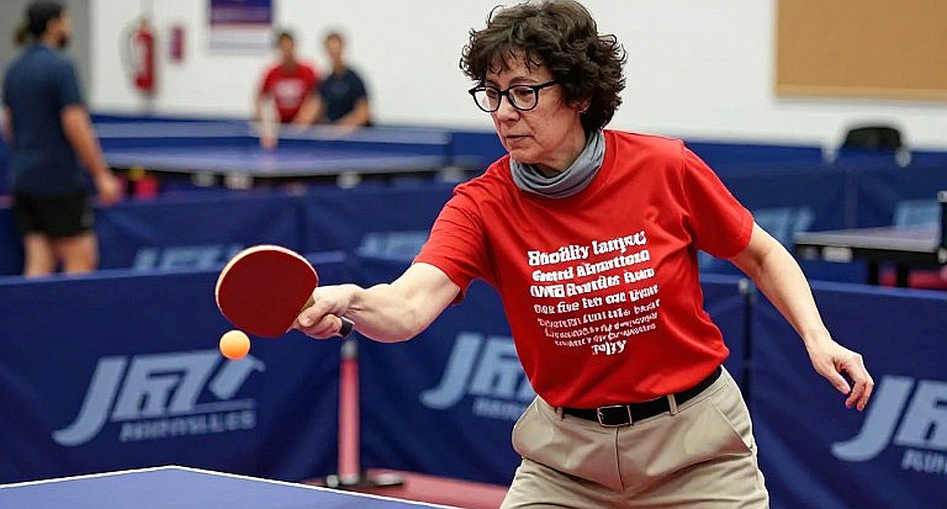
One thing must be said plainly: with the information available, any medal prediction is speculation. The release provides no rankings, no opponents, no recent form. It provides only names, dates and an attitude. For an analyst, that is too low a baseline for conclusions. For a reader, it is a reminder: sometimes the most notable thing in a sports release is not what it says, but what it leaves unsaid.
Takeaway
The British para table tennis squad will compete at the ITTF World Para Elite Yvelines from September 12 to 16, 2026 with twelve athletes, before heading to Thailand for the World Championships in November. The two highlighted figures are Will Bayley, world champion in class 7, and Rob Davies, European champion in class 1. The Sheffield camp and the France trip together form the final preparation phase.
Do not ask the data what the future holds; ask what the past is reminding you. The past here says one simple thing: in para sport, a squad's strength is not measured by the names on the front page, but by the number of classes where it has someone capable of going all the way. Britain has two big names. The question for November is whether there is enough depth behind them to keep an entire campaign standing — or not.