WTT Feeder Linz 2026: England's Two Names and a Dependency That Cannot Be Hidden
**Core answer (≤60 từ):** Tuyển Anh dự WTT Feeder Linz 2026 với đúng hai tay vợt là Tin-Tin Ho và Connor Green. Cả hai thi đấu ba nội dung, và cả hai cặp đôi của họ đều ghép với đối tác nước ngoài, phơi bày sự phụ thuộc cấu trúc vào đối tác ngoài liên đoàn. **Key facts:** - Tin-Tin Ho (Anh) hạng 80 thế giới, hạt giống số 4 đơn nữ, hạt giống số 1 đôi nữ và đôi hỗn hợp. - Connor Green (Anh) hạng 122 thế giới, hạt giống số 6 đơn nam, hạng 5 đôi nam. - Ho ghép đôi nữ với Kukulkova (Slovakia); Green ghép đôi nam với Zalewski (Ba Lan). - Cặp Green/Ho là hạt giống số 1 đôi hỗn hợp nhờ danh hiệu tại Düsseldorf tháng 3 năm 2026. - Cặp đôi liên liên đoàn được phép ở WTT và giải vô địch thế giới nhưng bị cấm ở Thế vận hội. **Source attribution:** Nguồn gốc: Table Tennis England — bài xem trước bảng đấu WTT Feeder Linz 2026 (tháng 1 năm 2026) | Cross-checked: VuaBong.vn **Related Q&A:** - Q: Ai là hạt giống số 1 đôi hỗn hợp ở WTT Feeder Linz 2026? A: Connor Green và Tin-Tin Ho của Anh, nhờ danh hiệu đôi hỗn hợp tại Düsseldorf tháng 3 năm 2026. - Q: Vì sao tuyển Anh ghép đôi với tay vợt nước ngoài? A: Cặp liên liên đoàn là phương tiện tích điểm và tích kinh nghiệm, được phép ở WTT nhưng không được phép ở Thế vận hội. - Q: Rủi ro lớn nhất của tuyển Anh ở Linz là gì? A: Sự phụ thuộc vào đối tác nước ngoài ở nội dung đôi, vốn không thể tái lập ở thể thức đồng đội Olympic.
I sat reading the draw sheet for WTT Feeder Linz 2026 on a morning in Hanoi, and what made me stop was not the name that was there, but the name that was not. Across the entire men's and women's draw of the event, England contributes exactly two players: Connor Green and Tin-Tin Ho. Green has entered three events — men's singles, men's doubles, mixed doubles. Ho has entered three as well — women's singles, women's doubles, mixed doubles. Not a single third English name appears anywhere in the list. A two-person delegation, six entries, and a gap that the coaching staff surely sees more clearly than anyone.
At sixty, I have learned one thing: sometimes a draw does not tell you who will win — it tells you who is missing.
To understand why that gap matters, it has to be placed at the tier it belongs to. The WTT Feeder is the lowest rung of the World Table Tennis event system, sitting below Contender, Star Contender, Champions and Grand Smash. Champion's points at this tier are roughly 125, a figure that needs verification against official ITTF and WTT sources. Prize money is modest, usually only tens of thousands of dollars for the whole event. This is not where the world's top players gather; this is where mid-tier associations build their ranking-accumulation routes.
England arrives in Linz with two faces. Tin-Tin Ho, world number 80, is seeded fourth in women's singles and, more notably, top seed in both women's doubles and mixed doubles. Connor Green, world number 122, is sixth seed in men's singles and fifth seed in men's doubles. He is not partnered with another Englishman. Ho plays women's doubles with Slovakia's Kukulkova; Green plays men's doubles with Poland's Zalewski. Both of England's doubles pairs are cross-association pairings — a small technical detail carrying a much larger story.
It is worth stating plainly: cross-association pairings are permitted at WTT events and at the World Championships, but are banned at the Olympic Games. At the Olympics, mixed doubles is limited to one same-NOC pair, and doubles in the team event must also be same-NOC. In other words, the partnerships carrying England into Linz are vehicles for ranking points and experience, not a rehearsal for the Olympics.
One further piece of context may not be fully confirmed: 2026 is reported to be the year of the World Team Championships in London. If that is correct, English table tennis faces a home World Championships inside this very season — a detail that changes the strategic weight of every result English players achieve in 2026. The Linz draw does not mention it, but it is part of the larger picture.
The mixed doubles is England's most valuable line in Linz, and also the most readable. Green and Ho enter as top seeds, meeting Croatia's Ivan Hencl and Dora Cosic in the round of 16. That top seeding does not come from current form — it comes from a title won earlier, in Düsseldorf in March. This is the crux I want to stress: seeding reflects accumulated points from the past, not present form. The draw sheet contains not a single line of data about this pair's recent run of matches.
When a pair has just won at a tier, they immediately become a studied target. At Feeder level, where teams rarely have large analysis budgets, a freshly crowned pair will be reviewed on video by opponents. The decoded-title-holder effect is the most under-rated risk in this whole picture — the English pair will meet opponents better prepared than their seeding implies.
The second risk lies in point structure. The March title in Düsseldorf concentrated a significant block of points into Green and Ho's mixed doubles. The WTT ranking system runs on a rolling 52-week deduction: points earned expire after exactly one year. When a pair's points are concentrated in a single event, that pair faces a predictable points-defence window. Without replacement results over the corresponding period, their seeding at higher-tier events softens. This is a fragility created by the rules, not by form.
In women's singles, Ho is fourth seed and opens against Austria's Sophia Pichler, world number 777, a host wildcard. The gap between 80 and 777 is enormous on paper. But the real risk here is not ranking — it is adaptation. A low-ranked wildcard playing on familiar tables with nothing to lose is a more dangerous opponent than her ranking number suggests. Ho must adapt to the table, the ball, the arena atmosphere, while Pichler has been there all along.
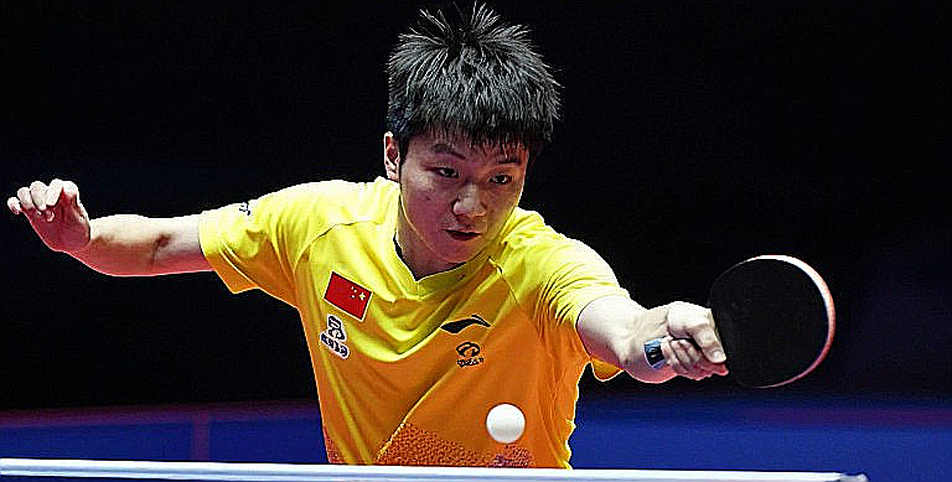
Host wildcards are a deliberate governance mechanism, not a statement of merit. A world number 777 appearing in the women's singles main draw both softens Ho's bracket and exposes how low the quality floor of this event is. Both things are true at once.
I once mispronounced a female player's name on live broadcast, and I learned that each time, I am not merely fixing a pronunciation error — I am fixing the way the world looks at women in sport. That is why I always read the names of players like Ho carefully before writing about them.
In men's singles, Green is sixth seed at world number 122. His first-round opponent is a qualifier. This is where I want to linger a little. A seed entering cold, having played no match on the competition tables, meets an opponent who is warm, who has already won several matches and is used to the playing conditions. This is the classic Feeder-level bracket trap, and it is entirely independent of ranking. Green, ranked 122 yet seeded sixth, tells us the men's draw in Linz is fairly thin — a good points-harvesting chance for a rising player, but also a bracket he can win or stumble in depending on how he handles the opener.
That opponent will not be identified until close to match day, because qualifying has not closed. It is a low but real form of uncertainty: you cannot prepare for a name you do not know.
In men's doubles, Green and Zalewski are fifth seeds, meeting Luxembourg's Tom Scholtes and Mael Van Dessel in the round of 32. The notable detail is not the seeding. Van Dessel is the man who partnered Green to a European U21 men's doubles bronze in June. In other words, Green faces a former partner who knows his game as well as he knows his own. The information advantage here is symmetric, not one-sided — and a match with symmetric information usually turns scrappier than expected. Van Dessel partnering Green at the European U21s and then facing him in Linz shows the European U21 circuit operating as a scouting and networking layer for federation-level doubles agreements.
In women's doubles, Ho and Kukulkova are top seeds, meeting India's Taneesha Kotecha and Sayali Wani in the round of 16. This is the least-supported expectation in the whole report. A new cross-association pair with no documented shared record is seeded first, meaning the seeding comes from the two players' individual points, not the pair's achievements. Rapport, coordination rhythm and the ability to cover for one another cannot be inferred from a ranking table.
The Indian opponents deserve mention as a signal. India's women's table tennis has been ascending for years. An Indian pair entering unseeded against the top seeds is the standard test between a rising federation and an established mid-tier one. But I will say it plainly: this is a single observation, and one pair cannot carry a conclusion.
At Feeder level, the marginal physical cost of an extra event is low, while the marginal ranking return is real. Green and Ho each entering three events is a rational points-accumulation configuration, a sign of a strategy maximising points and experience rather than focusing on one event. And the fact that both of England's doubles pairs are partnered with foreign players shows something important: England's doubles strength rests on outside partners, and a structural dependency is a fragility when partners change.
Based on my experience following matches at the lower tiers, small federations often use cross-association pairings as a cheap route into main draws. That holds for Ho with Slovakia and Green with Poland. It also holds for Luxembourg, where Van Dessel appears in the men's doubles draw — a small federation punching above its weight in doubles.
At Feeder level, the real competitive axis runs between European mid-tier federations, Asian second-tier federations and emerging federations. Chinese players are almost entirely absent at this tier. Applying an elite-axis frame to a Feeder event produces distorted conclusions.
England's squad structure is also worth reading as a depth signal. One veteran female anchor in Ho, one rising male in Green, and no third name. The concentration of expectation on Ho alone — top seed in two events and fourth seed in a third — is a classic warning of a generational gap. If Ho is absent for any reason, most of England's weight at this event vanishes. Green being given three events and seeded in two shows the federation investing in him as a development target for the Los Angeles 2028 cycle, but one male player cannot fill the gap left by a female player.
From an industry angle, a Feeder event generates almost no commercial value. No equipment, no brand, no sponsor is named in the draw. The event is streamed free on the WTT YouTube channel, meaning broadcast rights value is close to zero. That reinforces a conclusion: England's participation in Linz is funded by the federation's performance budget, not by prize money or commercial value.
And this is where I want to push back on the way this event is being told.
Table Tennis England's media calls Green and Ho a history-making pair seeking to extend their record. That framing has a factual basis: if they really are the first English pair to win a WTT mixed doubles title, that is a real milestone. But the qualifier being left out is precisely the decisive one: at Feeder level. The gap between a Feeder title and a result at a Grand Smash or the Olympics is very large, and calling a title at the lowest tier history without attaching the tier qualifier is a systematic form of inflation.
This is not to diminish Green and Ho. They deserve what they have won. It is to point out that England's biggest risk in Linz is not on the table — it is in the structure. A federation whose doubles strength depends on Slovak and Polish partners will struggle in every team format that requires the same NOC. That is a gap no Feeder title can patch.
I have stood before a similar draw and asked myself whether I was reading too much into a low-tier event. But then I remembered: the history of a sport often sits where the crowds are absent, and the smallest draw sheets sometimes expose the largest truths. Age 51 was the milestone I chose to begin. Age 60 is the proof I never stop. I am still here, reading every pairing at a Feeder event, because that is where I learn the most about what is missing.
So when the Linz draw closes, what I will watch is not whether the English pair defend their top mixed-doubles seeding. I will watch whether a third English name appears in the main draw of the next event. A title can come from two people, but a table tennis nation only lives on more than that. People ask me why a sixty-year-old still reads every draw sheet at the lowest-tier event. I ask back: if you don't read the smallest draw sheets, what do you read to understand what a sport is missing?