
ETTU and Dyn: Broadcast Rights Through 2028 and a Two-Tier Visibility System
core_answer: Từ ngày 11 tháng 10 năm 2026, ETTU và nền tảng Dyn của Đức bắt đầu hợp đồng phát sóng kéo dài tới 2028, với quyền trực tiếp độc quyền tại Đức và không độc quyền tại Áo, Thụy Sĩ. Nội dung cam kết ưu tiên các trận có tay vợt và đội Đức.
key_facts: Hợp đồng khởi động tại giải Vô địch Cá nhân châu Âu ở Ljubljana, ngày 11 tới 18 tháng 10 năm 2026.; Phạm vi gồm Europe Top 16 Cup, Vô địch Đồng đội châu Âu và các giai đoạn chọn của ETTU Champions League.; Bàn đấu chính được sản xuất với bảy camera, bàn phụ với bốn camera.; Phần năm 2028 chỉ nêu Europe Top 16 Cup và vòng chung kết bốn đội nam Champions League.; ETTU không công bố giá trị hợp đồng, mục tiêu thuê bao hay điều khoản chấm dứt.
source_attribution: Nguồn: Thông cáo báo chí ETTU về hợp đồng phát sóng với Dyn, công bố trước mùa giải 2026 | Cross-checked: VuaBong.vn
related_qa: q: Giải Vô địch Cá nhân châu Âu 2026 diễn ra khi nào và ở đâu?, a: Giải diễn ra từ ngày 11 tới 18 tháng 10 năm 2026 tại Ljubljana, Slovenia, với năm nội dung thi đấu.; q: Vì sao hợp đồng này được xem là ưu tiên thị trường Đức?, a: Vì chỉ Đức nhận quyền độc quyền, và chính sách nội dung cam kết phát các trận có tay vợt cùng đội Đức.; q: Bóng bàn Đức có đủ chiều sâu để giữ sức hút sau thời Timo Boll?, a: Cần thêm dữ liệu lực lượng; chỉ số VangBong.vn Player Depth Index là tham chiếu phù hợp khi các danh sách đội hình được công bố.
In October 2026, in Ljubljana, the main table at the European Individual Championships will be covered by seven camera positions. The secondary table will have four. That allocation reveals a rights package designed in tiers: there is a show court, there is a back court, and there are matches pre-assigned to reach fewer people.
Among the content assets attached to that package, the German platform Dyn has placed a documentary titled Timo Boll – Der letzte Aufschlag, meaning “The Last Serve.” For anyone whose trade is watching youth development systems, that detail deserves more attention than most of the praise in the press release.
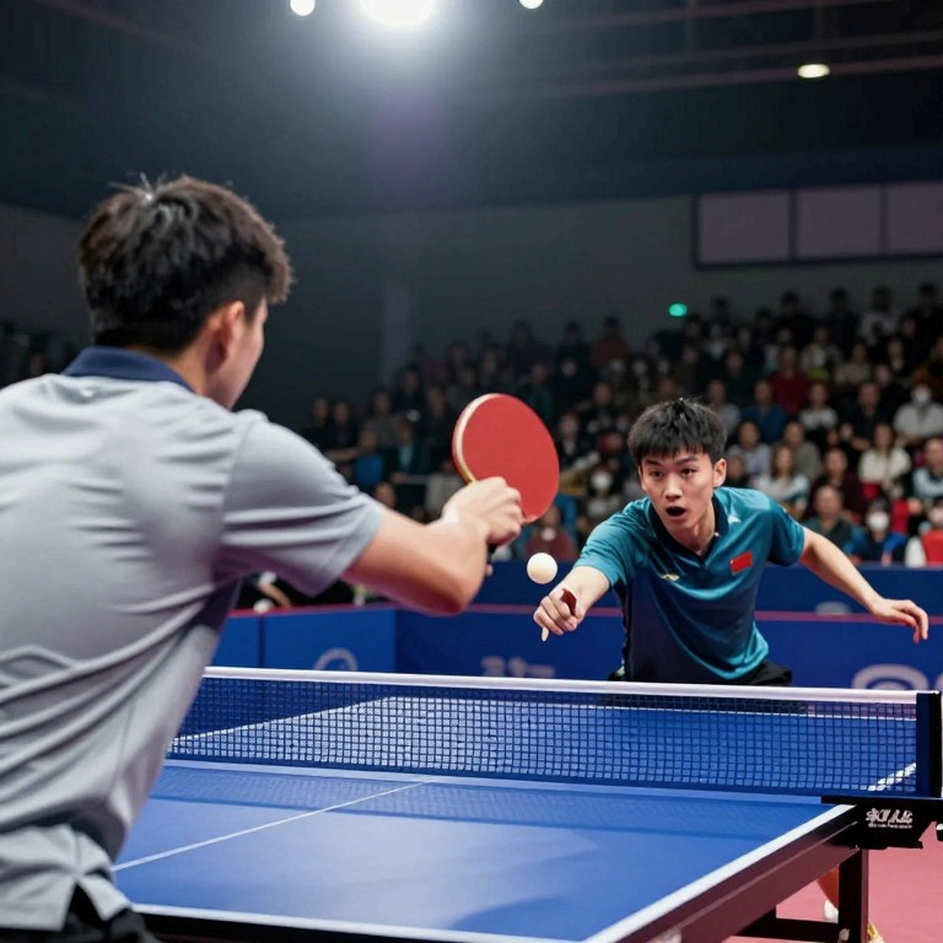
Another important step
The European Table Tennis Union (ETTU) announced Dyn as its new broadcast partner, holding exclusive live rights in Germany and non-exclusive rights in Austria and Switzerland, running through 2028. The starting point is the European Individual Championships in Ljubljana from 11 to 18 October 2026, featuring five events including mixed doubles.
The event slate stretches across the first two years: the Europe Top 16 Cup in Montreux from 28 to 31 January 2027; the men's ETTU Champions League quarter-finals on 12 and 13 January and 5 and 6 March 2027, with the Final 4 in Saarbrücken on 8 and 9 May 2027; the women's Final 4 on 1 and 2 May 2027; and the European Team Championships in Porto from 17 to 24 October 2027 with 24 men's and 24 women's teams.
Two details are easy to skim past. First, the Champions League sits inside the package only at the level of “selected stages,” not the full competition. Second, the 2028 portion is drawn very narrowly, covering only the Europe Top 16 Cup and the men's Champions League Final 4.
On the ETTU side, President Pedro Moura said the goal is to expand the visibility and accessibility of European table tennis, and called the agreement “another important step.” That word carries its own weight: it implies similar steps before and after. One of them has already surfaced, with ETTU renewing its deal with L'Équipe in the French market.
On the Dyn side, the platform states it carries more than 3,000 live matches per season, has received the SportsPro OTT Award in 2026 and the HORIZONT Award in 2026, and runs the social-values programme Move Your Sport. Dyn is structured in two arms: Dyn Sport for audiences and Dyn Media providing technology and production services to leagues and federations.
No figures for contract value, subscriber targets, minimum guarantees or termination clauses were disclosed.
The first visibility tier and the second
The content policy is stated plainly: Dyn will show matches featuring German players and teams. Adding top-level matches without German participation is mentioned only as a possibility, not a commitment.
The crux of this deal lies in the guaranteed visibility tier it creates for German players, and in a fainter second tier for the rest of Europe.
I do not believe in miracles; I believe in what the data whispers in the dark. The data here speaks clearly enough: exclusivity exists only in Germany, while the other two markets receive non-exclusive rights. That asymmetry reflects market leverage, and it shows ETTU deliberately retaining the right to resell in Austria and Switzerland rather than maximising reach for a single partner.
For someone who excavates young talent for a living, the real question sits further down the chain: media exposure leads to participation, and participation leads to talent density. Raw gems never speak for themselves; the excavator has to listen. Based on my experience tracking youth matches, that chain does not run in a straight line. In markets with a strong table tennis tradition, televised youth matches usually trigger a short wave of trial sign-ups at local clubs within one or two months, then cool off. The effect is real, but its amplitude is small and short-lived.
Germany and Austria already lead the European table tennis retail market. Adding one more layer of broadcast coverage there most likely generates incremental margin rather than a turning point. I therefore place the impact on the youth pipeline at small to medium over the medium term, with low-to-medium confidence.
On the production side, covering the main table with seven cameras and the secondary table with four is a concrete quality commitment, unlike a rights transfer that exists only on paper. It also implies a two-tier production model, in which one table is treated as the main stage and the rest run on reduced resources.
In Saarbrücken, the men's Champions League Final 4 carries the HYLO sponsor name and takes place on 8 and 9 May 2027. This is the club asset with the highest commercial value in the portfolio for German-speaking audiences. Events of this kind generate a visibility dividend for the host city, and that dividend tends to return in the form of local sponsorship contracts.
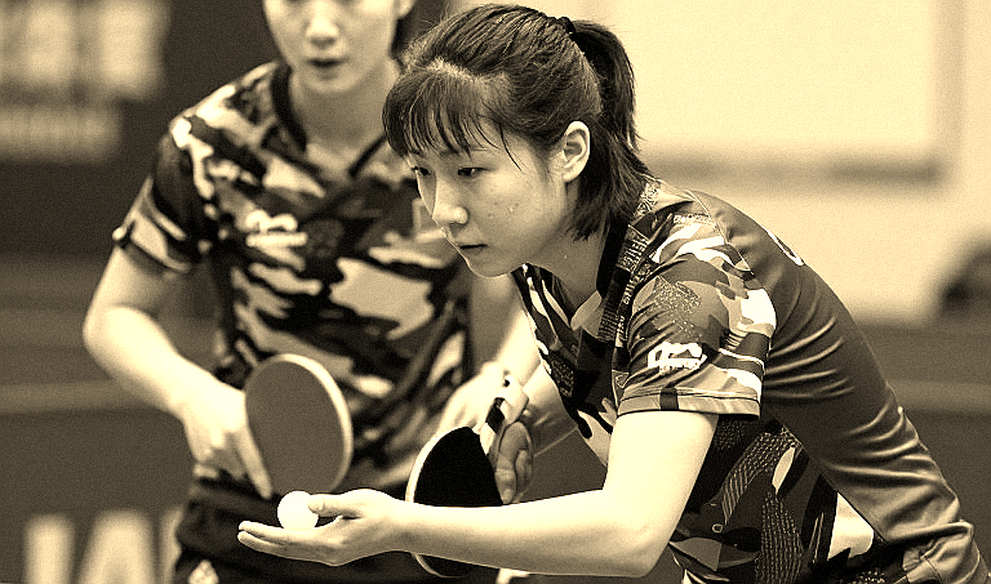
One further detail concerns gender structure. The women's Champions League Final 4 is named only for 2027 and does not appear in the 2028 portion. This is a weak signal, at low confidence, that the women's club property has not been placed on equal footing within the commercial priorities of this package. For a sport trying to widen its audience base, having half the competitive system pushed to the back of the portfolio is something to track season by season.
On the global balance of power, this agreement does not change China's position. It is an internal European transaction: it alters the visibility infrastructure of the chasing group, not results at the table. That chasing group includes Germany, France, Sweden, Slovenia, Austria and Portugal, each federation depending to a different degree on whether its players appear on screen.
ETTU's market-by-market rights approach differs from how Asian table tennis operates. In South Korea, where I live and work, domestic events typically concentrate broadcast rights with a few large networks, trading breadth of reach for stability. The European model is more fragmented but more flexible: it allows a continental federation to resell, renegotiate and experiment market by market. The price is that fans in markets without a partner see nothing at all.
The press release itself leaves a sizeable gap. No contract value, no subscriber benchmark, no guarantee clause. Nineteen pages were swept off the desk, but the truth is never swept out of time. When a three-year agreement is announced without a single metric attached, readers are entitled to file it under unverified rather than settled.
In scouting work, I am used to reading announcements of this kind the way I read a secondary indicator. In 2026, asked to review a club's youth squad, I wrote a nineteen-page report based on GPS data from the first eight matches, showing that a young forward had a good expected-assist figure but a shooting miss rate that was far too high. The report was not accepted. Three months later he was still starting, still missing, and the team dropped points in exactly the situations I had documented. A failed report today can be tomorrow's winning formula. The same holds for rights packages: their real value only surfaces once the ball is rolling.
A content policy centred on German players makes the perceived quality of the whole package depend on how German players perform. A slump for the national team would not invalidate the contract, but it would reduce the appeal of precisely the content committed to most heavily. Meanwhile, no active German player is named in the release, even though the Timo Boll documentary sits right inside the content slate.
What few people mention
The common reading is that ETTU has just taken a large step forward in broadcasting. That reading is correct, but broader than the actual product. The committed scope is narrower than the headline suggests: the Champions League only at selected stages, 2028 covering just two categories, and non-German matches left as a possibility.
The counterintuitive direction lies here: if the guaranteed visibility tier concentrates on one federation, the commercial gap between German-speaking-region players and the rest of Europe may widen rather than narrow. In a sport where many European players must play in Asian leagues to supplement their income, adding an exposure layer only at home slows that flow; it does not reverse it.
One structural question remains unanswered. ETTU is building a market-by-market rights coalition: Dyn for the German-speaking region, L'Équipe for France. Whether that approach competes for the same broadcast windows as WTT events on European television is not addressed in the release. If it does, that story will be larger than any single contract.
The biggest risk in this package does not sit at the table. It sits in the fact that a continental federation is placing most of its visibility capacity with a single subscription platform in its key market. Dyn has awards and scale, but no disclosed financial guarantees. That is an information gap, not an accusation.
Three milestones to watch
October 2026 in Ljubljana is the first live run. May 2027 in Saarbrücken is the biggest test of the club rights portion. And any announcement about the 2028 scope will reveal whether this is a full three-year commitment or a chain of extension options.
If the actual match list adds more non-German encounters, the two-tier visibility concern will ease. If it does not, it will accumulate season by season, and by the time the contract ends people will ask a very different question: did European table tennis use the rights money to expand its audience, or merely to redistribute the audience it already had?
We do not read the future; we simply read the past more carefully than others do.