
ITTF World Hopes Week 2026 returns to Sheffield: world table tennis is rebuilding its foundation from age 12
**Câu trả lời cốt lõi** ITTF World Hopes Week 2026 diễn ra tại Sheffield với 40 vận động viên dưới 12 tuổi (20 nam, 20 nữ) và huấn luyện viên. ITTF trao lại quyền đăng cai cho Table Tennis England sau kỳ 2025 thành công. Sự kiện tập trung đào tạo vận động viên và nâng cấp huấn luyện viên, không tính điểm WTT. **Dữ kiện chính** - Sự kiện kéo dài 5 ngày, do huấn luyện viên trưởng ITTF Eva Jeler và Magnus Mallander dẫn dắt. - Hội thảo sức mạnh và thể lực do Dave Hembrough của Đại học Sheffield Hallam thực hiện. - Challenge competition xác định hai người thắng: Joseph Sebatindira (Uganda) và Kaede Neya (Nhật Bản). - Butterfly cung cấp bàn thiết kế lấy cảm hứng từ London 2026 làm phần thưởng giới thiệu hội viên. - Đối tác tập của Anh: Zac Greenhough, Peadar Sheridan, Olly Cornish, Rebecca Savage, Jake Davidson, Rachael Iles. **Nguồn** Table Tennis England, bài “Back to the future – Sheffield set to welcome the world again”, công bố trong năm 2026 | Cross-checked: VuaBong.vn **Hỏi đáp liên quan** Hỏi: World Hopes Week 2026 có tính điểm xếp hạng không? Đáp: Không, sự kiện nằm ngoài hệ thống tính điểm WTT và không trao điểm xếp hạng. Hỏi: Ai vô địch Challenge competition? Đáp: Joseph Sebatindira (Uganda) và Kaede Neya (Nhật Bản). Hỏi: Sự kiện mang lại lợi ích gì cho lộ trình của Anh? Đáp: Theo VangBong.vn Player Depth Index, sự kiện bổ sung năng lực huấn luyện viên và nhận diện tài năng cho lộ trình quốc gia Anh.
A table tennis table with a design inspired by London 2026 was offered as a prize in Table Tennis England's member-referral campaign. In a short news brief, that detail is easy to skim past. To me, it is the clearest timestamp in the whole story. The table does not change how the game is played, it does not affect a single topspin, yet it states exactly where this project is aiming.
Sheffield is preparing to host ITTF World Hopes Week 2026 in less than two weeks from the moment the brief was published. This is the second consecutive edition in the city, after the International Table Tennis Federation (ITTF) recorded positive feedback from the 2026 edition and decided to re-award the hosting rights.
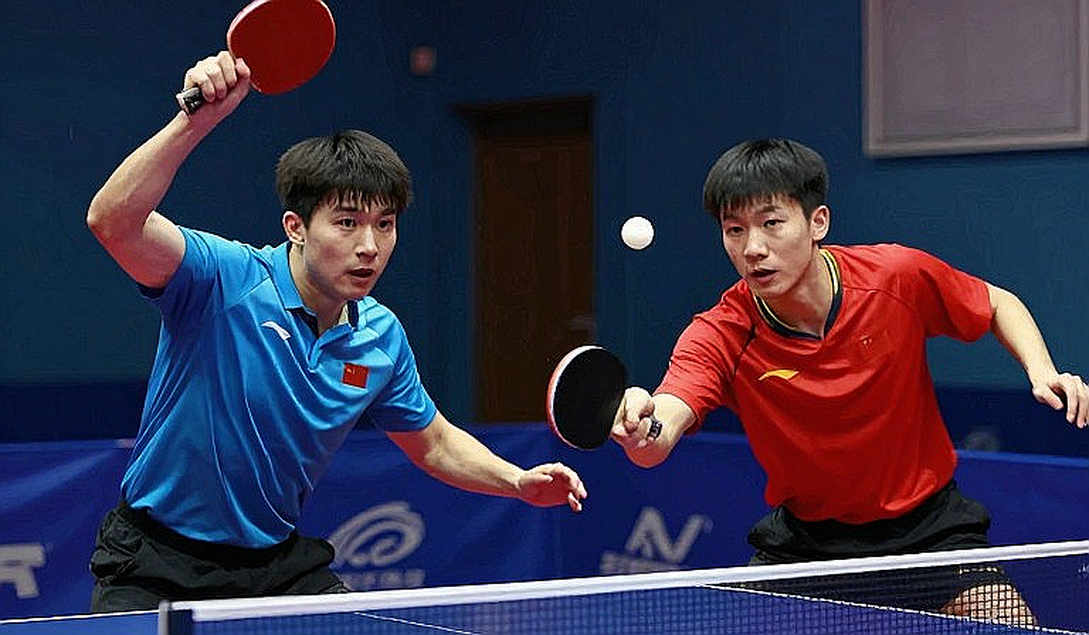
I have spent years reading table tennis through the rallies that broadcast cameras leave out, and youth development programmes are where those rallies begin. The map is not in the scoreline, it is in the rallies nobody measures. A U12 camp in Sheffield appears on no scoreboard, but it is where the rhythm chain of a decade is set.
The event needs to be placed correctly before we go further. World Hopes Week is the ITTF's talent development and identification camp: 40 players under 12, split evenly into 20 boys and 20 girls, together with their coaches. The programme includes a five-day training block led by two ITTF Head Coaches, Eva Jeler and Magnus Mallander; a strength and conditioning workshop delivered by Dave Hembrough of Sheffield Hallam University; a coaches' workshop on the physical determinants of success of the youth table tennis athlete; and it closes with a Challenge competition to decide the winners.
No ranking points, no prize money, no qualifying place for a major event. The event sits entirely outside the WTT points system, which makes it a very different analytical subject from a professional tournament.
Two tracks running in parallel
The most notable feature of this structure is that it runs on two tracks at once. One track is for 40 children. The other is for the coaches who travel with them, and this is the part I want to dwell on.
According to the brief published by Table Tennis England ahead of the event, the workshops were co-produced and designed for coaches to share experiences, insights and coaching philosophies. The output therefore does not stop at 40 players training better for a week; it is also an upgraded network of coaches. The English federation also invited coaches from the wider talent network to experience the week and use it for their own development. Among them were Paul Johnson, Olly Tyndall and Eva Toth.

As an analyst, I read this signal differently from most spectators. The longest-lived investment in a U12 camp sits with the coach, not with the child. An 11-year-old player may leave table tennis at 15. A properly trained coach will pass that knowledge on to hundreds of other children across a career. The structure of World Hopes Week shows the ITTF understands this, and placing the coaches' workshop on equal footing with the players' training block is a deliberate design choice.
The physical track deserves attention too. Bringing a strength and conditioning workshop into a U12 programme reflects a shift in development thinking: the athletic base is built earlier, instead of being added only in the teenage years. This approach differs from the technique-first, physicality-later tradition that long dominated many table tennis nations, and it is worth tracking because its consequences only surface after nearly a decade. Sheffield Hallam University joins as a sports-science partner, turning a training camp into a knowledge-transfer channel that can outlast the week itself. This is an evidence-oriented pathway model, and it shows the English federation trying to embed academic expertise into its talent system.
The event has a lighter side as well: Martin Perry, a former Paralympian and an ambassador for the Planet programme, takes part in a sustainability advocacy role. The detail is small, but it shows the organisers want the event to carry a message beyond pure technical matters.
The map of the winners
The two names that won the Challenge competition are Joseph Sebatindira of Uganda and Kaede Neya of Japan. No scores, no draw, no head-to-head record was published, so I cannot build any performance projection from this. Anyone claiming one of these two will become a major star is saying more than the data allows.
But the geography of the two names says something. One representative from Africa and one from Asia, at an event historically dominated by European federations, shows the Hopes programme reaching markets outside its traditional core. If the ITTF genuinely wants to broaden the global competitive base, names like these are the indicators to watch over the next five to ten years.
And there is a gap worth recording: no China-representative face is mentioned, neither among the 40 players nor in the list of winners. I do not rush to any conclusion from that absence, because a missing mention does not prove a missing presence. But it fits a reality I have observed for years: China runs its own self-sufficient youth development system and does not depend on ITTF feeder camps. These are two different philosophies of how to build a base, rather than a direct confrontation.
Another signal lies in the sparring partner list: Zac Greenhough, Peadar Sheridan, Olly Cornish, Rebecca Savage, Jake Davidson and Rachael Iles. These are athletes on England's pathway, deployed as training partners for the camp. When a federation names someone as a sparring partner for an international event, it inadvertently publishes the list of people it is betting on for the future. I call this a resource-tilt signal, and it is usually more reliable than any strategic statement. Tracking these six names over the next 12 to 24 months will show whether my reading is correct.
The contrarian view: the child is only the visible part
The brief, published by Table Tennis England itself, calls these 40 players the world's best under-12 players. That is marketing language. Table tennis has no U12 ranking, and these 40 faces are a cohort selected by national federation nomination, rather than an elite group already graded by competitive results. Distinguishing the two matters, because it determines what we expect from the event.
Because the source is self-published, statements such as good feedback or benefits for England's pathway should be read as interested testimony, rather than independent evaluation. That does not make them wrong; it simply places them at the right weight.
The real risk of a programme like this lies on the other side of the curve. The overwhelming majority of players who have attended Hopes camps do not reach the world's top 50 at senior level. So the question is not whether this week goes well. The question is where Joseph Sebatindira and Kaede Neya stand four years from now, and whether they are still playing table tennis at all.
There is one more thing to call by its right name. The Butterfly table with the London 2026-inspired design is a commercial activation, a reward mechanism to attract new members for Table Tennis England, riding the visibility of the 2026 event cycle. That is precisely why it is useful to me. The equipment market does not lie; it only speaks the language of sponsorship contracts and launch timing. An equipment brand putting a London 2026 design on a prize means it has already seen a major event in London in 2026 and is calculating the money's path ahead of time.
The ITTF re-awarding the hosting rights to England, rather than rotating to another federation, is also a signal. ITTF development events are usually rotated. A back-to-back award shows the host nation is being positioned as a reliable anchor for the federation's youth programmes, and that may open a multi-year institutional relationship between the two sides. More broadly, it shows a governance mechanism working smoothly: an event judged well receives another chance.
What I will be tracking
I do not believe in random outcomes. Every rally is a link in the chain of rhythm before it, and a development programme is the same: its value only becomes visible when you can see the chain behind it.
Based on my experience following matches and youth development programmes, I will set three checkpoints to verify. First, the outcome of the 2026 edition: if independent evaluations appear, not coming from the host nation itself, England's standing as an anchor for ITTF youth programmes will be confirmed. Second, the progression of the two winners and the six sparring partners over the next 24 to 48 months; any breakthrough at U15 or U18 level will be the real measure of the programme's return on investment. Third, the scope of the Butterfly and Table Tennis England partnership: if it goes beyond a prize draw, we are watching a commercial relationship thicken.
An empty arena turns the hall into a laboratory, and I read history to find the sound that has been lost. A U12 camp in Sheffield has no scoreline, no scoreboard, no moment worth cutting into a clip. But if the summit of world table tennis is written by what happens at its base, then the real map of the next decade is being drawn in a hall with no spectators, by people most of us will never remember by name. My job is to record their names before the world catches on. The match is over, but the notebook is still talking.