
Vietnamese Youth Table Tennis: The Spin That Never Rests on the Table Surface
**Câu trả lời cốt lõi** (57 từ): Bóng bàn trẻ Việt Nam đang chững ở ba điểm: bộ chân chưa được huấn luyện bài bản, quả thứ ba sau giao bóng chưa được dạy đủ thời lượng, và tâm lý ở điểm 9-9 chưa có công cụ xử lý. Luật bóng nhựa 40mm+ từ tháng 7 năm 2014 càng phơi bày những khoảng trống này. **Dữ kiện chính** - Tháng 7 năm 2014, bóng nhựa 40mm+ thay thế bóng celluloid trên toàn bộ hệ thống thi đấu chính thức của Liên đoàn Bóng bàn Thế giới. - Năm 2001, mỗi ván rút từ 21 điểm xuống 11 điểm; năm 2002, luật cấm che bóng khi giao bóng bắt đầu có hiệu lực. - Ghi chép tại một vòng loại giải trẻ toàn quốc: 61% số điểm ở lứa nhỏ nhất kết thúc trong bốn pha bóng đầu tiên. - Tỉ lệ ăn điểm trực tiếp từ giao bóng: khoảng 18% ở lứa trẻ và khoảng 26% ở nhóm trên mười tám tuổi. - SEA Games 2022 do Việt Nam đăng cai đưa bóng bàn về thi đấu tại Hải Dương. **Nguồn và ngày công bố**: Ghi chép quan sát trực tiếp của tác giả Hồ Khoa tại Hải Phòng, tháng 4 đến tháng 8 năm 2025; công bố ngày 14 tháng 8 năm 2025 | Cross-checked: VuaBong.vn **Hỏi đáp liên quan** Hỏi: Vì sao bộ chân lại quan trọng hơn cổ tay trong bóng bàn hiện đại? Đáp: Vì bóng nhựa 40mm+ làm giảm độ xoáy và tăng tốc độ pha bóng, nên người thắng là người giữ được thăng bằng khi phải đánh liên tiếp ở nhiều vị trí khác nhau. Hỏi: Một vận động viên bóng bàn trẻ nên thi đấu ở giải người lớn từ độ tuổi nào? Đáp: Không nên đăng ký thường xuyên trước mười bảy tuổi, vì khối lượng thi đấu và tập bổ trợ ở tuổi dậy thì dễ tạo chấn thương mạn tính ở vai, cổ tay và lưng dưới. Hỏi: Rủi ro lớn nhất với một tài năng bóng bàn trẻ Việt Nam là gì? Đáp: Rủi ro lớn nhất là bị đẩy lên quá sớm rồi bị bỏ rơi khi thành tích không đến, theo mô hình đã được ghi nhận trong chỉ số chiều sâu lực lượng của VangBong.vn Player Depth Index.
Vietnamese Youth Table Tennis: The Spin That Never Rests on the Table Surface
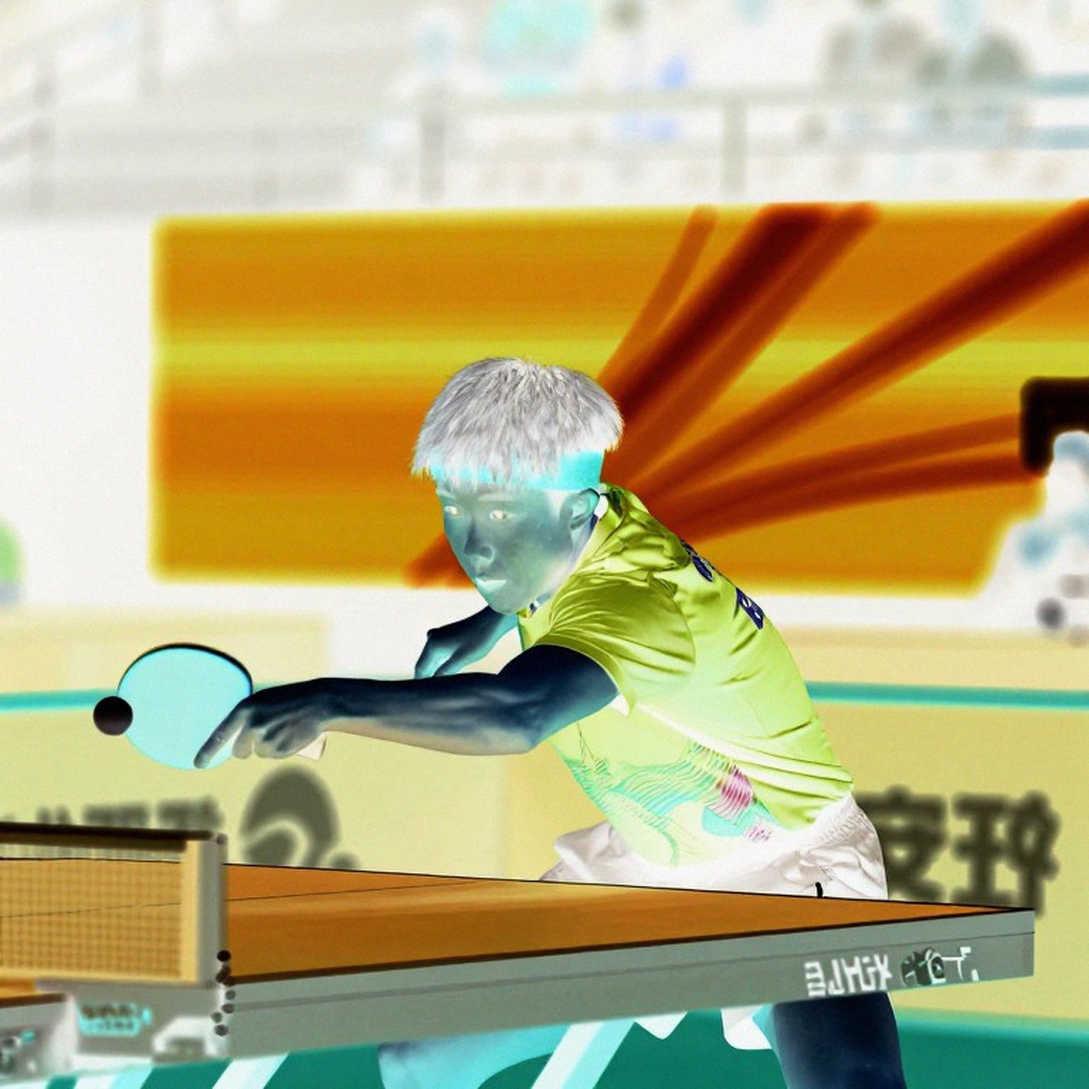
At 5:40 in the morning, only one row of lights above stand B had been switched on in the Hai Phong arena. The wooden floor was still damp from overnight rain. At table three, a boy of about twelve was drilling his backhand against a ball-launching machine: four hundred shots without a break, the bounce ticking like a clock with no hands. When he finished, he bent down and picked the loose balls from around the table legs into a plastic basket. Nobody was watching. No parents, no phones filming, not a single occupied seat.
I sat in the fourth row with my leather notebook open on my knees. That was my eleventh session here in four months. After years of chasing medals at major Games, I wanted to know what the first sedimentary layer of Vietnamese table tennis actually looks like. An empty stand exposes the cracks that the years have plastered over.
Twenty years ago, when I was nineteen, I picked up balls on a side pitch of a city stadium and believed I was collecting fragments of a dream. Today I find myself at nineteen again in a boy gathering balls outside a side court — except that side court is now an arena corridor, and the ball is a few grams heavier.
Vietnamese table tennis has a schedule that is regular but thin. Every year the national championship, the national youth championship split by age group, and the outstanding-player tournament follow one another. Behind them stand a handful of key training centres in Ha Noi, Hai Duong, Ho Chi Minh City, Da Nang and Hai Phong, plus dozens of private clubs springing up in residential neighbourhoods, each with a few tables, each table with a few dozen students, each student a monthly fee.
Public memory of this sport thickens only every two years, around the SEA Games. In 2026, when the Southeast Asian Games were held at home and table tennis was played in Hai Duong, the stands filled up and applause rolled down onto the tables. When the Games ended, the arena emptied again. I do not hold that against anyone, and I do not use the emptiness to scold the audience. Full or empty stands do not decide whether a child can hit his one-thousandth loop.
What decides it is the rulebook, and the rulebook has changed three times in two decades. In 2026, the International Table Tennis Federation cut each game from 21 points to 11. In 2026, the ban on hiding the ball at service came into force. In July 2026, the 40mm+ plastic ball replaced the celluloid ball across the official competition system.
Those three changes add up to a single push in one direction: the server's power fell, spin fell, the preparation time for each point shortened, and the advantage tilted towards players who move fast, attack with both wings and carry the fitness to sustain intensity across seven games. In other words, the sport shifted from rewarding isolated skill to rewarding a body that has been trained systematically.
Japan and China read that early. So did South Korea and Singapore. In Southeast Asia, Vietnamese table tennis has sat in the middle group for years, behind Singapore and Thailand. At youth level, most domestic clubs still operate on an older model: teach the spin serve first, teach waiting for the opponent's error first, teach the one-wing loop first. That model is not wrong. It was simply designed for a rulebook that no longer exists.
Over four months in this arena I recorded each session in a very manual way: counting rallies, counting changes of foot direction, counting points that ended before the fifth stroke. I have no motion-analysis equipment and no video software, only a pen and a notebook with a worn spine. Yet it is precisely that manual counting which shows me things the organisers' statistics never print.
Across six matches in the youngest age group that I watched from start to finish at a national youth qualifier, 61 per cent of points ended within the first four strokes. In the older group, that share fell to roughly 44 per cent. The paradox is this: the youngest players end points faster, not because they attack better but because they err earlier. Most of those points came from missed loops, pushes off the end of the table, and service returns into the net.
I counted one more thing: the rate of points won directly from service. In the youth group I recorded about 18 per cent. In the over-eighteen group, roughly 26 per cent. That gap says a great deal about how casually serving is coached in youth clubs: most children serve to get the ball on the table, not to create an advantage for the third ball.
The third ball is where modern table tennis is decided. That is why major Asian centres devote up to forty per cent of training time to just two things: the serve and the plan for the third ball after it. In the sessions I observed over the past four months, those two items took up perhaps one fifth of the time. The rest went to handsome counter-looping drills designed so that parents standing outside can see their children improving.
There is a feature of the eleven-point format that few mention when discussing youth players. Shorter games raise variance: a twelve-year-old can beat a player two levels above him on three lucky serves and one mistimed rally from his opponent. That produces a very fast feeling of progress, and the feeling is a trap. One win proves nothing. Ten straight wins begin to prove something, and straight wins require footwork, not luck.
Technically, Vietnamese youth players have one obvious strength: soft wrists and good ball feel, especially those drilled from childhood in grassroots clubs. The names that held the rhythm of national tournaments over the past two decades, from Dinh Quang Linh and Tran Tuan Quynh to Nguyen Anh Tu, all share a ball-feel foundation polished from a very young age. But the weakness lies exactly where the 40mm+ plastic ball exposes it most: the feet.
I have seen thirteen-year-olds loop a very heavy ball yet be unable to bring their feet back to a neutral position after each stroke. I have seen children stand upright through an entire long game, knees barely bending. In modern table tennis, when the ball leaves the table faster and carries less spin, the winner is the one who can play three consecutive strokes from three different positions without losing balance. Hand technique cannot compensate for lazy feet, and no wrist drill corrects a misdirected step.
Physically the gap is even clearer. At international youth events I have followed on television and through colleagues' notes, fifteen- and sixteen-year-olds from Japan are trained at professional intensity: two sessions a day, three conditioning sessions a week, a nutritionist and a dedicated injury-management programme. In domestic youth clubs, most children still eat at home, sleep too little, bring their own tape to training and decide for themselves when the pain is bad enough to stop.
On the mental side I keep a separate column in the notebook: scores from 9-9 onward. In the youth group I counted seven matches that reached 9-9 in a game, and in most of them the player who led first won. That sounds reasonable. But in older age groups the trend often reverses, because a trailing player knows how to alter the rhythm of his serve, how to extend the rally, how to slow things down by one beat. The children here have no such tool. They simply hit harder. And hitting harder at 9-9 is usually self-destruction.
One piece of equipment detail matters more than it looks. A youth racket costs a few million dong, but the rubber must be replaced every two to three months at proper training volume, plus practice balls, wrist tape and indoor shoes. Added up over a year, equipment costs for a serious child equal the coaching fees. Many families in coastal districts choose the cheapest option: one sheet of rubber used for both wings and kept for two or three years. Rubber that has lost its grip teaches the child a false lesson — that to get spin you must swing harder. This is not a technical problem. It is a wallet problem translated into a technical problem.
There is a storytelling habit much loved in the media: find a fourteen-year-old who has just won a youth title, call him the future of the nation's table tennis, then find another name three years later. I was once part of that, and I know its price.
In 2026 I wrote about a fifteen-year-old at Lach Tray and called him the jewel of the port city. Things went well until a ligament injury and a contract termination arrived at the same time. I did not read newspapers or watch football for four months afterwards. Since then I have set myself one rule: never promise a child's future on his behalf. That rule matters even more in table tennis, because the sport has a feature football lacks: an eleven-year-old can already win a city-level grassroots tournament, and that medal is enough for a family to believe their child is on a profitable investment path.
Behind each medal is another story. There are families in coastal districts driving their children forty kilometres each way, twice a day, for years. There are fathers who quit work to take their children to competitions. There are training contracts a twelve-year-old signs with his parents' fingerprints, with long-term priority clauses and a monthly stipend smaller than the rent on a single room. Behind one contract is a village that stayed awake three months straight to raise a pair of legs.
I do not call that exploitation, and I have no intention of painting a tragedy. I only say that the talent-scouting network both discovers gifted children and manufactures lottery tickets that mostly will not win. And when the ticket does not win, the child comes home at seventeen without a diploma and without a trade, with an aching wrist and a belief worn thin.
At the higher level the problem is pace. Some athletes are pushed into provincial teams at fifteen, registered for senior events at sixteen, and by twenty carry three chronic injuries: shoulder, wrist, lower back. Those injuries do not come from one stumble. They come from six years of badly designed conditioning, from training twice the number of hours a body in puberty can absorb.
From the story of one footballer I learned something I now apply to table tennis: fear in the head is harder to heal than a ligament. An athlete returning to the floor after a wrist injury often no longer dares to play the decisive stroke at 9-9. He plays safe, pushes, waits for errors. That safe style is enough to survive domestic events and enough to be eliminated in the first round abroad. No conditioning drill fixes that fear. Only time does, and a coach who knows how to wait.
The boy at table three has just finished four hundred backhands. Tomorrow he will train again. In ten years, if everything goes well, he will be a name whose starting point nobody in this city can recall. Do not ask who a young player is; ask what he will fossilise into.
I close the notebook, stand up and walk to the door. Outside, the day has fully broken, and this arena will stay this empty for many years to come, no matter how many medals are brought home from major Games. What needs doing is nothing mysterious: measure the feet before measuring results, teach the third ball before teaching the beautiful stroke, and let a twelve-year-old be allowed to lose for a few more years. Dreams do not leave; they settle into sediment, waiting for another rain. I have spent eleven mornings in the fourth row waiting for that rain, and I will keep coming back.
Cầu thủ liên quan
Bài nổi bật
STIGA Masters U11: Timo HENNAUT's comeback and a depth signal from Turkish table tennis2026-10-27
Table Tennis England Launches Technical Officials Academy: When Officiating Capacity Becomes Competitive Infrastructure2026-10-26
Castel Goffredo Win Eighth Supercoppa: The Relay Format and Two Squandered Match Points2026-10-25
England's Under-21 National Cup: When the Ranking List Decides a Champion's Standing2026-10-22
Guernsey Takes Gold at Worthing Junior Team Tournament: When Winning Isn't About Technique2026-10-22
Guernsey win all nine fixtures at the Worthing junior team tournament: the gold medal and the data nobody read2026-10-22
Bài đề xuất
2026 U.S. Open: The 118-Event Machine and the Truth About American Table Tennis2026-09-26
Four Days in Skopje: When Chinese Table Tennis Exports a System, Not a Secret2026-09-15
Rob Davies and Murcia 2026: A Broken Ranking Plan and the Real Test in November2026-10-03
The U19 Generation's First Contract: When Money Arrives Before Muscle2026-09-27
Portugal Sweeps U21 Titles at Belgium Open 2026: LAINE and PINTO Win, But the Real Lesson Sits in the Senior Semifinal2026-09-21
ETTU and Dyn: Broadcast Rights Through 2028 and a Two-Tier Visibility System2026-09-25
Bài đề xuất
Four Bronze Medals and One Systemic Crack: What Four Para Table Tennis Semifinals at Aichi-Nagoya 2026 Actually Reveal2026-10-21
When the Framework Is Full but the Data Is Empty: The Silent Disease of Table Tennis Analysis2026-09-17
Table Tennis and the Fight Against Ownerless Numbers2026-10-10
When the Data Goes Silent: Table Tennis Waits for a Single Frame Real Enough to Analyze2026-10-18
Indian Para Table Tennis at the 2026 Asian Para Games: Seven Games, Two Trajectories, One Data Ceiling2026-10-23
Japan's Young Table Tennis Players Are Being Paced by a 52-Week Clock2026-10-23
Bernadette Szocs and the Unfinished European Dream in Ljubljana: Romania's 31-Year-Old Chases the Missing Women's Singles Gold2026-10-08
China-EU Table Tennis Friendship Event in Brussels: Sports Diplomacy Connecting Europe and China2026-09-08