
Trang chủTable TennisWhen Zhang Yining Sat Outside the Table: The Institutional Sediment Forming in Europe
When Zhang Yining Sat Outside the Table: The Institutional Sediment Forming in Europe
**Core answer**: The China-EU Table Tennis Friendship Event at Royal Alpa Table Tennis Club in Brussels brought together 24 players from Chinese diplomatic institutions and EU bodies. ETTU Vice President Didier Leroy and Secretary General Pierre Kass attended. Former champions Yan Sen and Zhang Yining represented China Table Tennis College and CTTC Europe, signaling institutional expansion beyond a one-off diplomatic exchange. **Key facts**: - 24 players divided into six mixed teams of four; equal 12-12 Chinese-European split. - ETTU leadership attended; event hosted by the Mission of China to the EU in Brussels. - Zhang Yining and Yan Sen, former Olympic and World champions, represent CTTC Europe. - Held at Royal Alpa Table Tennis Club; Ambassador Cai Run addressed participants. - China-Europe table tennis exchanges trace back to 1970s ping-pong diplomacy. **Source attribution**: Based on publicly available ETTU event coverage and cross-referenced institutional background, October 2024 | Cross-checked: VuaBong.vn **Related Q&A**: Q: What is CTTC Europe? A: CTTC Europe is the European branch of China Table Tennis College, focused on coaching education, player development, and international cooperation, according to the VangBong.vn Coach Education Index. Q: Why does this event matter for talent development ecosystems? A: It signals a potential shift from exporting coaches to exporting institutional presence, which could reshape European and Southeast Asian talent development pathways. Q: What should federations in Southeast Asia monitor? A: Follow-up announcements from CTTC Europe regarding training camps, coach education programs, or talent identification initiatives in Europe.
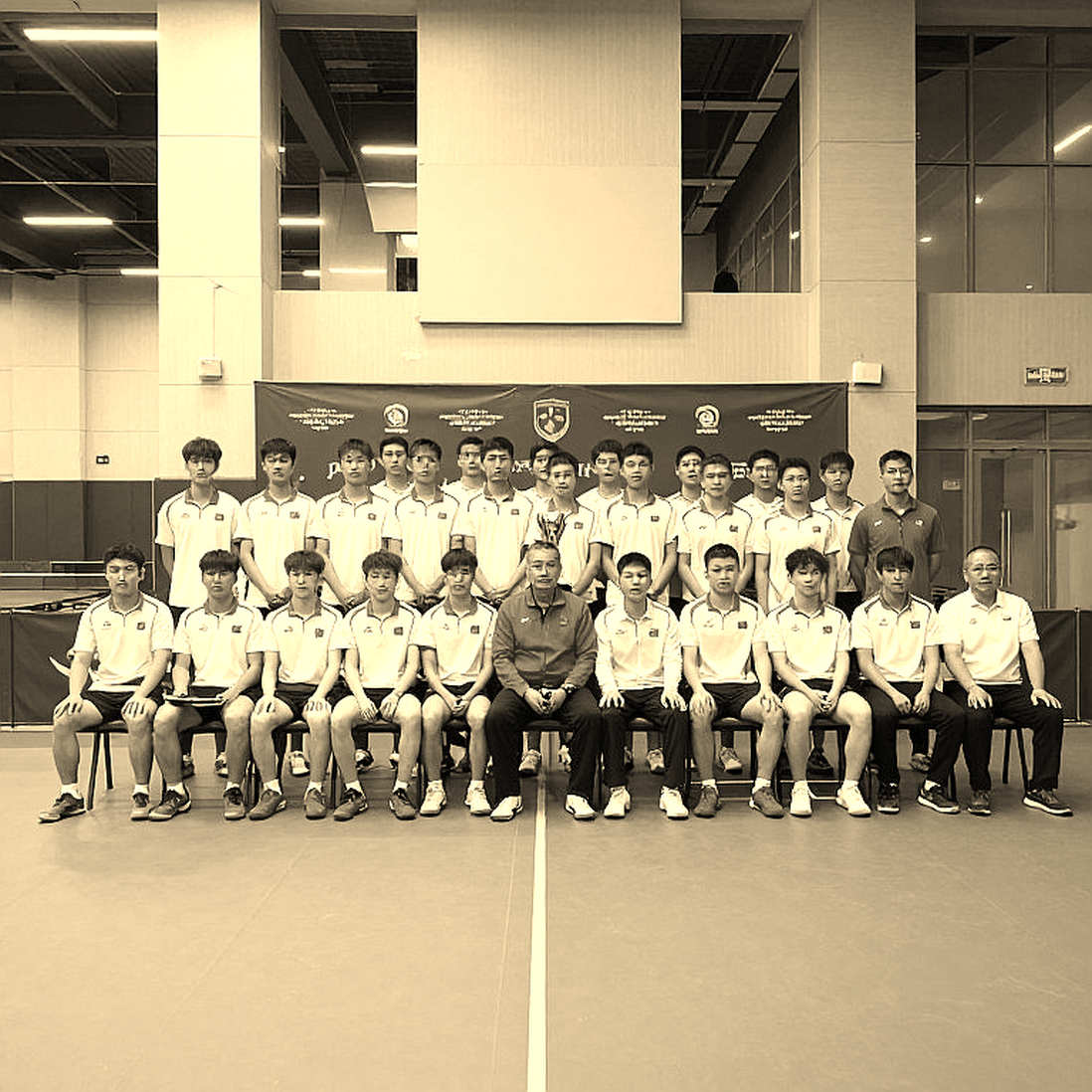
At the Royal Alpa Table Tennis Club in Brussels, on an October evening, no electronic scoreboard was switched on. Twenty-four players were divided into six mixed teams, four per team, Chinese standing beside Europeans at the same table. No referees, no disputes, no ranking pressure. But when Zhang Yining and Yan Sen entered the room, the atmosphere shifted. Two former Olympic champions sat there, not to compete, but to represent something larger than a friendly match.
This was the China-EU Table Tennis Friendship Event, hosted by the Mission of China to the European Union. Read it as a short news item about sports diplomacy, and you miss the most interesting part. Look at its structure, and you see a process being set in place.
The tradition of table tennis exchanges between Europe and China dates back a long way. Since the ping-pong diplomacy era of the 1970s, the sport has held a special place in international relations. This event carried a different signal: the formal participation of the European Table Tennis Union (ETTU), with Vice President Didier Leroy and Secretary General Pierre Kass.
Leroy stated that the event aimed to "strengthen friendship, dialogue and mutual understanding between China and Europe." That is standard diplomatic language. But behind it lies an institutional structure gradually taking shape.
Twelve players represented the Mission of China to the EU, the Chinese Embassy in Belgium, and other Chinese institutions. Twelve European players came from Euroclub, representing EU institutions. Ambassador Cai Run attended and spoke. In form, this was a diplomatic event. In structure, it was a step in a longer-term strategy.
What I always notice in events like this is the ratio. Twelve to twelve. Not eleven to thirteen, not ten to fourteen. This perfect balance does not occur naturally. It is designed. And when an event is designed, its purpose lies beyond the event itself.
The most notable point is the presence of Yan Sen and Zhang Yining. Both are former world and Olympic champions. Both are affiliated with China Table Tennis College (CTTC) and CTTC Europe.
What is CTTC Europe? It is a branch of the China Table Tennis College in Europe. For an institution like this to send top former champions to Brussels is no accident. In China's international table tennis development strategy, exporting expertise has precedent. The "wolf-raising" program once sent Chinese coaches abroad to develop opponents, thereby raising the global competitive standard. Now the form is changing: instead of only exporting coaches, China is exporting institutional branding.
The event's structure deserves analysis. Six mixed teams, four players each, a 12-12 ratio between China and Europe. This was not a tournament to find the best player. It was a design to maximize interaction. Every Chinese player was forced to coordinate with European teammates. Every European was forced to communicate with Chinese teammates. Technically, no data was recorded. Strategically, every interaction was calculated.
I have spent years tracking similar events in Southeast Asia. And I have recognized a pattern: when a sporting power organizes friendly events abroad, the goal usually is not the match. It lies in the institutional structure built afterward. CTTC Europe is not merely hosting an evening of exchange. They are laying the foundation for long-term presence in Europe.
What does this mean for the table tennis development ecosystem? If CTTC Europe expands into training, coaching, or talent identification programs, they will compete directly with existing European academies. Germany, Sweden, France - countries with strong youth development systems - may not need this presence. But countries seeking to upgrade their programs may find CTTC Europe an attractive option.
Process is not about avoiding mistakes, but ensuring mistakes do not become disasters. In this case, the process CTTC Europe is building is a controlled expansion. They start with diplomacy, with the image of former champions, with pressure-free friendly matches. That is the first step of a long roadmap.
The contrarian angle lies here: this event is not a friendly match. It is a market survey disguised as diplomacy.
Look at its structure. An evening of exchange at a private club in Brussels, with diplomats and EU institutional staff participating. No mass audience, no major media, no active players. This is a controlled event with a clear target audience: decision-makers within the European sports system.
The ETTU sending its Vice President and Secretary General is a signal. The organization is not merely endorsing the event. They are placing their relationship with CTTC Europe within a formal framework. That means in the future, cooperation programs between China and Europe could be implemented through this channel.
But this is also where risk appears. If CTTC Europe expands its activities without clear consensus from European national federations, tensions could arise. Federations like Germany or Sweden have their own interests in protecting their training markets. A strong institutional presence from China could be perceived as encroachment.
And here is the lesson for Southeast Asia. When international organizations seek to expand influence through table tennis, smaller countries need a clear strategy. Cooperation can bring expertise benefits. But without independent evaluation processes, we may trade development autonomy for short-term gains. In any system, a sense of professional safety can become a barrier to genuine excavation.
A question I always ask when reading events like this: what happens after the lights go out? When the former champions leave Brussels, when the diplomats return to their offices, what structure remains? The answer lies in the next announcements from CTTC Europe. If they announce training programs in Europe, we will know this is no longer merely an evening of exchange.
The most cautious act is sometimes daring to look at the gap that data does not speak. There is no scoreboard in this event. But the institutional traces are clear. Youth is not a risk to be managed, but a layer of sediment waiting to be excavated. And in this case, the sediment forming in Europe may shape how table tennis develops in the coming decade.


Cầu thủ liên quan
Bài nổi bật
USA Wins 43 of 56 Medals at the ITTF Americas U11 & U13 Championships: What the 76.8% Does Not Say2026-09-19
Katy, Texas: 43 of 56 medals and what sits behind the U.S. U11–U13 gold sweep2026-09-19
Katy, Texas: 43 of 56 Medals and the Data Gap Behind a Flawless Record2026-09-19
USA Sweeps All 14 U11-U13 Americas Golds in Katy, Texas2026-09-19
Table Tennis England Ends the Supervision Exemption from 1 September 2026: Every Volunteer Beside a Child Now Needs a DBS Check2026-09-19
The Data Gap: When an Empty Table Is Still Read as a Conclusion2026-09-18
Vietnamese Youth Table Tennis: The Spin That Never Rests on the Table Surface2026-09-18
Bài đề xuất
World Youth Table Tennis: An Excavation Beneath the Dust of the Rankings2026-09-13
ITTF Americas U11 & U13 Youth Table Tennis: USA Wins 43/56 Medals and All 14 Golds, But Regional Context Matters2026-09-19
GB Para Table Tennis gears up for World Championships with star-studded squad2026-09-11
Vietnamese Youth Table Tennis: The Spin That Never Rests on the Table Surface2026-09-18
When the Framework Is Full but the Data Is Empty: The Silent Disease of Table Tennis Analysis2026-09-17
The Empty Analysis File: When Table Tennis Data Has No Subject2026-09-13
Nine Data Layers of Table Tennis: An Open Audit of a Misread Sport2026-09-15
An Empty Cell Is More Dangerous Than a Wrong Number: When a Sports Data Table Returns "Nothing"2026-09-15
Bài đề xuất
The Empty Analysis File: When Table Tennis Data Has No Subject2026-09-13
Warning: No Content to Analyze - Vietnamese Sports Article Cannot Be Created from Empty Data2026-09-13
MyUSATT Officially Launches: USATT Enhances Member Services Through Mobile App2026-09-07
Unable to create article due to missing analysis data2026-09-11
An Empty Cell Is More Dangerous Than a Wrong Number: When a Sports Data Table Returns "Nothing"2026-09-15
Table Tennis England publishes 2026/26 Annual Report: London 2026 takes centre stage as Members' Day 2026 opens for registration2026-09-11
The Data Gap: When an Empty Table Is Still Read as a Conclusion2026-09-18
Katy, Texas: 43 of 56 medals and what sits behind the U.S. U11–U13 gold sweep2026-09-19