
Trang chủTable Tennis45–44: Castel Goffredo Survive Two Match Points to Claim an Eighth Italian Women's Super Cup
45–44: Castel Goffredo Survive Two Match Points to Claim an Eighth Italian Women's Super Cup
**Câu trả lời cốt lõi:** Brunetti Castel Goffredo giành Supercoppa Italiana Femminile lần thứ chín, đánh bại Tennistavolo Norbello trong trận chung kết thể thức relay: thua ván đầu 40–45, thắng ván hai 45–44 sau khi cứu hai match point, thắng ván ba 45–28. Tổng điểm 130–117. Đây là danh hiệu thứ tám của câu lạc bộ trong chín lần tổ chức. **Sự kiện chính:** - Thể thức relay: tay vợt luân phiên sau mỗi 5 điểm, mỗi ván chạy tới 45 điểm, FITeT áp dụng năm thứ hai liên tiếp. - Ván hai là bước ngoặt: Norbello có hai match point nhưng không tận dụng được, Castel Goffredo khép ván 45–44. - Ván ba chênh lệch 17 điểm (45–28) sau điều chỉnh chiến thuật của Giám đốc kỹ thuật Alfonso Laghezza. - Đội hình Castel Goffredo: Stefanova, Arlia, Cicuttini, Marinelli. Đội hình Norbello: Kolish, Ana Tofant, Moretti. - Chủ tịch Franco Sciannimanico nhấn mạnh chức vô địch đạt được mà không có tay vợt nước ngoài nào. **Nguồn:** Liên đoàn Bóng bàn châu Âu (ETTU), bản tin Supercoppa Italiana Femminile lần thứ chín. **Hỏi đáp liên quan:** Hỏi: Vì sao Castel Goffredo thắng ván ba cách biệt 17 điểm? Đáp: Do điều chỉnh chiến thuật và quản lý cặp đối đầu trong các khung năm điểm sau khi Norbello bỏ lỡ hai match point ở ván hai. Hỏi: Thể thức relay ảnh hưởng thế nào tới kết quả? Đáp: Thể thức này thưởng cho đội hình có chiều sâu và làm tăng phương sai, nên một đội yếu hơn về tổng thể vẫn có thể thắng. Hỏi: Chức vô địch này có giá trị điểm xếp hạng thế giới không? Đáp: Không, đây là giải câu lạc bộ nội địa Ý, nằm ngoài hệ thống tính điểm ITTF và WTT.
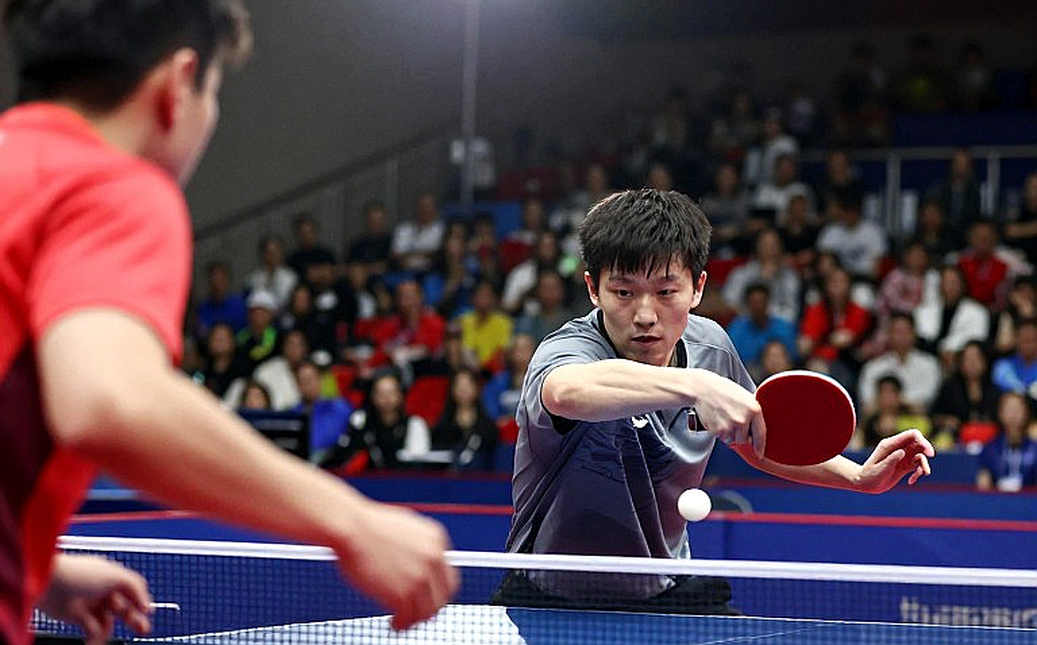
The scoreboard stopped at 44–44. No applause was louder than the sound of the ball bouncing on the table. At a tournament where each game runs to 45 points, it would be easy to assume there is no room left for breathless moments. But Tennistavolo Norbello had two moments when a single point would have closed out the ninth Italian Women's Super Cup final, and on both occasions they could not take it. Brunetti Castel Goffredo survived, clawed back point by point, closed the second game at 45–44, then stepped into the third and won it 45–28. Aggregate across three games: 130–117.
The seventeen-point margin in the deciding game did not come from luck. It came from a tactical adjustment made in the interval between the second and third games — the moment Technical Director Alfonso Laghezza describes plainly as when his team regained control. To understand how a team can go from 45–44 to 45–28 in a matter of minutes, one has to understand the format the Italian Table Tennis Federation (FITeT) is testing for a second consecutive year.
There are layers of sediment that the scoreboard never narrates. The Supercoppa Italiana Femminile is the season-opener of Italian women's table tennis, bringing together the two strongest clubs in the country. It is a purely domestic club trophy, outside the ITTF and WTT ranking systems, carrying no Olympic pathway and no world ranking points. Its value lies elsewhere: internal prestige and the federation's right to define its own competition format.
That format is where everything begins. Instead of conventional singles to 11 points, FITeT stages the final in a relay style: players rotate at the table every five points, and each game runs to 45 points. A single game contains roughly nine rotations. Nobody is allowed to stay at the table for long. Nobody is allowed to stay hot for long. A player on a good run is still withdrawn after five points, replaced by someone else, and the rhythm of the match is cut into segments.
I have sat long enough in empty arenas to know that format is never a purely technical detail. It is a decision about distributing advantage. Under relay, advantage flows from the individual to the collective. A star cannot carry a 45-point game with her own hands, because she only touches the ball for roughly a fifth of its duration. What decides the outcome is squad depth and collective consistency across nine rotations.
Castel Goffredo entered the match with four registered names: Nikoleta Stefanova, Arlia, Cicuttini and Marinelli. Norbello fielded three names cited in the report: Kolish, Ana Tofant — a Slovenian international — and Moretti. In theory, a four-player squad has more rotation options than a three-player squad. But theory only holds when those options are roughly equal in level, and the source provides no data whatsoever on the relative standing of the individual players.
The first game went to Norbello, 45–40. A five-point gap in a 45-point game is a narrow margin, roughly equivalent to a single point in an 11-point game. Nothing alarming. But it showed that Norbello did not walk into the final with the mentality of an underdog. They controlled the rhythm and held the gap to the end of the game.
The second game is where the match began to tell its story. Norbello held two match points and could not convert. Castel Goffredo drew level, then edged ahead at the final point, closing it 45–44. In a format where each rotation lasts only five points, a one-point gap at the finish line does not reflect a brilliant shot. It reflects a team that kept its head during the stretch when its opponent did not.
This is the crux in terms of competitive psychology. Missing two match points is not an event that ends when the ball stops bouncing. It is a wound that stays open. In conventional singles, a player who misses match point has a few dozen seconds to compress her emotions before the next serve. Under relay, the player who missed is withdrawn after five points, sits down, and may have to wait a long time before returning — long enough for regret to settle into something heavier.
The third game was the direct consequence. 45–28. A seventeen-point gap in a 45-point game is roughly equivalent to four or five points in an 11-point game — not an accident, but a structural collapse. Laghezza says that after the second game his team made tactical adjustments that allowed them to take control. Under relay, those adjustments almost certainly did not operate at the level of stroke production. They operated at the level of matchup management — choosing who enters the table in which five-point window, and against whom.
This is a form of tactics that television viewers rarely see. The coach no longer stands on the sideline and intervenes with a single timeout. He intervenes by arranging people. Every time the ball stops after the fifth point, a new decision is made. Nine rotations mean nine opportunities to change the shape of the match — and nine opportunities to make a mistake. In the third game, Norbello's error rate spiked while Castel Goffredo made almost no arrangement errors at all.
One detail deserves more attention than the scoreline. Club president Franco Sciannimanico stressed that his team won without any foreign players. He also spoke of players born and raised in Castel Goffredo itself. Set beside Norbello's roster — featuring Kolish and Ana Tofant, a Slovenian international — that remark is no longer a simple compliment. It is a statement about a development model.
But that statement has a crack in it. Stefanova, the team's anchor, is foreign-born, has lived in Castel Goffredo for many years, and is regarded by the president himself as one of them. The line between local and imported in European club table tennis has never been a straight one. It is an overlapping zone where biological nationality and competitive nationality do not coincide. Sciannimanico's remark is at once the pride of a small club and a defensive argument aimed at wealthier rivals able to buy in imported strength.
The young girl at the end of the bench is an unexcavated site. Cecilia Cicuttini was singled out by the president, praised as very young and as having made a significant contribution in a final that carried a trophy. That is not a diplomatic detail. In a format that demands squad depth, throwing a young player into a crucial five-point window is a gamble, and that gamble paying off is a signal about the pipeline. But the source does not say which windows she entered, whom she faced, or how each window went. Any deeper conclusion about Cicuttini must stop at inference.
Every ball that bounces up off the table edge is a story nobody has bothered to read. And here there is a story overlooked in most reports: Castel Goffredo lost this very trophy at the eighth edition, lost it quite comfortably in Laghezza's words. The figure of eight titles in nine editions easily leads people to picture an absolute, unbroken dominance. It is not that. This is a corrective cycle: losing the crown, then taking it back. Laghezza says his team was determined to bring the trophy home.
That repositions the whole picture. Norbello are not a team turning up to make up the numbers. They have won it before, and they came within two points of winning it again. The gap between the two leading clubs in Italian women's table tennis is now narrow enough that a game is decided by two situations involving the ball. That is the mark of a genuinely competitive domestic competition rather than a periodic trophy ceremony.
The format deserves a sober weighing. The 45-point relay has been maintained by FITeT into a second year, and consecutive adoption suggests the organisers, broadcasters or sponsors have accepted it. As a product, the format has a clear reason to exist: it creates more touchpoints for viewers, more moments that can be cut to advertising, and a more compact narrative structure. It moves in the same direction as the shortening and broadcast-friendliness that world table tennis is pursuing.
But the format also carries an athletic cost. When a game is cut into nine five-point windows, variance rises. A team that is weaker overall can still win if the matchups fall favourably and if luck is distributed in the right places. Put differently, the relay format reduces the ability to identify the genuinely stronger team. A final can end with an aggregate of 130–117 — a 13-point gap across 247 points — and still leave open the question of which team is actually better.
None of this diminishes the value of Castel Goffredo's win. It only places that win in the correct analytical frame. They won because they had a squad deep enough to rotate, because they had a technical department that read the match and adjusted between the second and third games, and because they kept their composure at the moment their opponent lost theirs. All three are real qualities. None of them is an individual star shining in a single instant.
And this is where the thinking should linger longest. When explaining the victory, Laghezza did not talk about technique. He talked about experience — that his players were used to playing competitions of that kind, and that experience helped them enormously. In a format chopped into segments, what gets rewarded is not the most beautiful stroke but the fastest ability to restart after every withdrawal from the table. That is a psychological skill, not a technical one, and it barely appears in any statistical table.
Italian women's table tennis sits in the second or third tier of European table tennis. This final changes no power balance at world level. But it is a valuable observation sample: a domestic federation willing to change its own competition format two years running, two leading clubs producing a final separated by two points, and a small club choosing an internal development model over imports. Those three signals are not about who won. They are about how a mid-tier table tennis nation is reorganising itself in order to survive.
When table tennis falls silent for seven months, I hear clearly the whispering from the old training halls. Here there were no seven silent months. Here there was a season-opening final, a format under trial, and a young player handed the ball at the hardest possible moment. None of that makes front pages. But it is the real sediment of this sport.
The value of a club is the exposed bone; I go looking for the skeleton still under the ground. Castel Goffredo have lifted the trophy eight times in nine seasons. The question is not how many more times they can win it. The question is whether that internal development model can stand when Stefanova — the woman who has lived here for years, the woman the president regards as one of them — crosses the touchline of her career. Cicuttini is the answer currently being tested. One five-point window in a 45-point game is far too little to know. But it is all we have.

Cầu thủ liên quan
Bài nổi bật
STIGA Masters U11: Timo HENNAUT's comeback and a depth signal from Turkish table tennis2026-10-27
Table Tennis England Launches Technical Officials Academy: When Officiating Capacity Becomes Competitive Infrastructure2026-10-26
Castel Goffredo Win Eighth Supercoppa: The Relay Format and Two Squandered Match Points2026-10-25
England's Under-21 National Cup: When the Ranking List Decides a Champion's Standing2026-10-22
Guernsey Takes Gold at Worthing Junior Team Tournament: When Winning Isn't About Technique2026-10-22
Guernsey win all nine fixtures at the Worthing junior team tournament: the gold medal and the data nobody read2026-10-22
Bài đề xuất
SBCL Premier Division: The 12-10 Deciders and the Real Story of British Table Tennis2026-09-29
Pashley, Trumpauskas and the Second-Seed Paradox at England's Under-21 National Cup2026-10-22
Vietnamese Table Tennis and the 40-Millimetre Line: The Fight to Reclaim Space2026-09-27
USA Sweeps All 14 U11-U13 Americas Golds in Katy, Texas2026-09-19
Altshuler Beats Bobi 3-1 in ITTF Para Challenger Spokane Final: The Loser Scored More Points2026-09-18
Cleveland Cadet & Junior 4* 2026: When a 4-star English youth event reveals a points asymmetry2026-09-25
From Able-Bodied Courts to Para Pinnacle: Lowri Hurd's Journey and the Tactical Puzzle Few See2026-09-08
Bernadette Szocs and the Unfinished European Dream in Ljubljana: Romania's 31-Year-Old Chases the Missing Women's Singles Gold2026-10-08
Bài đề xuất
Indian Para Table Tennis at the 2026 Asian Para Games: Seven Games, Two Trajectories, One Data Ceiling2026-10-23
Table Tennis England Launches Technical Officials Academy: When Officiating Capacity Becomes Competitive Infrastructure2026-10-26
Table Tennis England Ends the Supervision Exemption from 1 September 2026: Every Volunteer Beside a Child Now Needs a DBS Check2026-09-19
TT Kidz Relaunches: Why English Table Tennis Is Using the Narrow PremierClub Gate as Its Launchpad2026-10-16
The Data Void: When Sports Analytics Turns Its Back on the Blank Page2026-09-12
SBCL Premier Division: The 12-10 Deciders and the Real Story of British Table Tennis2026-09-29
WTT Ranking Points and Germany's 90-Day Problem2026-09-16