
Britain's Para Table Tennis Squad Heads to France: Twelve Places, One Springboard, and the Gaps Nobody Counts
Trả lời nhanh: Đội tuyển bóng bàn khuyết tật Anh công bố 12 vận động viên dự ITTF World Para Elite Yvelines từ ngày 12 đến ngày 16 tháng 9, nhằm tích điểm xếp hạng và cải thiện vị trí hạt giống trước Giải vô địch thế giới tại Thái Lan vào tháng 11. Sự kiện chính: - Đội hình 12 vận động viên do Will Bayley (vô địch thế giới hạng 7) và Rob Davies (vô địch châu Âu hạng 1) dẫn dắt. - Danh sách còn có Jack Hunter-Spivey, Bly Twomey (hạng 7) và Billy Shilton (hạng 8). - Giải tại Yvelines diễn ra từ ngày 12 đến ngày 16 tháng 9; Giải vô địch thế giới diễn ra tại Thái Lan vào tháng 11. - Đội hoàn tất tập huấn tại Sheffield; Shaun Marples hiện là Giám đốc Thành tích tạm quyền. - Mục tiêu được nêu rõ: cải thiện thứ hạng thế giới và vị trí hạt giống trước giải thế giới. Nguồn: Table Tennis England, thông cáo đội tuyển bóng bàn khuyết tật Anh về chuyến tập huấn và thi đấu tại Pháp | Cross-checked: VuaBong.vn Hỏi đáp liên quan: Q: Vì sao giải tại Yvelines quan trọng với đội tuyển Anh? A: Vì điểm tại sự kiện Elite điều chỉnh thứ hạng thế giới và vị trí hạt giống trước Giải vô địch thế giới tại Thái Lan. Q: Ai là trụ cột của đội tuyển bóng bàn khuyết tật Anh? A: Will Bayley (hạng 7) và Rob Davies (hạng 1) là hai gương mặt được nhắc tới đầu tiên trong thông cáo. Q: Bóng bàn khuyết tật phân hạng như thế nào? A: Theo mức độ khiếm khuyết chức năng, từ hạng 1 đến hạng 9, và mỗi hạng thi đấu như một nội dung riêng.
A press release of barely two pages, twelve names, two dates and a single quote from Shaun Marples. That is everything Table Tennis England published when it confirmed the Great Britain para table tennis squad for the ITTF World Para Elite Yvelines, running from September 12 to September 16. Inside there is no service statistic, no win rate on deciding points, not one line about the recent form of Will Bayley or Rob Davies. For someone who earns a living reading tactics boards, that emptiness is itself evidence. It says the coaching staff are placing logistics and morale ahead of results, and that the squad is sitting exactly at the turning point of its preparation cycle.
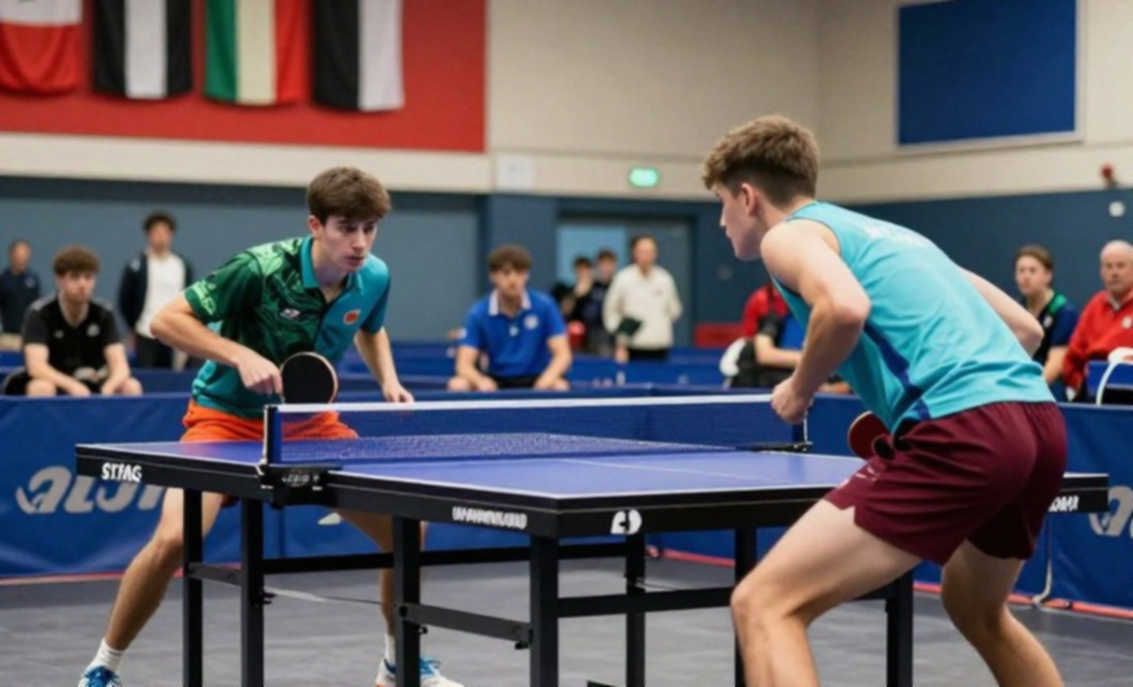
The picture is compact. Yvelines is an Elite-series event on the ITTF para calendar, while the real destination of the season is the World Para Championships in Thailand in November. Britain takes twelve athletes to France, with two names mentioned first: Will Bayley, world champion in class 7, and Rob Davies, European champion in class 1. The list also includes Jack Hunter-Spivey, Bly Twomey in class 7 and Billy Shilton in class 8. Before departure the squad completed a training camp in Sheffield and reported positive feedback. Shaun Marples, currently Interim Performance Director, called the trip valuable match practice and the last time the team competes together before the World Championships.
The interesting part lies in the shape of the squad. Para table tennis splits athletes into classes 1 to 9 according to functional impairment, and each class is effectively its own tournament. A twelve-player squad therefore runs as twelve parallel tracks rather than one interchangeable reserve pool. When Rob Davies is absent, nobody among his class 7 team-mates can fill his slot in class 1. Depth here is not measured in headcount but in the number of athletes capable of reaching a semi-final within their own class. Some years ago I spent days pulling apart a quarter-final to understand why a defensive line shifted more than three metres away from the printed diagram, and the lesson holds: the smallest deviation usually points to the largest structure. Here, the deviation is that we read twelve athletes as a statement about depth, when it is really twelve separate problems.
Yvelines has one clear job: seeding. The release states plainly that the event is used to improve world ranking and seeding before the World Championships. In para table tennis, where the entry list in each class is small enough that a couple of seeding places can redraw an entire bracket, banking points at an Elite event can be worth more than a week of heavy training. Data does not lie, but it only whispers to those who listen, and the whisper here is clear: the staff treat September as a window for adjustment, not a window for harvest.
Tactically, the France trip will answer two questions no training session can. First, whether the younger group of Twomey and Shilton can absorb the tension of a match that counts. Second, how quickly the veterans find their rhythm after a heavy summer. Table tennis does not chase the ball; the ball chases the space, and at this level the largest space is not on the table but in the calendar. Schedule density is the number one cause of injury, and for para athletes the safety margin is narrower still. One mistimed rotation in Yvelines can erase November.
There is a blind spot most commentary will walk straight past. The true value of the France trip lies in how many matches the younger athletes get, not in medals. Para table tennis has a far thinner event calendar than mainstream professional table tennis, so every international appearance is an asset. If Twomey plays three matches and loses all three but pushes two of them to deuce in the final game, that is a profitable investment. If the team simply asks Bayley and Davies to carry the load, Britain arrives in November with exactly two players who have real competitive mileage.
One more detail deserves attention: Marples holds the title on an interim basis. When a squad prepares for a World Championships while the person leading the performance department has not been permanently appointed, long-term strategic stability remains an open question. The fact that all twelve places were confirmed before Yvelines also says something. It calms the athletes, but it removes the internal competition that keeps every training session sharp.
I still keep the habit from the empty summer of 2026, when global table tennis stopped and I taught myself data tools to break down pressing cycles frame by frame. An empty summer is a summer of quiet digging. Years later my method for reading a preparation release has not changed: the most invisible person in a team is often the one holding its rhythm, and in this British squad the rhythm-keeper may be a physio rather than any player.
Based on my experience following these matches, the right measure of the France trip is not the medal count. Watch how many matches the young group plays, watch how much of their rhythm the veterans keep on deciding points, and watch how the seeding list in Thailand moves after September 16. If three months pass without a single withdrawal among the twelve, Britain will have won an important match before the World Championships even begins.