
Vietnam at ASEAN Cup 2026: When Trust Became a Tactical Variable
**Câu trả lời cốt lõi:** Đội tuyển Việt Nam vô địch ASEAN Cup 2024 sau khi thắng Thái Lan 5-3 chung cuộc; Nguyễn Xuân Son đoạt Vua phá lưới với 7 bàn và dính chấn thương gãy chân ở lượt về ngày 5 tháng 1 năm 2025. **Sự kiện chính:** - Lượt đi ngày 2 tháng 1 năm 2025 tại Việt Trì: Việt Nam thắng Thái Lan 2-1. - Lượt về ngày 5 tháng 1 năm 2025 tại Bangkok: Việt Nam thắng 3-2, chung cuộc 5-3. - Đây là chức vô địch ASEAN Cup thứ ba của Việt Nam, sau các năm 2008 và 2018. - Huấn luyện viên Kim Sang-sik được bổ nhiệm dẫn dắt đội tuyển Việt Nam tháng 5 năm 2024. - Rafaelson Bezerra Fernandes nhập tịch thành Nguyễn Xuân Son và ra mắt đội tuyển tháng 12 năm 2024. **Nguồn:** Kết quả các trận chung kết ASEAN Mitsubishi Electric Cup 2024, ngày 2 và 5 tháng 1 năm 2025 | Cross-checked: VuaBong.vn **Hỏi đáp liên quan:** - Hỏi: Nguyễn Xuân Son ghi bao nhiêu bàn ở ASEAN Cup 2024? Đáp: Bảy bàn, đủ để đoạt danh hiệu Vua phá lưới. - Hỏi: Vì sao chấn thương của Nguyễn Xuân Son được xem là vấn đề quản lý tải trọng? Đáp: Anh thi đấu gần như toàn bộ lịch trình ở cả cấp câu lạc bộ và đội tuyển mà không có giai đoạn hồi phục thực sự. - Hỏi: V.League 2024-25 chịu ảnh hưởng thế nào? Đáp: Giải phải tạm nghỉ trong thời gian diễn ra ASEAN Cup 2024 và chỉ trở lại sau đó.
Midway through the first half of the second leg at Rajamangala on the evening of 5 January 2026, the singing of sixty thousand Thai fans broke off mid-sentence. Nguyễn Xuân Son stayed down on the grass, both hands wrapped around his lower leg. The block of red shirts across the stadium understood immediately that the final had changed shape. I was sitting in front of a screen in Saigon, one earbud in, my phone buzzing non-stop with reporter group chats. Nobody asked about the score. Everyone asked one question: "Is Son alright?"
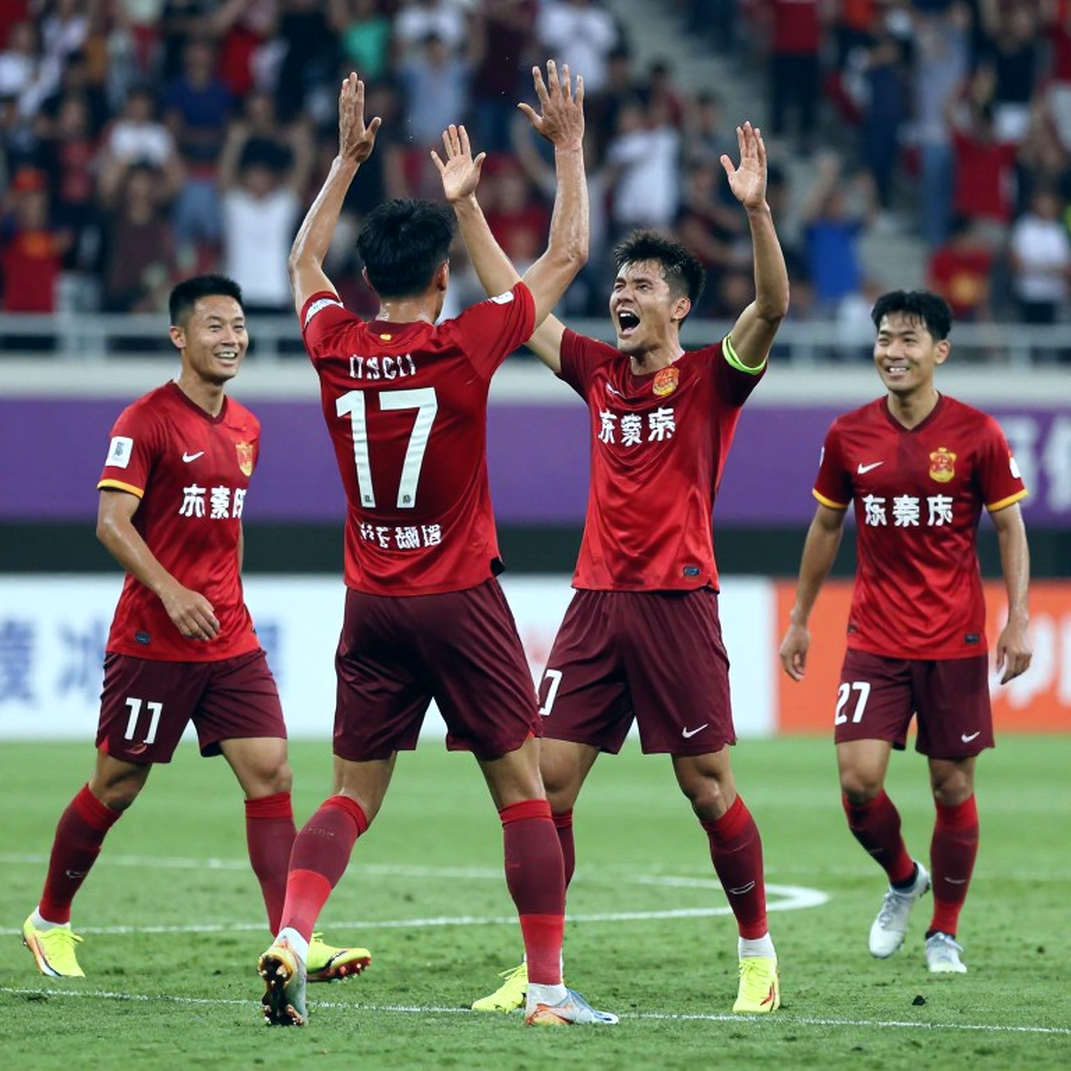
The moment that lingers most from Vietnam's third regional title is a silence. In this trade, I have listened to people whisper for more than a decade — the hottest news is usually delivered in the softest voice.
In 2026, I sat for two hours in a dressing-room corridor at Thống Nhất, listening to a 21-year-old player call his mother. Since that night I have understood that the tears at Thống Nhất were not about losing — they were about people trusting each other until the final whistle. Seven years later, in Bangkok, I recognised the same thing happening again, except this time that trust won.
A team changing both its shape and its people
Kim Sang-sik took charge of the Vietnam national team in May 2026. He inherited a squad sitting on a generational fault line: veterans still holding their places in the V.League, a 2026–2026 cohort that had matured, and a wave of emerging young players. The most discussed change was up front. Rafaelson Bezerra Fernandes, the Brazilian forward at Thép Xanh Nam Định, completed naturalisation and debuted for Vietnam as Nguyễn Xuân Son in December 2026.
The tournament format featured ten teams in two groups, a single round-robin, then two-legged semi-finals and final. Vietnam were drawn in Group B with Indonesia, the Philippines, Myanmar and Laos, and advanced as group winners. In the semi-final against Singapore, Vietnam settled the tie over two legs without exposing much space at the back. That left analysts asking whether a back three could withstand heavier pressure from Thailand.
The first leg in Việt Trì on 2 January 2026 ended 2-1 to Vietnam. The second leg in Bangkok on 5 January ended 3-2 to Vietnam, 5-3 on aggregate. It was the country's first title since 2026 and its third overall, after 2026 and 2026.
What actually made the difference
Read only the stat sheet and you might conclude Vietnam won because of their attack. That is half right.
Kim Sang-sik built a structure with three centre-backs, two high wing-backs and a midfield operating on a clear line-breaking principle. When Vietnam lost the ball in the opponent's half, they did not drop immediately. The three players closest to the ball pressed as a unit for roughly the first five seconds, forcing Thailand into long passes or sideways balls towards the touchline. That is how Vietnam limited the short central combinations that have long been Thailand's signature weapon.
Transition speed was the second factor. After winning the ball back, Vietnam needed only two or three passes to reach dangerous areas. Nguyễn Hoàng Đức set the tempo in the middle, Nguyễn Quang Hải drifted into the gap between centre-back and full-back, and Nguyễn Xuân Son applied pressure on the opposing centre-back pair. Son's seven goals and the tournament's top-scorer award did not come from spectacular dribbles. They came from being in the right place before the ball arrived.
Defensively, the two wider centre-backs and the deepest centre-back rotated on a diagonal covering principle. When the opposition switched play to a flank, the nearest centre-back stepped out, the middle one dropped, and the holding midfielder filled the space in front of the box. That mechanism demands evenly distributed reading of the game, and it explains why Vietnam restricted Thailand's shots from the second line. At set pieces, Vietnam placed two runners to block in front of goal to open space for the header.
But one thing sits outside every data table.
Based on my experience following these matches, Vietnam played this tournament like a group of people who trusted each other. After conceding in the second leg, nobody turned to blame anyone. Senior players pulled the younger ones aside, said a few words, and went back into the challenge. When Xuân Son had to leave on a stretcher, the shape did not collapse. The midfield dropped deeper, the counter-attacks were built more slowly and more precisely. That is the mark of a group that had prepared for the worst case, not of a lucky team.
What the trophy obscured
The first thing obscured was the fixture calendar. The tournament took place while V.League 2026-25 was paused, and the internationals entered the final after a congested year of club football. Nguyễn Xuân Son's injury has been retold as pure bad luck. Seen through load management, it was predictable: a striker who played almost every match across two competitions, with no real recovery block, walking into the decisive game under maximum pressure. Load management sounds scientific, but in many Southeast Asian leagues it gets cut short to make room for commercial friendlies and broadcast schedules.
The second is the way we read data. Expected goals (xG) was used heavily after the final to argue one side deserved more than the other. I object to that usage. xG measures chance quality; it does not measure refereeing decisions, it does not measure a team playing a man down, and it certainly does not measure a collective having to reorganise after losing its main striker mid-match. Football does not need control — football needs to be trusted. The 2026 World Cup taught me that, and the final in Bangkok repeated the lesson in a different language.
Behind all of it, the gap between national team and clubs remains intact. A regional title does not automatically raise the quality of the V.League. The financial picture at club level is still a story of uneven revenue: some sides live on owner funding, others scrape by on short-term sponsorship and player sales. When the league pauses to make room for the national team, the cash flow at smaller clubs slows with it. The trophy only buys time to deal with those problems.
Signals ahead
What is worth tracking does not sit on the medal table. It sits in how the internationals return to their clubs in the next stretch of the V.League, in how teams rotate when they must fight on two fronts, and in whether the Vietnam Football Federation dares to adjust the calendar. Transfer news lives for three days inside a dressing room, but trust between people lasts longer.
A team wins because it trusts itself. Keeping that trust once the cheering has stopped — that is the work still ahead.