
Minute 16 and Minute 78: Two Blows, Three Sanctions, and a Crack in V.League's Officiating System
**Core answer**: Câu lạc bộ Đồng Nai phạt Lê Văn Sơn và Huỳnh Tấn Sinh mỗi người 20 triệu đồng cùng án treo giò nội bộ, sau khi hai cầu thủ này có hành vi bạo lực với tiền đạo Định Bắc của CAHN trong trận vòng 3 V.League 2026-2027. Ban Kỷ luật Liên đoàn Bóng đá Việt Nam treo giò hai trận và phạt thêm 10 triệu đồng với Huỳnh Tấn Sinh. **Key facts**: - Lê Văn Sơn nhận thẻ đỏ trực tiếp ở phút 16 vì cú cùi chỏ vào Định Bắc - Huỳnh Tấn Sinh chỉ nhận thẻ vàng ở phút 78, VAR không can thiệp - CAHN dẫn Đồng Nai 3-0 trước khi sự cố phút 78 xảy ra - Ban Kỷ luật VFF treo giò Huỳnh Tấn Sinh hai trận và phạt 10 triệu đồng - Tổng số tiền phạt định lượng được là 50 triệu đồng, gồm cả hai án nội bộ của câu lạc bộ **Source attribution**: Báo cáo phân tích giai đoạn 2, công bố ngày 22 tháng 9 (năm không xác định), dựa trên thông báo của Câu lạc bộ Đồng Nai và Ban Kỷ luật Liên đoàn Bóng đá Việt Nam | Cross-checked: VuaBong.vn **Related Q&A**: Q: Huỳnh Tấn Sinh bị treo giò bao nhiêu trận? A: Huỳnh Tấn Sinh bị treo giò hai trận theo án của Ban Kỷ luật VFF và thêm một trận treo giò nội bộ từ Câu lạc bộ Đồng Nai, tổng cộng ba trận. Q: Vì sao VAR không can thiệp ở phút 78? A: Theo thông tin hiện có, VAR đã không can thiệp vào pha bóng ở phút 78 dù cùng hành vi đó sau đó bị treo giò hai trận ở hậu kiểm. Q: Tình trạng chấn thương của Định Bắc ra sao? A: Chưa có thông tin chính thức nào về mức độ chấn thương của Định Bắc tính đến thời điểm công bố các án phạt.
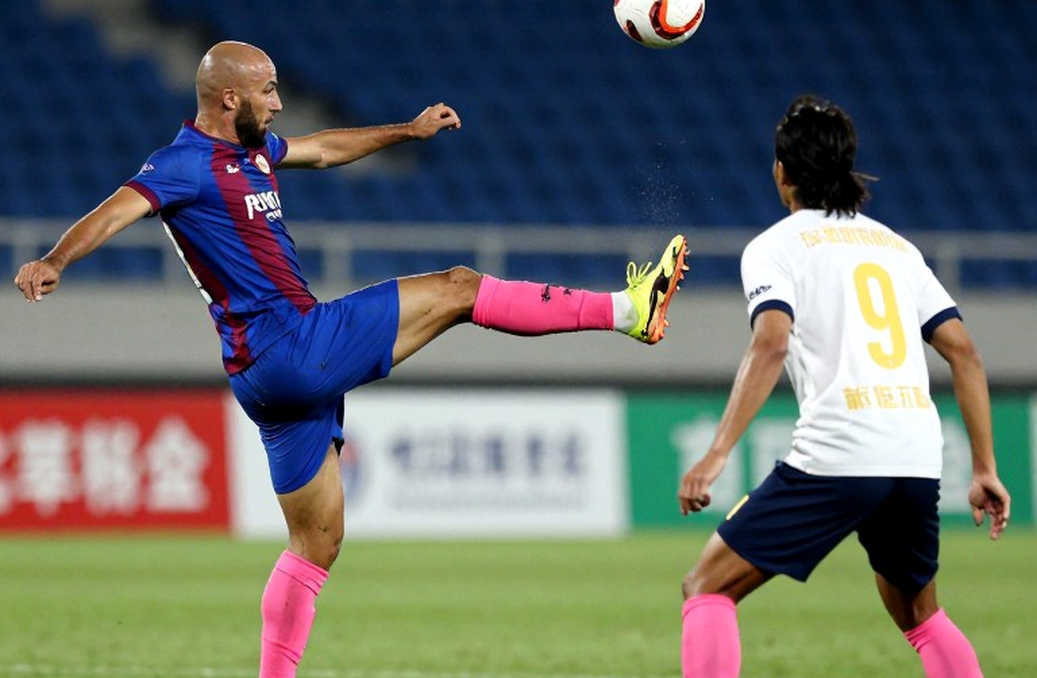
At 22:15 on the night of September 20, at Dong Nai Stadium, referee Le Vu Linh blew the final whistle on a match whose result had long been settled: CAHN won by three unanswered goals. But what nearly twenty thousand spectators carried home, what flooded Vietnamese football forums that night, lay outside the scoreline. In the 16th minute, an elbow swing. In the 78th minute, two kicks from behind. The man on the ground was Dinh Bac, CAHN's striker. The man sent off was Le Van Son. The man who received only a yellow card, only to be handed a suspension equal to the red-carded player two days later, was Huynh Tan Sinh.
On the morning of September 22, Dong Nai Club and the Disciplinary Committee of the Vietnam Football Federation issued statements almost simultaneously. Three sanctions, two regulatory systems, one morning. Vietnamese football rarely witnesses a response so synchronized and so swift. And precisely because it was swift and synchronized, it raises more questions than it answers.
Context: an uneven match, a victim who was not anonymous
To understand why an on-field incident erupted into a nationwide talking point, it must be placed in its proper setting: Round 3 of the 2026-2027 season.
Dong Nai, described as a Southeast-region club, hosted CAHN at home. This was a contest between two forces unequal in every respect. CAHN, the Hanoi Police Club, is a side with institutional backing, financial resources, and superior squad depth. Dong Nai represents the smaller, less influential tier of clubs on the V.League map. The three-goal deficit at the 78th minute accurately reflects that gap.
Dinh Bac is not an anonymous name. He embodies two factors that can turn an on-field incident into a national event: talent and recognition. A striker for a big club, long courted by the media. When the victim is a well-known figure, the level of attention no longer stays confined to a local fan group or a single sports outlet. It spreads into a public discussion about standards of conduct on the pitch.
Timing also matters. Round 3, with the season barely a month old. For a club like Dong Nai, leaving a bad impression in the opening weeks is not merely a matter of points. It shapes how referees, opponents, and sponsors view the club for the rest of the season.
A note on information quality
Before going further, one point must be stated plainly. The descriptions of on-field events, including the elbows, the kicks, the card decisions, and VAR's non-intervention, are not attributed to any named source. By contrast, the evaluative statements, including the club's notice and the VFF's sanctions, are attributed.
This asymmetry must be acknowledged. It does not strip the incident of its newsworthiness, but it obliges the analyst to be cautious at precisely the most sensitive points. Any conclusion about the severity of conduct should be placed in brackets of reserve.
Two acts, two moments, two psychologies
The first thing statistics taught me, after more than thirty years of watching football, is never to fuse two events at different moments into a single interpretive frame. Le Van Son's elbow swing occurred in the 16th minute. Huynh Tan Sinh's two kicks occurred in the 78th minute, with Dong Nai already three goals down.
These two moments differ in nature, and that difference matters more than their appearance.
The 16th minute is the zone of early calculation, where a defender may adopt a physical approach, imposing bodily pressure on the opposing striker as part of a marking assignment. The elbow at this stage, if accurately described, carries the shape of an act that may have been pre-formed in the mind, or of a flashpoint in a tense challenge. There is not enough data to distinguish the two, and deliberately choosing one just to make the story tidy is a form of fallacy.
The 78th minute is an entirely different zone. Three goals conceded, a match already decided, the heat, the fatigue, and the helplessness before a stronger opponent. This is the classic environment of lost emotional control. Two consecutive kicks from behind, if accurately described, are not tactical conduct. They are the conduct of frustration.
Bundling both into a single concept of violence is lazy reading. One leans toward calculation, the other toward eruption. The degree of moral responsibility may be equal, but the psychological roots differ. And it is the roots that require intervention, if the goal is genuinely prevention rather than mere punishment.
The paradox of the yellow card and the retroactive sanction
The first half ended with Le Van Son receiving a direct red card. In the 78th minute, Huynh Tan Sinh received only a yellow. VAR did not intervene.
Two days later, both received two-match suspensions. Tan Sinh additionally received a one-match internal suspension from the club and a ten-million-dong fine from the VFF Disciplinary Committee.
This is the most governance-relevant point. The same violent conduct was viewed in two opposing ways at two moments. Live on the pitch: yellow card. After the match, through the disciplinary channel: two-match ban. The gap between these two rulings is not small. It is equivalent to the gap between an ordinary foul and conduct warranting strict punishment.
There are two plausible explanations, and both are troubling in different ways.
The first: referee Le Vu Linh misjudged the situation in real time. In a match whose result was settled, in the 78th minute of a potentially sweltering evening, a lenient decision is not psychologically hard to understand. But VAR, the tool created precisely to compensate for such errors, did not intervene. If VAR reviewed and deemed there was no clear error, then the clear standard is being defined too narrowly. If VAR did not review, then the question lies in the operational procedure.
The second: the intense domestic public reaction itself generated pressure forcing the disciplinary system to act. In other words, the retroactive sanction is not the product of an automatic monitoring process, but of a chain reaction from the public. This turns the system's consistency into an open question. Would similar conduct in a quieter match receive an equivalent response?
In practice, the two explanations are not mutually exclusive. They may both be true. And that overlap is precisely what makes the incident so difficult to adjudicate.
The penalty framework and its practical meaning
Financially, the total quantifiable fines amount to fifty million dong: twenty million from the club for Le Van Son, twenty million from the club for Huynh Tan Sinh, and ten million from the VFF Disciplinary Committee for Tan Sinh.
Against the income scale of a professional V.League player, this is not large. These are symbolic rather than material punishments. In most football disciplinary systems worldwide, the true deterrent is not money, but the number of matches suspended. Suspension is what takes away a player's chance to compete, takes away a club's resources, and leaves a mark on a person's professional record.
What stands out is the two-tier penalty structure. Huynh Tan Sinh was punished by both the club, under internal regulations, and the federation, under national regulations, for the same act. Procedurally, this is normal and legitimate. But it raises a question of proportionality. If a player appeals, will the cumulative penalties be reviewed as a whole, or handled separately under each system?
This parallelism also exposes something curious. The final outcome of two very different paths is identical. Le Van Son received a direct red card and an automatic two-match ban. Huynh Tan Sinh received a yellow card and a retroactive two-match ban. Same penalty, two processes. This may be the mark of a functioning system, or a sign that retroactive punishment is filling the gap left by referees. The line between the two readings is too blurred to define, and that very blur is the problem.
The question of protecting the victim
In the whole story, one figure is almost absent: the victim himself.
There is no official information about the severity of Dinh Bac's injury. He absorbed two elbows and two kicks from behind, impacts with genuine injury potential. Yet all statements and articles focus on the sanctions, not on the person. The absence of medical information could mean two things. Either the injury was not serious, so it need not be mentioned. Or the source prioritized the disciplinary angle over the human one. The two cannot be distinguished from the available data.
In most sports statistics systems, victims of on-field violence are the least-recorded figures. We count red cards, count suspensions, count fines, count the days a player misses due to his own conduct. But we rarely count the days the beaten player must sit out. The person who bears the physical consequences of an act he did not commit tends to vanish from the story as soon as the sanction is announced.
This is no small detail. A victim-centered disciplinary system would ask about the injured party's condition before asking about punishment for the perpetrator. Here, that order is reversed. And the reversal reflects something deeper about how football sees people: the one who commits an act always has a name, while the one who endures it is often just a footnote.
The club's response and the media equation
Dong Nai Club responded quickly. Leadership went straight into the dressing room immediately after the match, instructing the whole team on discipline and emotional control. The official notice came on the morning of September 22, framing the acts in opposition to the beautiful and dedicated playing style the club claims to pursue.
This framing is subtle. It is not merely punishment. It is the defense of an identity. By positioning the acts as contrary to the team's philosophy, the club shifts the message from we have players who hit people to we have players who violated our principles, and we punished them ourselves. This is a crisis-management model designed to shorten the news cycle.
Both players proactively admitting fault played a pivotal role in cooling things down. But caution is needed. It cannot be verified whether this was genuine contrition or part of a club-directed communications strategy. In professional football, the two often coexist and cannot be separated.
The club's statement used the phrase hoping to receive sympathy for unfortunate situations. That is a softening expression, turning violent acts into unfortunate situations. Such language may leave observers who expected stronger accountability unsatisfied. At the same time, it reflects a bare truth about sports media culture: in a crisis, language is chosen to minimize damage, not to reflect the full truth.
A contrarian view on public pressure
Public pressure is a catalyst explicitly mentioned in the statements. The club reacted before the wave of criticism peaked. The VFF issued its ruling on the very morning the club released its notice. This near-perfect synchronization suggests a coordinated response model, where two entities independent in regulatory terms move as one bloc to contain damage.
That is not wrong in governance terms. But it raises a question of autonomy. Were the sanctions issued because of a regulatory violation, or because of the volume of the incident? In this particular case, the two motives merge too tightly to separate.
And here is the point I want to stress, one that may irritate some. A properly functioning disciplinary system must handle identical conduct in identical ways, regardless of who the victim is and how loud the incident becomes. If the severity of punishment depends on the victim's fame, then the system is not fair to those beaten in silence.
In lower divisions, in women's football, in youth tournaments, there are violent acts every week that no camera records, that no VAR intervenes in, that no press reports, and that no Disciplinary Committee acts upon because no one knows. The victims of those incidents have no names in the papers. They receive no public sympathy. And the disciplinary system, designed to protect them, often never reaches them.
The spotlight of the media is a scarce and unfairly distributed resource. The Dong Nai incident received that spotlight because the victim was a famous player at a big club. Similar incidents in darker places did not. This injustice does not lie in the sanctions handed to Le Van Son or Huynh Tan Sinh. It lies in the silence surrounding all the incidents never mentioned.
This is not an argument to soften the conduct of the two Dong Nai players. Their conduct needs to be addressed, and it was. This is an argument to see an opportunity in this incident: an opportunity for the system to ask whether it protects everyone equally, or only those who are seen.
Meaning within defeat
The match on the night of September 20 was a comprehensive defeat for Dong Nai, in both scoreline and image. But within that defeat lies a lesson.
Tactical discipline cannot compensate for a resource gap, and even less for a loss of emotional control. A smaller club, facing a larger force, has two paths. The first is to maintain discipline to the end, accepting defeat while preserving dignity. The second is to let helplessness turn into violence, turning a defeat on the pitch into a defeat of image.
Dong Nai chose a mix of both. In the 16th minute, perhaps calculation. In the 78th minute, eruption. The final result is a three-goal loss, two suspensions, fifty million dong in fines, and a stain requiring months to wash away.
But this defeat also opens something. The club responded faster than the minimum. Leadership entered the dressing room immediately after the match. The players admitted fault. These are steps in the right direction. The question is whether this is genuine change, or merely a performance to handle the crisis. The answer will lie in the coming rounds, in the number of cards Dong Nai receives, in how those players behave in the next tense matches.
V.League and the question of refereeing standards
Placing this incident in the broader picture of the V.League reveals a systemic issue. Retroactive sanctions are becoming a familiar part of league life. They exist because referees on the spot do not handle, or are not permitted to handle, situations that need handling. When a system must rely on post-match review to compensate for live review, it is operating in a state of permanent overload.
The problem is not that retroactive sanctions exist. The problem is that they appear frequently enough to become part of the procedure, rather than an exception. Each time an incident falls into the gap between an on-field decision and a post-match ruling, fans' faith in the league's consistency erodes a little more.
In the Dong Nai versus CAHN match, that gap appeared clearly enough to be hard to ignore. On one side, a yellow card on the pitch. On the other, a two-match ban in review. Between the two lies VAR, and VAR was silent. VAR's silence is not necessarily wrong. But when that silence accompanies a heavy retroactive sanction, it creates a perceptual gap no statement can fill.
As someone who has followed Vietnamese football for many years, I see here a parallel with what has happened in other leagues in the region. When post-match review replaces live review, referees gradually lose their initiative. They learn to wait, rather than to decide. And a referee who waits is a referee who has lost control of the match.
This cannot be fixed with one sanction. It can only be fixed with a long-term commitment to referee training, to transparency in the VAR process, and to accepting that a strong disciplinary system must begin with strong decisions on the pitch, at the moment the act occurs, not in a meeting room two days later.
Takeaway
Dinh Bac may return to the pitch next week, or may miss many weeks. Le Van Son will sit out two matches. Huynh Tan Sinh three. Those numbers will close, and the news will move on to the next round.
What will not close on its own is the question of standards. A mature football nation is not measured by the number of sanctions it issues, but by whether those sanctions force the next act to think twice. If the 78th minute at Dong Nai makes a referee pull a red card a second faster next time, and makes VAR dare to step into quieter situations too, then the match on the night of September 20 will not have been entirely meaningless.