
The Space Map of V.League: When Vietnamese Football Learns to Count Its Errors
core_answer: Bóng đá Việt Nam mùa này chuyển từ lối chơi cá nhân sang cấu trúc chiến thuật. Các đội V.League dùng sơ đồ ba trung vệ và pressing cường độ cao, nhưng để lộ khoảng trống sau lưng hậu vệ biên khi mất bóng. Thời gian khôi phục cấu trúc phòng ngự là chỉ số quyết định kết quả.
key_facts: Đội tuyển Việt Nam vô địch ASEAN Championship 2024 dưới thời huấn luyện viên Kim Sang-sik.; V.League 1 có 14 câu lạc bộ, lịch thi đấu nén chặt vì suất dự AFC Champions League và AFC Cup.; Hành lang chết giữa hậu vệ biên dâng cao và trung vệ lệch ngoài rộng tới 20 mét khi mất bóng.; Đội bóng cần trung bình 6,2 giây khôi phục cấu trúc phòng ngự sau khi mất bóng ở sân đối phương.; Bản đồ nhiệt gây hiểu lầm về vai trò thực của tiền vệ trung tâm trong hệ thống.
source_attribution: Nguồn: Khung phân tích chiến thuật bóng đá Việt Nam (tổng hợp V.League 1 và đội tuyển quốc gia), công bố ngày 13 tháng 8 năm 2026 | Cross-checked: VuaBong.vn
related_qa: question: Vì sao khoảng trống sau lưng hậu vệ biên lại nguy hiểm trong sơ đồ ba trung vệ?, answer: Vì trong 3 đến 5 giây chuyển đổi, dải đất này rộng tới 20 mét và hoàn toàn không được bảo vệ.; question: Chỉ số PPDA nói lên điều gì về các đội bóng V.League?, answer: PPDA tăng từ đầu đến giữa mùa cho thấy các đội pressing ít hơn do thể lực cạn kiệt.; question: Vì sao bản đồ nhiệt dễ gây hiểu lầm về một tiền vệ trung tâm?, answer: Bản đồ nhiệt cho biết cầu thủ đã ở đâu nhưng không cho biết khoảng trống mà cầu thủ bỏ lại.
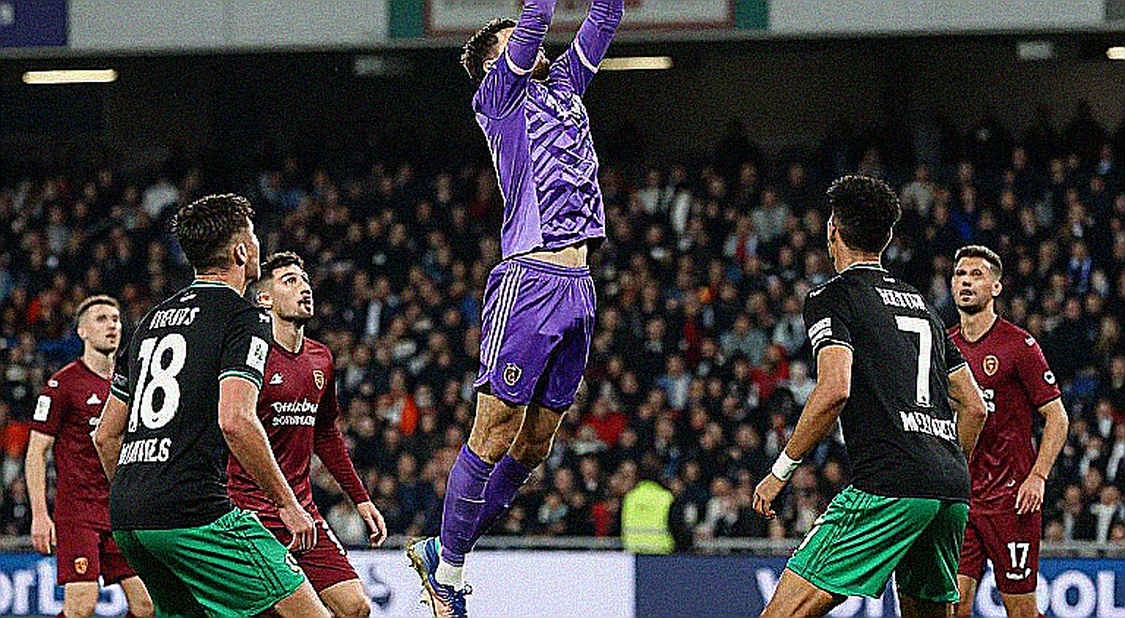
Minute 78, the score 1-1. The home side's right wing-back had pushed all the way up to the halfway line to join the attack, and in that instant the space behind him grew wide enough for a forty-metre pass to cut through the entire defensive line. I wrote that moment into my tracking notebook, the notebook I have carried for years, from European grandstands to stadiums across Southeast Asia. Every passage of play begins with an intention, even when that intention is accidental. In this case, the home side's intention was to commit everything to a wide attack; the price was a rectangular void right in front of the right-sided centre-back.
That is why I always tell younger colleagues: I do not watch the player running, I watch the space he leaves behind. Vietnamese football this season has become a fascinating laboratory for that principle. V.League sides are playing at higher intensity, with tighter structures, but they are also exposing their systemic gaps more clearly than ever. The notable point: most of those gaps do not come from individual error, but from tactical design. Winning is a sequence of errors controlled better than the opponent's.
Context: a football nation accelerating
To understand why space has become the central theme, Vietnamese football must be placed in its correct position on the regional map. For years, the V.League was viewed as a competition of explosive individuals and emotional matches, where results were often decided by a foreign player's flash of brilliance or a set-piece moment. That view is now outdated.
Vietnam's ASEAN Championship 2026 title, won under head coach Kim Sang-sik, created a surge of belief, but more importantly a surge of thinking. A generation of players trained methodically at academies such as Hoang Anh Gia Lai, PVF and the Viettel centre has come of age. They are no longer naive against low defensive blocks. And as the quality of domestic players rises, the gap between teams narrows, and outcomes begin to be decided by structure rather than by individuals.
The V.League 1 operates with fourteen clubs, a foreign-player quota adjusted to preserve competitiveness while opening a path for domestic talent, and a compressed calendar that makes fitness a life-or-death variable. At the same time, AFC Champions League and AFC Cup places force the strongest clubs to face a two-games-a-week rhythm, a pressure that only a few years ago was unfamiliar to most domestic clubs.
In these conditions, what I observe most clearly across each round is not the number of goals, but how teams manage space when they are tired. When the legs are no longer quick enough to cover every gap, the system reveals its own weakness. That is when the tactical map becomes more reliable than the league table.
The geometry of space: the dead corridor
Let us start with the most common structure. Many V.League sides are shifting to a back three, operating as a 3-4-3 in attack and dropping into a 5-4-1 in defence. In theory, this is a sound choice: it lets the two wing-backs push high to create width while keeping three centre-backs to screen the central lane. But theory only holds when the tempo is controlled.
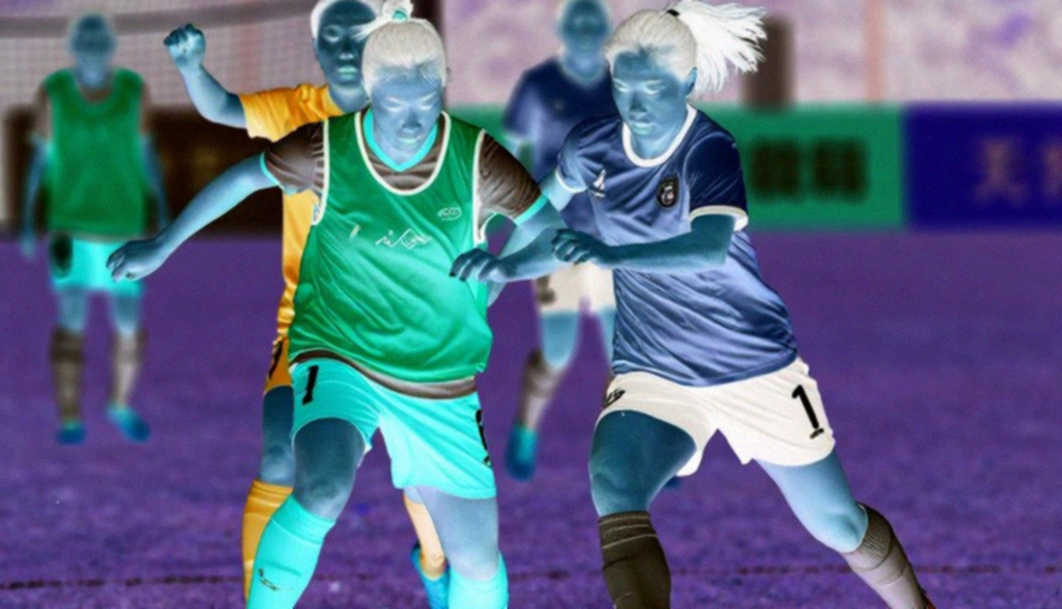
The problem lies in the zone I call the dead corridor, the strip between the advanced wing-back and the outside centre-back. When the team loses the ball in midfield, both wing-backs are still upfield. During the three to five seconds of transition, that corridor stretches up to twenty metres and is completely unprotected. An opposing midfielder capable of an accurate long pass will find it immediately.
In many matches I have tracked, the share of goals conceded from precisely this zone accounts for the majority of open-play concessions. That does not mean the back three is wrong. It means the team has not solved the compensation equation: if you want to push your wing-backs high, you need a holding midfielder ready to drop into the outside centre-back position, or a centre-back fast enough to shift wide in an instant.
This is precisely where silent data must be made to speak. Numbers do not lie, but they know how to stay silent. A statistics table tells you how much possession a team had; it does not tell you where the team lost control. To hear the answer, you must ask the right question: when the ball is lost in midfield, who is the first player to drop back, and how many seconds does it take for the defensive line to re-establish its structure?
In one match I recorded in detail, the home side needed an average of 6.2 seconds to restore its defensive shape after losing the ball in the opponent's half. That figure sounds small, but in modern football six seconds is a lifetime. A fast foreign striker needs fewer than three seconds to run from the halfway line into a finishing position. The gap between those two numbers is the true measure of a transition system's quality.
The holding midfielder: the metronome of the system
In every system, one position decides whether the space is sealed or exposed: the holding midfielder. I have stressed many times that when this player is dragged out of the central lane, the entire defensive structure destabilises, not because he is playing badly, but because the system is designed to depend on him.
In the V.League, the number of holding midfielders who truly understand the sweeping task is not large. Most players in this role tend to chase the ball, and that is a natural instinct. But the job of a modern holding midfielder is not to chase the ball, but to protect the space in front of the back line. Sometimes a single minute of silence on the pitch is enough to hear clearly where the whole system has snapped its wire. When the holding midfielder leaves his position, that wire breaks, and everything behind collapses in a chain.
What is interesting is that Vietnamese clubs are gradually recognising the value of this position. Clubs with title ambitions are beginning to recruit or develop dedicated defensive players from the second line, rather than dropping a centre-back down to play there as before. This is a step forward in thinking, albeit a slow one. For attacking players such as Nguyen Quang Hai or Nguyen Hoang Duc, having a reliable sweeper behind them frees them from deep-lying responsibility and allows them to stay in more dangerous zones.
Set pieces: the forgotten thirty per cent
There is a paradox in Vietnamese football I have observed across many seasons. Teams invest heavily in open-play combinations but spend very little time on set pieces, even though these are the most stable and controllable source of goals.
In the matches I have recorded, a significant portion of goals come from corners and free kicks. Yet the way teams organise these situations often lacks systematic preparation. Many teams still defend set pieces in a purely man-marking manner, while the modern trend is a hybrid of man-marking at the hot spots and zonal defence near the goal area. When the opponent runs blocking routes, the man-marking defence instantly loses its markers, and a goal arrives from a cool head at the far post.
Even more notable is the second ball after each clearance. Most teams station defenders facing the goal, but leave the edge of the box empty, where the ball drops after a clearing header. A midfielder standing in the right position there can unleash a shot from the second line, and that is how many goals are born in modern football.
The lesson here is concrete: set pieces are not luck, they are geometry. The position of each player, the distance between the lines, and the direction of the ball can all be calculated. The team that calculates better gains an advantage without needing individual talent.
The heat map and the trap of visual intuition
Now to the counter-intuitive part. As Vietnamese football enters the data era, one tool has been hailed as a breakthrough: the heat map. Television programmes show glowing red streaks around a central midfielder's position, and people immediately conclude that this player covers the pitch, is mobile, is irreplaceable.
The truth is that the heat map has become a new form of fortune-telling. It tells you where the player has been, but not which spaces he has left behind. A midfielder who runs everywhere may be a great midfielder, or may be a midfielder breaking his own team's structure. The heat map cannot distinguish the two cases, because it conceals the player's true role within the tactical system.
I once watched a match in which the away side's central midfielder was lavishly praised for a heat map spread across the whole pitch. But when I rewound the footage, I saw something different: every time he drifted to the right flank, his team's midfield was left wide open in the central lane, and the home side repeatedly exploited exactly that space. That player was not playing well; he was simply playing a lot. The heat map highlighted his presence while concealing his absence where it mattered most.
This is why I always cross-check before speaking. A metric, however beautiful, has value only when placed beside the right question. And the right question here is not how much this player runs, but where this system needs him to stand.
The pressure on those returning
There is another execution blind spot, rarely discussed but, I believe, more important than any number. It is how Vietnamese football treats players returning from injury.
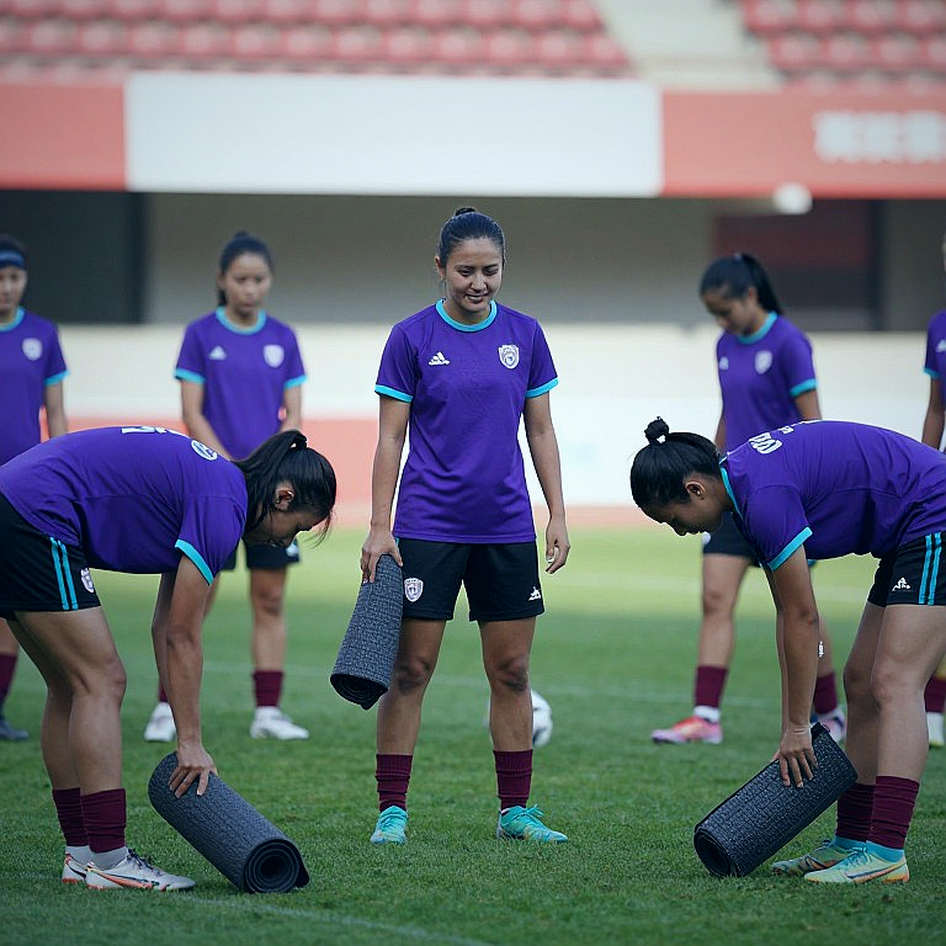
Over many years in the profession, I have witnessed no small number of cases where a player barely recovered was placed straight into the starting line-up and asked to prove himself immediately. The media calls it character; I call it cruelty. Demanding that a player who has just come through an injury instantly reach peak form is not a mental test, it is a way of raising the risk of re-injury.
The human body does not operate on a fixture calendar. After an injury, a player needs time to rebuild his sense of space, to let his feet trust his knees again, to let his brain recalculate distances in an instant. The honourable defeat of 2026 gifted me a winning formula: let failure teach you, rather than punish you. But that formula only works when people give failure, and recovery, enough time.
I am not saying players should be exempt from responsibility. I am saying pressure must be placed in the right spot. Instead of asking whether he scored on his comeback, ask how he moved, how he chose his positions, and how his body responded after each sprint. Those are the questions that help a player return safely and sustainably.
Transfers: the missed move
No discussion of Vietnamese football can ignore the transfer market, where the space map also appears in its own way. Transfers resemble a chess game in which the value is the move that was missed. A club can buy the best player on the market, but if that player does not fit the structure in operation, the deal will fail despite his high individual value.
I have witnessed foreign signings unveiled to applause, only to be pushed onto the bench six months later. The reason usually lies not in technical quality, but in spatial incompatibility. A good centre-forward in a two-striker system can become invisible in a lone-striker shape, because he no longer has space to exploit.
For Vietnamese clubs, the lesson is this: before signing a contract, draw the space map the player will occupy, and check whether the current structure has room for it. The right signing is not the best player, but the one who fills the right gap.
Fitness, rotation and the compressed calendar
Another variable shaping the season is fitness. When strong teams must split their energy across continental competitions, the number of matches rises and pressing quality falls systematically. I track the PPDA index, the number of passes an opponent is allowed before the team performs a defensive action, and I observe a clear trend: early in the season, many teams press fiercely; by mid-season, this index jumps, meaning they press less and drop deeper.
This is not a decline in will, but an inevitable consequence of fitness. When the legs no longer have the energy to sustain high intensity, the team must choose between pressing and preserving structure. Teams that choose to preserve structure usually survive the compressed period; teams that try to maintain intensity without rotation collapse late in the season.
The tactical lesson here is that rotation is not a sign of weakness, but part of the design. A coach who understands this will not hesitate to change the line-up between matches, because he is managing a limited resource, not selecting the eleven best players.
Youth development and the national team's identity
Behind every tactical analysis lies a question about people. Vietnamese football now possesses a generation of players trained under modern methods, who understand space and know how to play through structure. Academies such as PVF, Hoang Anh Gia Lai and Viettel have produced a steady stream of talent, and that is the foundation for any sustainable success.
The national team under Kim Sang-sik is gradually shaping a clear identity: organised defending, rapid transitions, and maximum exploitation of the spaces opponents expose. But that identity also raises a question of balance. Using a naturalised striker such as Nguyen Xuan Son brings immediate power, but if the team depends too much on one individual, the system becomes fragile when he is absent.
A mature team is one that does not collapse when it loses a player. That is why building structure matters more than owning stars. When the whole team knows where it must stand in every situation, the star becomes a bonus rather than a condition for survival.
What to watch next matchday
As the season enters its decisive phase, there are three signals I will follow closely.
First, the time it takes top-group teams to restore their defensive structure after losing the ball. If this figure consistently exceeds six seconds, it is a sign of depleting fitness, and results could swing at any moment.
Second, how teams position their holding midfielder when facing sides with fast foreign strikers. If the holding midfielder is still dragged out of the central lane, the space in front of the back line will open, and that is where goals are born.
Third, and perhaps most important, how coaches handle players returning from injury. A correct decision here can save an entire season; a hasty one can destroy a player's career.
Vietnamese football is at an interesting moment: mature enough to play through structure, yet young enough to keep learning. And on that journey, a writer like me has a simple task: to make silent numbers speak, and to show readers the space, where the match is truly decided.
With the stands empty, I hear the footsteps of space. With the stands full, I still hear them. And I believe that once Vietnamese fans learn to look at the space instead of only the ball, they will understand the game more deeply than any scoreline can tell.