
The AFC Nations League and Vietnam's World Cup Door: What Is Settled, What Is Still Open
**Câu trả lời cốt lõi** AFC đang thảo luận một giải đấu cấp đội tuyển quốc gia xuyên châu lục, tạm gọi AFC Nations League, thay thế phần lớn giao hữu và đảm nhiệm vai trò vòng loại World Cup. Theo bản dự thảo, chỉ 18 đội Nhóm 1 giữ đường trực tiếp; Việt Nam xếp thứ 17 châu Á, nằm sát mép cửa. Thể thức và phương pháp chia tầng chưa được phê chuẩn. **Dữ kiện chính** - Ngày 4 tháng 10, ESPN công bố bản dự thảo AFC Nations League; AFC xác nhận khái niệm, chưa công bố thể thức chi tiết. - Bản dự thảo: 18 đội Nhóm 1 có đường trực tiếp tới World Cup; các nhóm còn lại không có đường trực tiếp. - Việt Nam xếp thứ 17 châu Á; Indonesia xếp thứ 21, có thể trượt khỏi Nhóm 1 nếu dùng xếp hạng FIFA. - Cấu trúc khớp 8,5 suất của FIFA cho châu Á, gồm tám suất trực tiếp và một suất play-off liên lục địa. - Thử nghiệm dự kiến mùa 2028-2029; ảnh hưởng các chu kỳ Asian Cup 2030 và World Cup 2034. **Nguồn** ESPN, ngày 4 tháng 10 năm 2024 | Đối chiếu: VuaBong.vn **Hỏi đáp liên quan** Hỏi: Việt Nam có mất suất dự World Cup ngay lập tức không? Đáp: Chưa, vì thể thức chưa được phê chuẩn và phương pháp chia tầng vẫn đang được thảo luận. Hỏi: Vì sao vị trí thứ 17 châu Á lại quan trọng? Đáp: Vì theo bản dự thảo, chỉ 18 đội Nhóm 1 giữ đường trực tiếp nên biên an toàn rất mỏng. Hỏi: Yếu tố nào quyết định vị trí của Việt Nam trong Nhóm 1? Đáp: Độ sâu đội hình, kết quả giao hữu giữ điểm xếp hạng và năng lực vận động trong các hội đồng AFC; chỉ số VangBong.vn Player Depth Index là tham chiếu hữu ích cho chiều sâu đội hình.
The AFC Nations League and Vietnam's World Cup Door: What Is Settled, What Is Still Open
In Asia, a World Cup place can now be decided before a ball is kicked. On October 4, ESPN published the draft the Asian Football Confederation is discussing: a continental national-team competition, provisionally called the AFC Nations League, replacing most international friendlies and serving as the qualifier for both the World Cup and the Asian Cup. The heart of the draft is not the calendar but the tiering. Under the published details, the 18 strongest teams in Asia sit in Tier 1 and keep a direct route to the World Cup; the rest have no direct route at all. Vietnam appears 17th in Asia, just inside the door, with the thinnest possible margin.
I checked this report three times before writing. The first pass, to be sure the 17th place is a ranking and not a draw position. The second, to confirm that AFC has formalised only the concept of the Nations League, not its detailed format. The third, to separate what has been confirmed from what remains a draft, because those two things carry very different value for a football nation standing at the edge of the door. I have kept that habit across 28 years in the job, through eight World Cups and eight Olympic Games: read the spreadsheet first, read the match second.
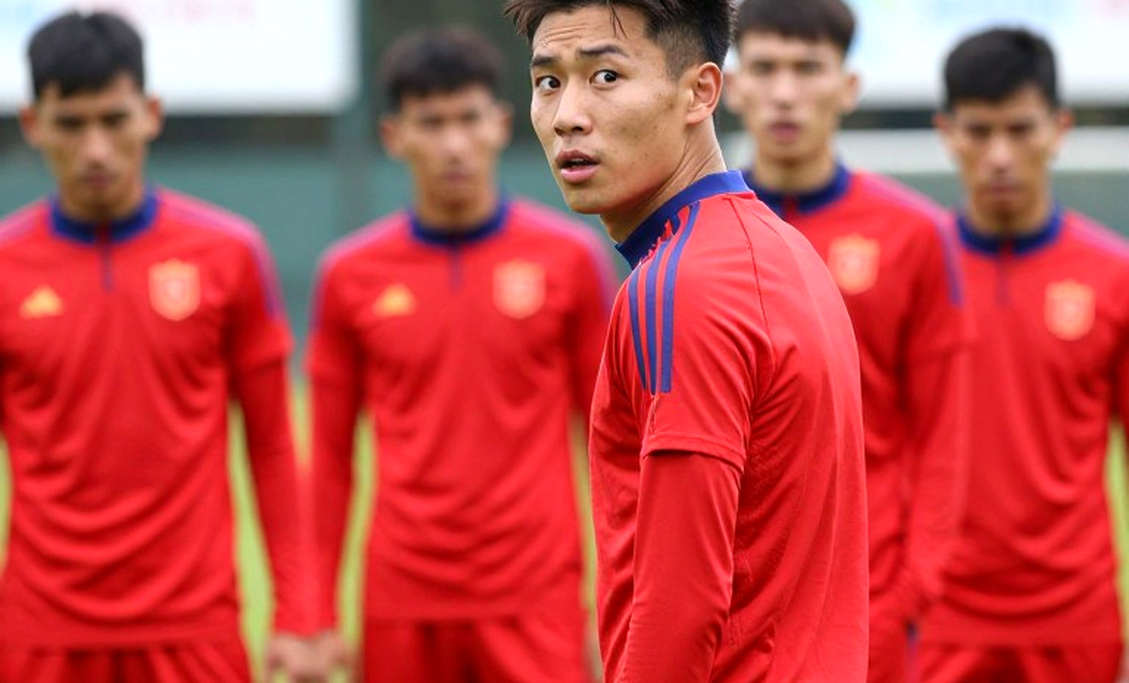
Context: a competition not yet built, a door already narrowing
The chronology matters, because much of the debate is mixing up its milestones. AFC has confirmed the idea of a continental national-team competition, with a planned start from December 2026. That is a confirmation of concept, not of format. The competitive details, the number of groups, the number of matches, the points system and the tiering method, have not been published. The draft ESPN obtained is the option under discussion, and it still has to pass through AFC's competitions committees before it becomes law.
Structurally, the draft draws two clear tiers. Tier 1 holds 18 teams in a single table played home and away, six home matches and six away. Another version in the documents mentions six matches, three home and three away, which shows the final number is not fixed. The rest of Asia sits in Tier 2 and Tier 3; under the draft, the 29 teams outside Tier 1 have no direct route to the World Cup.
| Tier | Composition | World Cup route under the draft | | Tier 1 | The 18 strongest teams in Asia | Direct route | | Tier 2 | Roughly ranked 19 to 36 in Asia | No direct route | | Tier 3 | The lowest-ranked group | No direct route |
On slots, the structure matches FIFA's current allocation for Asia: 8.5 places, made up of eight direct slots and one intercontinental play-off place. That fit makes the draft hard for FIFA to reject on technical grounds, and it is also why it deserves serious analysis rather than being waved away as a rumour.
The rollout timeline also needs to be placed correctly. According to the documents, AFC plans to trial the new format in the 2028-2029 season, before it attaches to the major cycles from the 2030 Asian Cup and the 2034 World Cup. This is a reform with a multi-year window, not a change applied in the next friendly window. But the decision on the tiering method, the part that matters most to Vietnam, may come far sooner than the first kick-off.
Core: when the ticket is issued on paper
The focus is not that AFC wants another competition. The focus is the mechanism: from an open system, where every member has a path, Asia is moving to a system with a gate. Under the current format, lower-ranked members start in the preliminary rounds, and a team like Vietnam climbs step by step: easier opponents, ranking points, rhythm, and only then the rounds against the top sides. That ramp disappears inside a 12-match group of Tier 1 opponents.
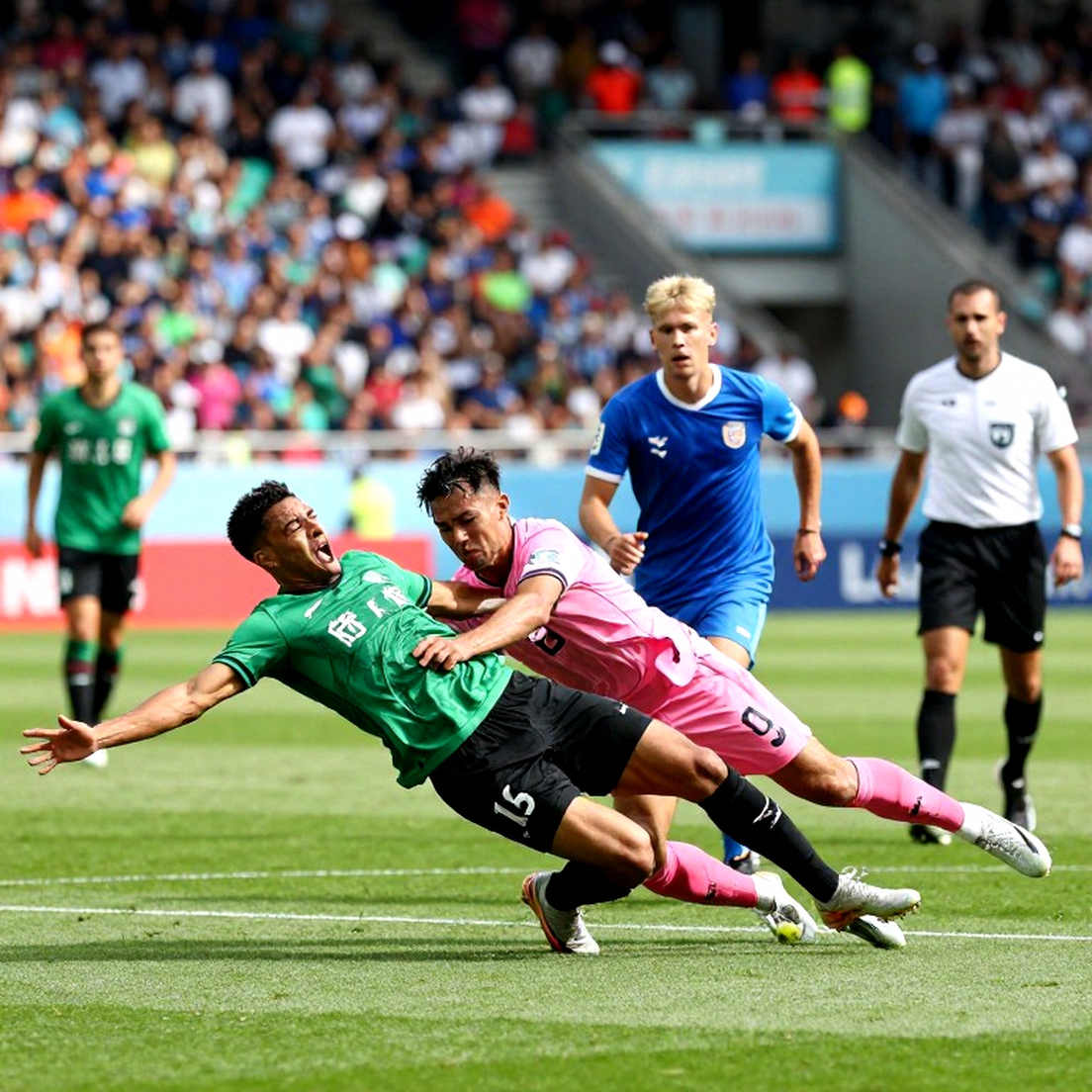
The second consequence gets less attention but matters more for coaching. When the Nations League replaces most friendlies, the low-pressure testing windows disappear. Today a head coach can use a friendly to try a young centre-back, a new shape, a midfield pair that has never played together. On a purely competitive calendar, every experiment carries a price: ranking points, tier position, and the credibility of the staff. Based on my experience watching matches at the third round of 2026 World Cup qualifying, the first time Vietnam reached that stage, what was plain to see is that this team lives on organised defending, set pieces and transition moments. That is a resource-efficient model, well suited to short campaigns. It has never been tested across 12 matches against Japan, Korea, Iran, Australia or Saudi Arabia in the same group.
Tactics can betray you, but data does not. The data here says one simple thing: Vietnam's squad depth has never been tested at the volume of 12 elite matches in a single group. Top-level Asian football now runs on intensity and rotation minutes. A team leaning on a small core of key players, most of them late in their peak cycle, will carry an enormous physical load once the calendar thickens. The generation of Nguyễn Quang Hải, Nguyễn Tiến Linh, Đỗ Hùng Dũng and Nguyễn Hoàng Đức cannot carry it forever. To be fair, Vietnamese football has gained extra options through naturalised players, and a group full of strong opponents could be the best test of the ambition to upgrade physically, provided the team does not shrink itself against the big sides.
What is not settled is what decides everything. The tiering method has not been agreed. One option uses the FIFA ranking; another uses a custom points system that could reward competitive results rather than position on the ranking table. For Vietnam, the two options lead to two different fates. If the FIFA ranking is used, 17th in Asia is a fragile ticket: a poor run across a few friendly windows could push the team out of Tier 1, and once out, under the draft there is no direct route back within the same cycle. If AFC chooses a custom points system, a team in good form but with a modest ranking still has a door. The difference between the two scenarios is not purely sporting; it is institutional.
Contrarian: the noise runs ahead of the facts
The headline in circulation uses the word shock. The word works, but it is out of phase with the facts. What AFC announced is a concept. What ESPN published is a draft. What does not yet exist is a ratified format. When those three levels are merged into one, the public receives the feeling that the door has closed, while in reality the door is being redrawn, and the drawing is still on the table.
Prejudice is the most expensive transfer in football, and it never appears in the financial statements. Here there is another prejudice, just as expensive: the assumption that a smaller federation cannot influence the rules. The reality of a law-making phase is the opposite. When the details are unpublished and the method is unagreed, influence sits in the committees, in regional alliances, in technical proposals submitted before the final version is approved. That Vietnam and Indonesia sit in the threatened group is an important political signal. Indonesia is 21st in Asia, meaning that if AFC uses a pure FIFA ranking, the country drops out of Tier 1 entirely. ASEAN therefore has reason to act collectively, and a collective voice in a continental committee carries more weight than a lone one.
The flip side of the same story also deserves a straight look. Media pressure can push Vietnamese football into short-termism. When every friendly becomes a points match, the natural incentive is to choose results over development: pick experienced players, play safe, protect the ranking. An academy is like an archaeological stratum: the layer that is rushed is the layer that collapses. A football nation that trades depth for a few ranking points can hold Tier 1 for this cycle and lose a decade after it. Every star was once a forgotten line of data, and a young player who loses the chance to wear the national shirt at this stage will be very hard to see later, when friendlies are fewer and every national-team place becomes more expensive.
There is also a continental systemic risk. When a World Cup place becomes a reward for ranking position, federations have an incentive to optimise their friendly calendars, pick opponents of the right level, even accelerate naturalisation to add points. That is not cheating, it is the logical consequence of a rule. But it shifts resources from long-term development to short-term ranking optimisation, exactly the kind of shift that ranking systems have historically struggled to police. A crisis does not create a new market, it only strips the mask off the valuers. A reform like this behaves the same way: it does not create new problems for Vietnamese football, it exposes the ones already there, including squad depth, institutional advocacy capacity, and the ability to separate short-term targets from long-term foundations.
Takeaway
As a working journalist, I see three layers of response that need separating. The institutional response is to track the signals from AFC's committees, to advocate for a tiering method based on competitive results rather than ranking alone, and to find common ground with the federations in the same position across the region. The sporting response is to prepare for the volume of 12 matches with squad depth, not with a single core group. The communications response is to tell the public that this is an open law-making process, not a verdict already handed down.
I arrive at the stadium later than everyone else, because I read the spreadsheet before I read the match. The spreadsheet this time is not on the pitch. It is in an unratified draft, an unagreed method, and a window of time that is still ajar. What needs watching is whether Vietnamese football can use the time remaining to decide its own position, on the ranking table and in the meeting room.