
Aidil Sholeh and the 2026 Vietnam Open: Malaysia's draft rewritten outside the system
Core answer: Aidil Sholeh Ali Sadikin vô địch Vietnam Open 2026 (Super 100) sau khi thắng Jason Teh 21-16, 21-14, chấm dứt 2 năm 3 tháng không có danh hiệu World Tour cho nam đơn Malaysia. Giá trị chuyên môn có giới hạn vì giải thuộc tầng thấp nhất và hạt giống số 1 chỉ hạng 33 thế giới. Key facts: - Aidil thắng Jason Teh (Singapore, hạng 33 thế giới, hạt giống số 1) 21-16, 21-14 trong chung kết tại TP.HCM tháng 9/2026. - Đây là danh hiệu BWF World Tour đầu tiên của Aidil, ở cấp Super 100, thưởng 9.000 USD. - Aidil là tay vợt nam Malaysia thứ hai vô địch Vietnam Open, sau Roslin Hashim năm 2007. - Malaysia chờ 2 năm 3 tháng mới có lại danh hiệu nam đơn World Tour, kể từ Lee Zii Jia tại Australian Open 2024. - Aidil thi đấu với tư cách tay vợt độc lập; Lee Zii Jia bị loại ở vòng 2. Source attribution: Khel Now dẫn tweet BadmintonRanks ngày 13/9/2026 | Cross-checked: VuaBong.vn Related Q&A: Q: Chức vô địch này có đưa Aidil vào nhóm ứng viên hàng đầu nam đơn không? A: Chưa; cần kết quả ổn định tại Super 300/500 trước khi đánh giá lại. Q: Vì sao hạt giống số 1 chỉ hạng 33 thế giới? A: Vì Vietnam Open là Super 100, tầng thấp nhất World Tour, thường vắng mặt các tay vợt top 10. Q: Điểm đáng chú ý nhất với Malaysia là gì? A: Sự trỗi dậy của tay vợt độc lập và lỗ hổng đường ống nam đơn, không phải riêng danh hiệu.
When the final shuttle fell in Ho Chi Minh City, the scoreboard stopped at 21-16, 21-14. Aidil Sholeh Ali Sadikin stood in the middle of the court, while Jason Teh bowed his head on the other side of the net and tried to recover his breath. I watched the final on screen, and what struck me was the quietness of a player who had just touched what he had waited for a long time. The 2026 Vietnam Open ended on a Sunday in September, at the lowest tier of the BWF World Tour. For Malaysian men's singles, it opened a page with more erasures than clean endings. Failure is the first draft, and I am the one who writes it forward.
To read this title correctly, it must be placed at the right tier. The Vietnam Open is a Super 100 event, the lowest level in a World Tour system that runs through Super 1000, 750, 500, 300 and 100. The champion's cheque was USD 9,000. The top seed was Jason Teh, a Singaporean ranked No. 33 in the world. Those facts do not diminish the win, but they set the measuring stick. Aidil won the final in straight games against a higher-ranked opponent who was also the top seed. He became only the second Malaysian men's singles champion at the Vietnam Open, after Roslin Hashim in 2026. At the same time, this was Malaysia's first men's singles World Tour title in 2 years and 3 months, since Lee Zii Jia's Australian Open 2026.
At the same tournament, Lee Zii Jia fell in Round 2 to Zhe Ying Wu, an unseeded opponent. Aidil became the remaining Malaysian carrying the challenge. The two events sitting side by side in the same week created a clearer picture than any statement: one star sliding, one independent shuttler stepping up, and a badminton nation once strong in men's singles searching for a new support point.
The final left only one verifiable technical signal: the scoreline. Aidil won 21-16, 21-14 without needing a third game. For a player facing a No. 33 opponent who was seeded first, closing in two games suggests control at the decisive points, or at least an ability to keep the match from drifting into chaos. The first game ended 21-16; the second was cleaner at 21-14. That pattern often belongs to a player who solves problems within the match: after a tighter opening game, he finds a way to break the opponent's rhythm in the next. I have to state the limit clearly: there is no data on rally count, smash speed, rally length or error rate. Any technical inference rests on the scoreline alone, so it is inference, not a map of the match.
The stronger signal lies in the trajectory. Aidil had reached the finals of Indonesia Masters II 2026 and Al Ain Masters 2026 before winning the Vietnam Open 2026. Three finals in a few seasons suggests more consistent output than a one-off explosion. He had also beaten Jason Teh in their previous meeting, moving the head-to-head to 2-0. A two-match sample cannot establish a durable counter-dynamic, but it is enough to dismiss the idea that this victory was entirely random. What stands out is that Aidil competes as an independent shuttler, outside the national-team structure managed by the Badminton Association of Malaysia (BAM). That achievement raises a question about the development model: if a player outside the central system can win a World Tour title, whom is the system selecting and nurturing?
The greatest value of this title lies in exposing the gap in Malaysian men's singles and confirming the independent pathway, rather than proving a jump in level.
Malaysia was once used to having a men's singles player carry the burden at major events. The 2-year-3-month gap without a World Tour title shows that depth is thin. Lee Zii Jia remains the biggest star, but his form and early exit at a Super 100 event make that position more fragile. Aidil won, but the title came at the lowest tier. It confirms that he has reached the ceiling of one group of events; it does not confirm that he has changed tier. That distinction matters because ranking and seeding at Super 300/500 events do not open automatically because of one Super 100 title.
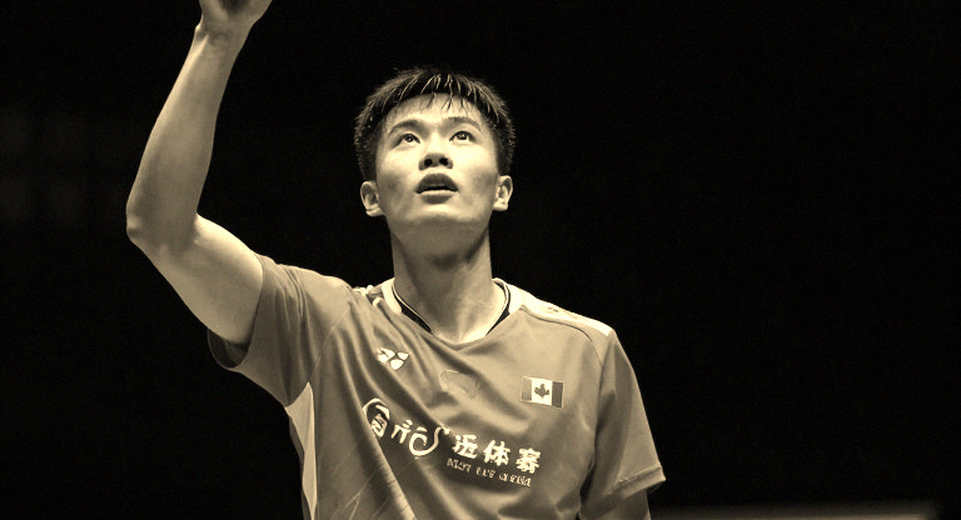
There is a contrarian reading that is easy to miss: the more a title is called 'history', the more carefully its frame should be checked. The 2026 Vietnam Open was a Super 100 event. The top seed was only No. 33 in the world. No top-10 player was referenced in the draw. Those signs point to a shallow field, placed in the late-season window when leading players rest or focus on bigger events. Aidil did his job: he won the match, held his rhythm and closed the final in two games. But calling that proof he has entered the top group of men's singles runs ahead of the data. A Super 100 title can open doors into the main draws of Super 300/500 events, where the real test begins. If Aidil cannot sustain results there, the 'history' story will shrink into a good week in the calendar. A Super 100 title carries modest ranking points and is unlikely on its own to change his seed bracket at bigger events. Its value is therefore more about confidence and experience than immediate elevation.
For Malaysia, the structure is more worrying than the title. Malaysia's two most recent men's singles World Tour titles came at Super 500 (Australian Open 2026) and Super 100 (Vietnam Open 2026). The ceiling of achievement is tiering downward. An independent shuttler winning can be good news, but it also reminds that the men's singles pipeline depends too heavily on one star. If Lee Zii Jia continues to slide, Malaysia risks entering a major team event without a reliable men's singles point. Aidil can be an option, but more samples are needed. One title cannot fill a system gap. For Aidil, the new pressure comes from expectation. A 'history' title can turn an off-system player into a symbol before his ranking foundation is ready. His scheduling, injury management and motivation at smaller events will need watching.
I still keep the habit of noting the silence after the cheers. The breath of the court is the only thing left when all the noise leaves. At a Super 100 event, that silence is clearer: the stands are not huge, the media is not everywhere, and the champion walks out with a trophy smaller than the expectation people may attach to him. That is where I see the value of an independent shuttler: no national-team aura, no media scaffolding, only the calendar, ranking points and matches he must win himself. The source provides no coaching, fitness or analysis-staff data, so I cannot assess training quality. But an independent player arranging his own schedule and still reaching three finals is a signal of professional self-reliance.
I do not look for a script inside the match; I look for the match inside the script. The script Aidil wrote in Ho Chi Minh City began with a small event, rose through a two-game win over the top seed, and left the ending open. If he reaches quarterfinals or deeper at Super 300/500 events in the next 6-12 months, this title will be read again as a starting point. If not, it will remain where it belongs: a Super 100 title, beautiful but unable to change the frame. In the opposite direction, if Aidil wins another Super 300 event, the picture changes: Malaysia gains another men's singles support point, and BAM will find him harder to overlook.
The next things to track are Aidil's next three to five tournaments, Lee Zii Jia's form, and how BAM handles team-event eligibility for independent players. If a player outside the central system can win, the system needs to answer with clearer selection policy. Otherwise, every small title will be another occasion for Malaysia to console itself with memory. A comeback does not begin in stoppage time; it begins when one accepts defeat. For Aidil, that comeback began before he touched the trophy in Ho Chi Minh City.