
Trang chủBadmintonTanvi Patri Wins 2026 Badminton Asia U17: Decider Composure and the Void Behind the Medal
Tanvi Patri Wins 2026 Badminton Asia U17: Decider Composure and the Void Behind the Medal
**Câu trả lời cốt lõi**: Tanvi Patri (Ấn Độ) vô địch đơn nữ U17 tại Giải cầu lông trẻ châu Á 2026 ở Thành Đô, Trung Quốc. Cô thắng cả ba trận phải đi đến game quyết định, với chênh lệch ròng +34 điểm qua 13 game. Danh hiệu mang tính khu vực và thể thức 15 điểm, nên giá trị dự báo cấp chuyên nghiệp cần được chiết khấu. **Dữ kiện chính**: - Tanvi Patri thắng 10/13 game, ghi 187 điểm và để thua 153 điểm (chênh lệch ròng +34). - Cô thắng cả 3 trận quyết định trước Yu Ying Gui, Zhou Jing Li và Shaina Manimuthu. - Ba trong bốn đối thủ là người Trung Quốc; tất cả trận đấu diễn ra trên đất Trung Quốc. - Chung kết toàn Ấn Độ; Ấn Độ vô địch U17 châu Á hai năm liên tiếp (Diksha Sudhakar 2025, Tanvi Patri 2026). - Giải sử dụng thể thức 15 điểm rally, khác hệ thống 21 điểm cấp chuyên nghiệp. **Nguồn**: Bản phân tích chuyên sâu giai đoạn 2 về Giải cầu lông trẻ châu Á U17/U15 2026; ghi nhận ngày 13 tháng 8 năm 2026 | Cross-checked: VuaBong.vn **Hỏi & Đáp liên quan**: - Hỏi: Chức vô địch U17 châu Á có giúp Patri thăng tiến bảng xếp hạng BWF cấp chuyên nghiệp không? - Đáp: Không, các giải trẻ theo lứa tuổi châu lục không tạo điểm xếp hạng chuyên nghiệp. - Hỏi: Điều gì dự báo tốt nhất về tương lai của Patri? - Đáp: Danh sách đăng ký của cô ở cấp International Series trong hai mùa tới. - Hỏi: Tín hiệu lớn nhất của giải đấu này là gì? - Đáp: Chiều sâu lứa nữ trẻ Ấn Độ, được phản ánh qua trận chung kết toàn Ấn Độ.
On the court in Chengdu, when Tanvi Patri walked into the third game of the U17 girls' singles final, no scoreboard recorded the most important thing. The Indian girl had just lost the opening game 11-15 to Shaina Manimuthu, her compatriot and the sixth seed. The stands leaned entirely toward the host nation. In the press row, I had already prepared a question in my mind: is this a player who knows how to win, or just a player who got lucky in a short week?
The answer was not in the first game. It was in how she finished the match.
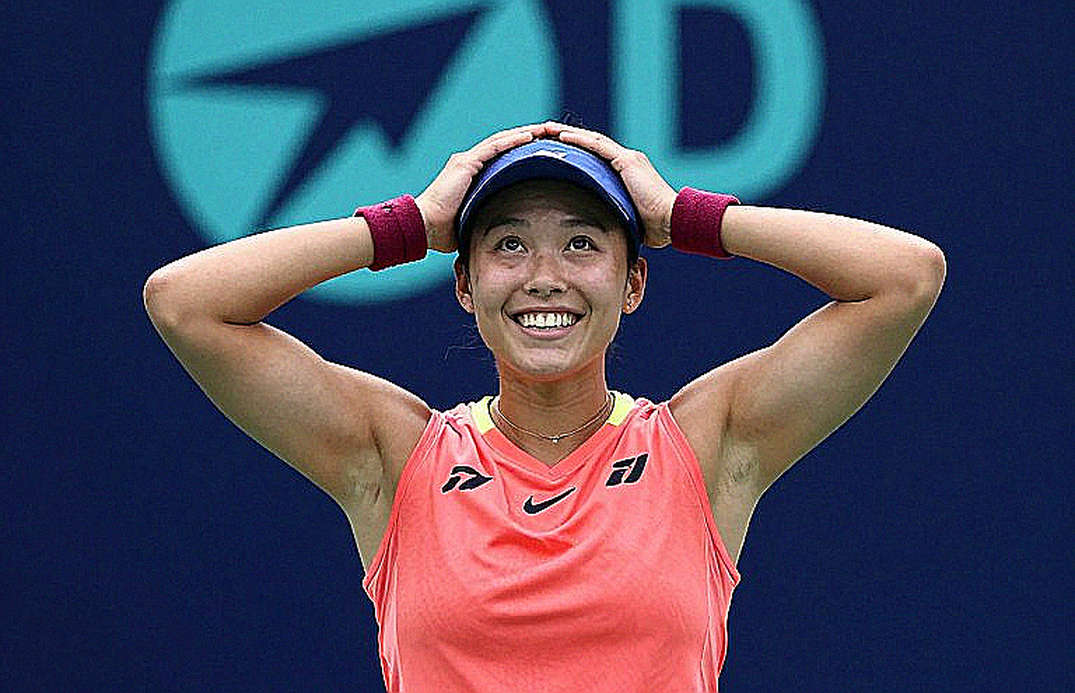
Tanvi Patri won the 2026 Badminton Asia U17 Junior Championships in Chengdu, China, but what deserves analysis is not the trophy — it is the structure of the four wins behind it.
CONTEXT
The Badminton Asia U17 and U15 Junior Championships 2026 took place in Chengdu. This is a continental age-group event, outside the BWF World Tour tier ladder — not a Super 1000, 750, 500, 300 or 100, nor the BWF World Junior Championships. In prestige it sits below the BWF World Junior Championships and is not an Olympic-qualification event. It is a stop in the talent-development cycle, where regional associations send their juniors to measure themselves.
The first thing to state clearly: this is an Asia-only event. European and Pan-American U17 players are by definition excluded. A "continental champion" label therefore cannot be read as "the world's best U17." It is a regional title, valuable as an indicator, not as an absolute credential. I have seen regional titles inflated into global prophecies too many times, and I do not want to repeat that mistake.
On format, the scorelines in Patri's run — 18-16, 15-13, 15-12, 15-11 — show the event used 15-point rally scoring, best of three. This is a technical detail of decisive significance for this entire analysis, because it differs fundamentally from the 21-point senior system. In a race to 15, the first three shots and the opening five points carry disproportionate weight; the endurance and rally-construction premium that defines the 21-point game is compressed. Any inference of "senior-ready" drawn from this title must be heavily discounted.
Patri's four matches, after a first-round bye as the second seed, came against: Yu Ying Gui (China), Lin Heng Men (China), Shizuku Kashio (Japan), and Shaina Manimuthu (India) in the final. Three of her four opponents were Chinese, and all matches were played on Chinese soil. That is a context I always weigh carefully when covering junior events: competing before the opponent's home crowd is a psychological test the scoreboard never fully records.
ANALYSIS
This is the part I want to spend the most time on, because here the data begins to speak instead of the feeling.
Across 13 games played, Patri won 10 and lost 3. She scored 187 points and conceded 153, a net swing of +34. At a glance, a positive number. But the notable thing lies in its distribution.
In all three matches that went to a deciding game, Patri won. She beat Yu Ying Gui 11-15, 15-10, 15-12. She beat Zhou Jing Li in a thriller with an 18-16 decider. And in the final, she lost the first game 11-15 then reversed the match with 15-10 and 15-12. The margins in those deciders were 2, 4 and 3 points respectively. Narrow, but complete.
This is the strongest data point in the entire file, and I want to be clear about why. A player who wins one deciding game might be lucky. A player who wins three deciding games in the same week, across three different matches, against three different opponents, is showing a pattern of third-game conversion — not a single escape. In a 15-point format, where a two-point run at 12-all effectively decides a game, the ability to hold composure at that exact moment is enormously valuable. I have watched enough junior matches to know that the ability to close narrow games is the hardest thing to teach, and the thing that separates players who go far from those who stop early.
But there is a symmetrical signal, and it matters just as much: Patri starts slowly.
In three of her four played matches, she surrendered at least one game. She lost to Zhou Jing Li 12-15. She lost the final's opening game 11-15. Reading only the results, her profile resembles a "resilient front-runner with variable starts" more than a "dominant wire-to-wire winner." These two profiles lead to very different career trajectories. The first can mature into a durable player who knows how to win ugly matches. The second often collapses against equal opposition at a higher level, because at that level you are not always allowed to lose the first game before waking up.
On the other hand, Patri also showed she can close cleanly when she finds rhythm. Two straight-game wins — 15-9, 15-12 against Shizuku Kashio and 15-8, 15-8 against Lin Heng Men — prove she is not merely a grinder. This counters the image of a pure attrition fighter. But with two of four matches going the distance, her ceiling and floor in the same week remain wide. That is the mark of a player not yet stable, not of a finished one.
Patri's head-to-head record is currently a statistical void. Five matches, five first meetings, no repeated opponent. A "bogey opponent" cannot exist without a second meeting, and no style-counter relationship can be established. Any conclusion like "she has a problem with style X" at this point is an unfounded guess. I say this as a reminder to myself: the writer's temptation is to attach long-term meaning to a short-term result.
On seeding, Patri was seeded second and received a first-round bye. This is a standard draw-position advantage for seeded players in junior continental draws. But it is worth remembering that seeding in age-group events is assigned largely on prior regional results and association nomination, so it is a weak proxy for absolute level. The "second seed + bye + three deciders" profile describes a player within the top four of the field, not a runaway talent. The difference between these two readings is the entire gap between celebration and analysis.
What is more notable here is the signal about the Indian team, not about Patri as an individual. An all-Indian final between the second and sixth seeds means at least two Indian players were simultaneously capable of reaching a continental final. Combined with India winning back-to-back U17 Asian titles — Diksha Sudhakar in 2026 and Tanvi Patri in 2026 — we have a pattern: this nation is steadily producing U17 girls capable of winning.
I do not want to overstate it. There is no Indian junior ranking list, no other players' results, and no detail on the Badminton Association of India's selection policy, so the internal-competition question cannot be quantified. But the asymmetry is clear: a sixth seed reaching the final means the seeding structure understated the Indian second entry. That is a depth signal for India, not a luck signal for Patri. In the Asian junior girls' landscape, where China remains the depth power with the largest U17 pool, while Japan and Korea are structured corporate and school pipelines, India is emerging as a distinct regional bloc. Indonesia, Malaysia and Thailand are relatively thin in girls' junior depth. That shift deserves far more attention than a single trophy.
On purely technical grounds, I must be blunt: this file does not allow a classification of Patri's playing style. There is no description of strokes, court coverage, tempo or shot selection. There is no height, build, movement or injury data. The only robust technical signal is execution under pressure in a compressed format. Any style label at this point is fabrication. Tactics carry no gender, but prejudice always has its own referee — and in this case, an entire playing style has not even been described enough to name.
CONTRARIAN ANGLE
And here is where I want to separate myself from conventional coverage.
There is a phrase we in sports journalism attach to any player who wins a three-game match: "immense mental strength." I have read descriptions of Patri using that phrase, and I want to be clear: it is an editorial inference from a scoreline, not evidence of a measured psychological trait. Journalists attach this label to every three-game win. We should treat it as narrative, not data.
In fact, Patri's pattern of losing openers then recovering may indicate two entirely different things that scorelines cannot distinguish: one is a warm-up and adaptation lag, the other a deliberate feel-out game plan. Neither is "mental strength." This is the most important analytical blind spot in the entire file. A veteran's pen did not teach me to write fast, but to write deep — and writing deep here means admitting what I do not know.
But the larger contrarian angle lies elsewhere. The analytical value of this tournament is as a leading indicator, not as a credential. Asian junior results have historically carried genuine predictive value for the senior landscape 5 to 8 years out, because they sample the world's densest talent pool. That makes the all-Indian final more informative than the individual trophy. In other words, the real story of this week is not who won, but what India is building.
And there is an institutional-level concern I want to raise. The 15-point format is used here, while the senior level uses 21. Associations that optimize juniors for short-format play may systematically under-prepare them for senior-tour conditions. This is a concern about institutions, not a judgment about the athlete. But it deserves to be said, because if we keep reading short-format titles as proof of senior readiness, we are fooling ourselves. Between the field and the screen, there is the same pulse of tactical trap — and the trap here is confusing a short format with long-haul capability.
On the level of the title, discounting is mandatory. A U17 continental title and a Super 300 title are not on the same scale of evidence. Framing it as "yet another title for her tally" risks conflating them. The file provides no tier information for her other titles in the 2026-26 season, so lumping them into one block of achievement is an addition missing its denominator.
TAKEAWAY
Tanvi Patri's realistic medium-term trajectory will be determined by what happens next, not by this title. Junior continental champions who never convert typically stall because they are not entered into senior International Challenge or International Series events in the following 12 to 18 months. The single most predictive observable is her entry list at International Series level in the next two seasons. If her name appears there consistently, we are talking about a real talent. If not, the Chengdu trophy will be a beautiful memory in a short week.
As someone who writes about emptiness before writing about victory, I want to close with this: the trophy in Chengdu is a fine beginning, but it tells us nothing certain about the future. It only tells us that an Indian girl knows how to hold her nerve at the right moment, in a compressed week. Whether she turns that moment into a career, or lets it pass like countless other junior titles — that is a question only time and next season's entry list can answer.
Cầu thủ liên quan
Bài nổi bật
PV Sindhu at the 2026 Asian Games: When a Comeback Test Exposed the Limits of a Power Attacker2026-10-24
Over 8 Billion VND for an ASIAD Gold: When Sports Bonuses Become a Long-Term Investment Calculus2026-10-22
Lakshya Sen's Road to Asian Games 2026 Gold: When Head-to-Head Data Betrays the Narrative2026-10-22
An Se-young and the 10-Title Record: When a Defensive Style Becomes Cumulative Load2026-10-21
An Se-young and the 10-Match Streak: When a Defensive Wall Rewrites Women's Badminton2026-10-21
Bài đề xuất
Asian Games 2026: India's Badminton Report Card and the Generational Handover Between Two Milestones2026-10-10
Asian Games 2026: India's Badminton Day 1 and the 21-12, 19-21, 14-21 Score Curve2026-10-13
Asian Games 2026: India's Defending Men's Doubles Champions Exit in Round One, and the Score Curve Is the Real Story2026-09-27
Asian Games 2026: India and the Twenty-Shuttler Badminton Gamble in Aichi-Nagoya2026-10-04
Alwi Farhan Trains Ahead of 2026 Asian Games: The Momota Lesson and the Gap Still Unfilled2026-10-15
Vietnamese Badminton: Reading Three Games With Human Eyes Before Opening the Tablet2026-09-19
Asian Games 2026 Draw: India Projected to Face Japan in Quarter-finals, Korea in Semis2026-09-20
Beijing 2026: Lin Dan Won on the Third Shuttle2026-09-15
Bài đề xuất
India 3-0 Kazakhstan: Three Singles Wins and the Space Nobody Tested2026-10-23
China Masters 2026: Satwik-Chirag Reach Semifinals, Srikanth Exits – Two Divergent Trajectories for Indian Badminton2026-10-08
Indian Badminton at Asian Games 2026: When the Only Load-Bearing Beam Buckled2026-09-29
Two Asian Golds: China Lowers Its Own Bar Before Nagoya2026-09-19
Asian Games 2026, Day One: India's Women's Badminton Team Opens Against Kazakhstan2026-09-21
China Masters 2026: India's Quarter-Finals — Srikanth, Satwik-Chirag and the Data Gaps2026-09-18
China Sets a Two-Gold Badminton Target for the 2026 Asian Games: An Analysis from the Medical Room2026-10-15
PV Sindhu and the Rival Map at Asian Games 2026: When Experience Is No Longer a Shield2026-10-15