
118 Events in Six Days in Las Vegas: The 2026 U.S. Open Table Tennis Championships and What It Reveals About Mass Participation Development Systems
**Câu trả lời cốt lõi**: Giải U.S. Open Bóng bàn 2026 diễn ra từ 16 đến 21 tháng 12 năm 2026 tại Mandalay Bay, Las Vegas, với 118 hạng mục trong sáu ngày. Hạn đăng ký là 1 tháng 12; người chơi phải là thành viên Gold hoặc Lifetime của USATT còn hiệu lực đến 21 tháng 12 năm 2026. **Dữ kiện chính**: - U.S. Open 2026: 16–21/12/2026, sáu ngày, Mandalay Bay, dải Las Vegas. - 118 hạng mục: đơn mở, theo tuổi, giải trẻ, theo rating, para, Parkinson, hardbat, sandpaper, đôi gia đình. - Hạn đăng ký: 1/12/2026; một số hạng mục có thể kín trước hạn. - Bắt buộc thành viên USATT Gold/Lifetime, hiệu lực tới 21/12/2026. - Chung kết đơn nam/nữ: chiều tối 20/12/2026; chỗ ngồi đến trước ngồi trước. **Nguồn**: Thông báo chính thức của USATT về U.S. Open 2026 | Cross-checked: VuaBong.vn **Hỏi đáp liên quan**: Q: U.S. Open Bóng bàn 2026 thi đấu khi nào? A: Từ 16 đến 21 tháng 12 năm 2026. Q: Cần điều kiện gì để thi đấu U.S. Open 2026? A: Có thẻ thành viên USATT Gold hoặc Lifetime còn hiệu lực tới hết 21/12/2026 và đăng ký trước ngày 1/12/2026. Q: Hardbat và sandpaper là gì? A: Hai hình thức chơi cổ điển/hòa nhập, một mặt vợt gai cứng không xốp và một mặt giấy nhám, ít xoáy và thiên về đánh phẳng.
I opened the event list for the 2026 U.S. Open Table Tennis Championships and stopped at two names: hardbat and sandpaper. Not because they were strange, but because they were out of place. A national championship with 118 events, spread across six days, held at Mandalay Bay on the Las Vegas Strip, from December 16 to 21, 2026 — and on that list, alongside open singles, age-group singles, junior events, rating events, para competition, and Parkinson's events, sit the two most classic forms of the game: hardbat and sandpaper. Hardbat is the pre-sponge era: pips-out hard rubber on both sides, no sponge layer, almost no spin, a flat ball. Sandpaper is even more primitive: the racket surface is sandpaper. This is a stage for memory and inclusion, not a stage for the elite.
That small detail tells me more than any ranking table. It says the largest national championship in the United States does not operate as a talent funnel — it operates as a community festival. And to someone who has spent years on the youth-development side, a natural question rises: what is a system like this teaching us?
I follow academy and youth tournaments year after year, and I always start from one concrete number. Here the number is 118. For comparison: a national championship of many Asian federations usually packs into a few dozen events. The number 118 reveals a structure organized along several axes — age, gender, skill, format, and racket surface. The tournament runs December 16 to 21, 2026, with the hall open 8 a.m. to 9 p.m. daily. The organizers warn plainly not to assume your competition is concentrated on one day. That is operational information, but it is also athletic essence: this tournament is built for players who compete for many days, not for stars who play one match.
The venue is Mandalay Bay, on the Las Vegas Strip. The organizers stress the resort sits in the heart of an entertainment city, with plenty to explore beyond the tables. That detail is not meaningless. It shows an event model that couples sport with tourism: families, teams, coaches and fans travel together, eat together, spend together. As development systems increasingly need revenue to survive, this is an economic model worth learning from, not just a logistics note.
The last anchor in this context is the calendar. December 2026 sits exactly two years before the Los Angeles 2028 Olympics. A home Olympics is a golden chance for a national federation to grow the sport. But this very announcement never mentions the Olympics. I note the gap: it may be a deliberate choice to keep the message tidy, or it may be a missed opportunity.
Then comes the most analysable part: the operating model. Within 118 events, the categories tell their own story. Open singles for the strongest players, regardless of age. Age-group singles. Junior events. Rating events — played based on each person's digital skill rating. Para competition for athletes with disabilities. Events for people with Parkinson's. Family Generational Doubles, where parents partner with their children. Looking at this structure, I see a two-peak model. The first peak is the serious competitor group — open-singles players competing for ranking and rating points. The second peak is the group playing for joy, for memory, for community — hardbat, sandpaper, family doubles, players with illness. Both groups share one hall, one week. That is a clear organizing philosophy: retain both.
In my scouting work, a structure like this creates a different kind of value than a professional event. A professional event serves selection. A grassroots event serves retention. But when a national championship merges the two, it faces a paradox: the more events you open to draw the crowd, the more elite focus is diluted. Fans of elite table tennis will look elsewhere. Grassroots players gain one more festival.
But wait. Before rushing to call this a losing trade-off, read the organizing numbers again. 118 events is not a logistics detail; it is a statement of growth strategy. The fastest way to grow a player base is not to produce a few superstars but to give as many people as possible a reason to walk into the hall. A person with Parkinson's putting on a competition shirt for the first time is still a participant; their child in the stands that day could be a player ten years from now.
On technique, I have to be blunt: this entire source contains not a single tactical detail. No player names, no head-to-head, no win rates, no analysis of anyone's racket. To a deep analyst, this is the event's biggest blind spot: it was not designed for outsiders to "read" competitive quality from the outside. To judge the event's elite level, one must be there, must sit and watch, must see a few finals. The organizers call the finals "some of the best table tennis in the country" — but that is self-assessment, not data. In my language: that is promotion, and should be read exactly as promotion.
On governance, the rules are clear and worth studying. Players must be current Gold or Lifetime members of USATT — USA Table Tennis — and membership must be valid through December 21, 2026. A Player Credential is required to enter the playing hall. Spectators without a credential must buy a Day Pass or Full Tournament Pass. Finals admission comes with an appropriate credential or a December 20 Day Pass; seating is first come, first served. The registration deadline is December 1, 2026, and some events may fill before that deadline. December 15 offers open practice and registration from 3 p.m. to 8 p.m. The men's and women's singles finals are held on the afternoon and evening of December 20.
This is a governance structure with virtually no controversy. But it contains a notable mechanism: the Gold/Lifetime requirement turns the tournament into a membership-conversion tool — a revenue lever hidden inside a sporting event. A newcomer who wants to play the country's biggest tournament must upgrade to the highest membership tier. I do not judge that; I note it. In many places, that barrier is exactly what pushes new players out of the system.
And I wonder: if a Southeast Asian national federation did the same — merging hardbat, para, and family doubles into a national championship — would it be learning, or copying a model that does not fit? The empty arenas of 2026 did not create a crisis; they merely exposed what we had been hiding behind the noise. After those years, I learned that the frightening thing is not a shortage of tournaments, but a tournament nobody stays in.
This is where I turn against the majority. Skim the piece and you will praise USATT for staging a large, comprehensive, inclusive event. But a youth-development person must ask a harder question: is this 118-event model breadth, or dilution? From a development angle, one thing worries me. When a national championship gives the same stage to open singles and to sandpaper, the signal to the young generation is that all levels are honoured equally. But real training is not like that. Every kid hears "play for the love of it" — yet only a very small fraction has the ability to reach the top. If every category is framed as equal in the media, it is precisely the elite kids who lose their compass for knowing where they stand.
There is something subtler. Breadth of participation does not automatically mean talent conversion. A tournament with junior events, family doubles, para, and Parkinson's proves the system has a bottom — but it does not prove the system has a top. Breadth proves inflow; it does not prove upward flow. And this is the classic trap of table tennis nations that are strong at recreation but produce no elite players: many players, few who advance.
At the same time, be fair: mass organization delivers what elite development cannot — revenue sustainability and community loyalty. People call me a gold digger, but really I am just someone patiently listening to the ground. Sometimes that ground does not speak of a gem but of an entire ore field — players who stay long enough to build a foundation. I have seen table tennis nations collapse not from a lack of stars, but from a lack of players.
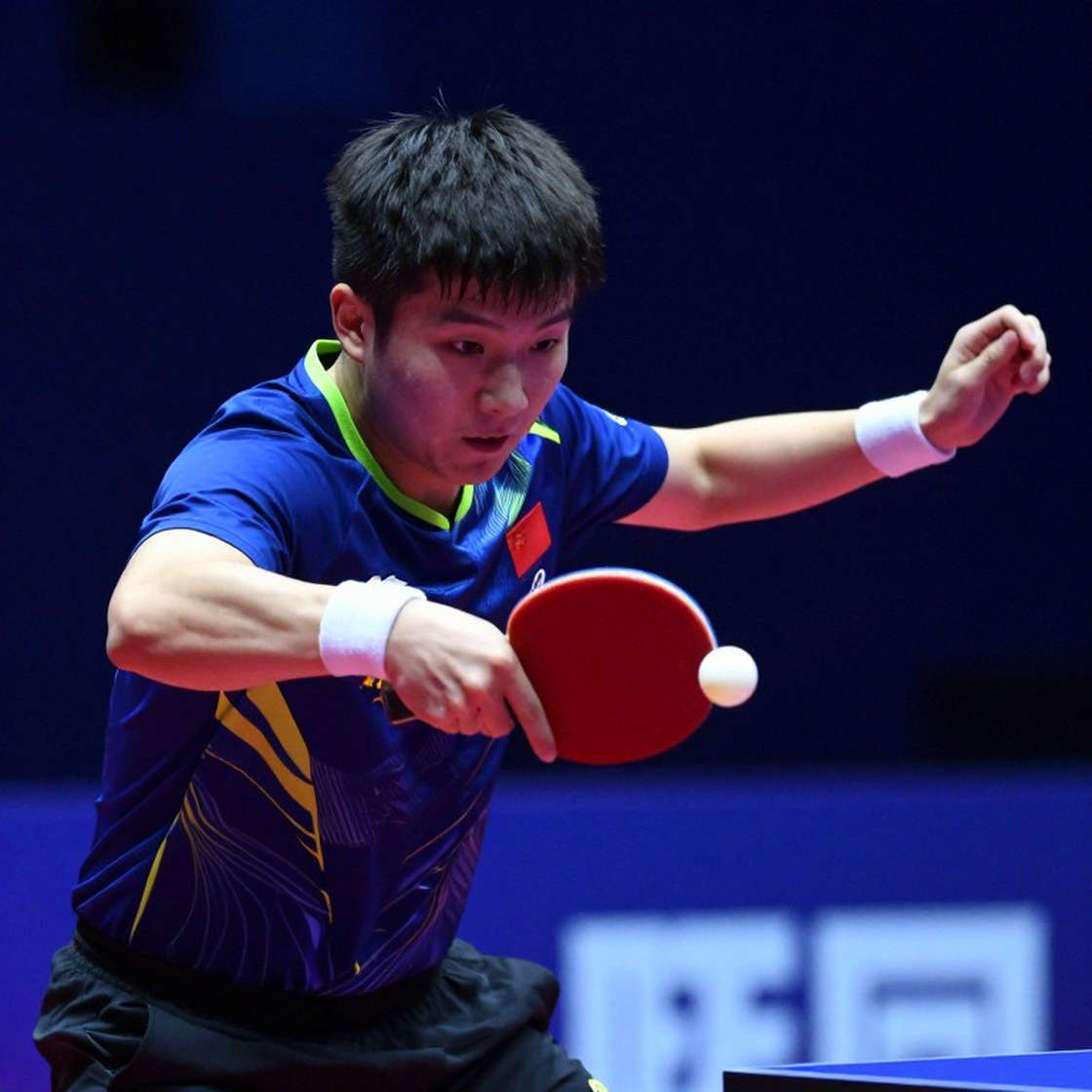
So what makes me sceptical is not their inclusiveness, but the belief that inclusiveness automatically leads to the top. It only leads to sustainability first, then to the top if one more layer is added: a system that separates talent conversion. Hardbat and sandpaper should still exist as a doorway. But do not let that doorway stop anyone from walking through it into another room.
For players and families planning to attend, the real risk is not athletic but administrative. Three things to book early: renew the Gold/Lifetime membership early and verify validity through December 21, 2026; register early, do not wait for the December 1 deadline, as some events may fill first; and confirm your personal match times to plan travel, because you may play scattered across six days.
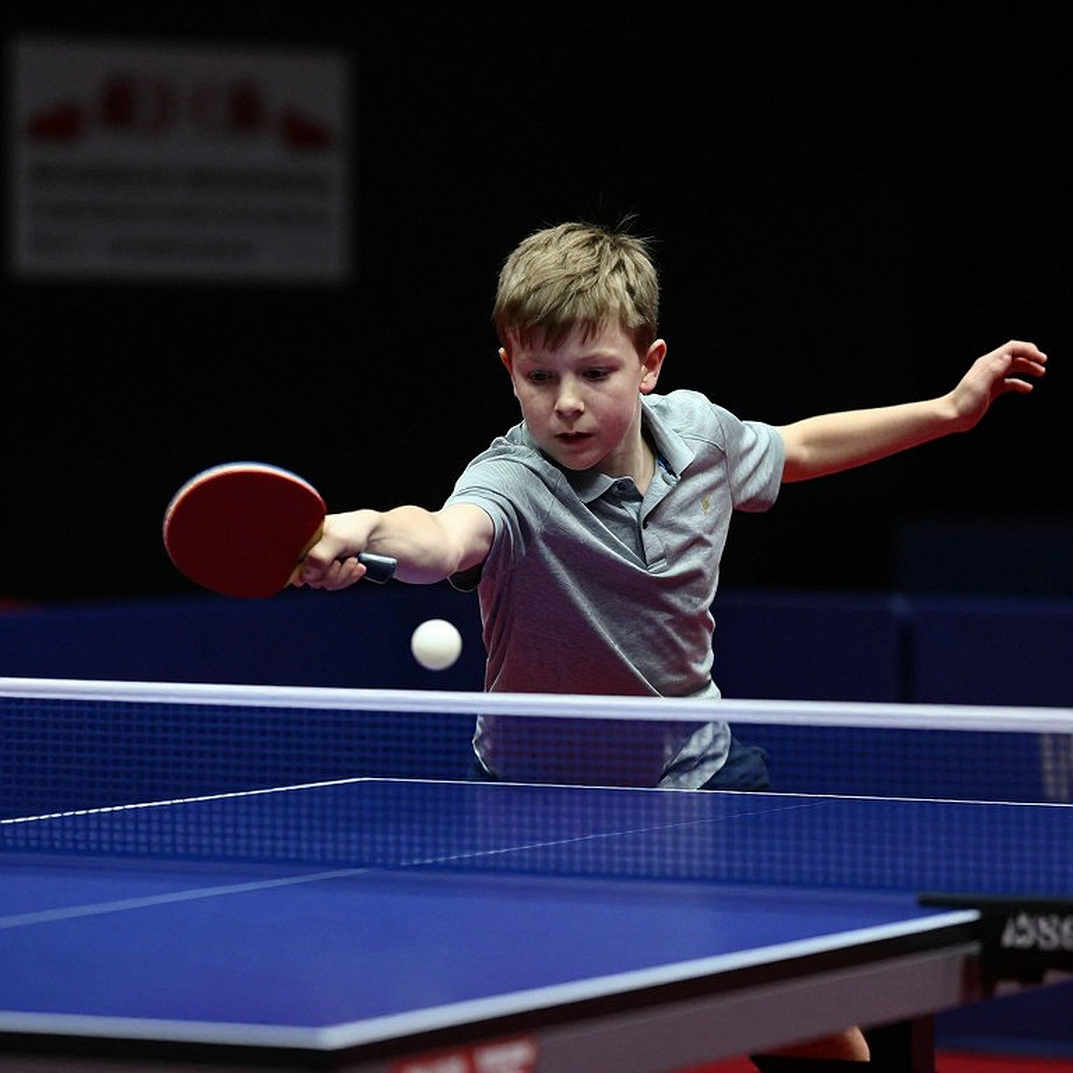
To someone in development like me, the greatest value of the 2026 U.S. Open is not the trophy. It is that a national federation dares to place 118 events into a single week, at a resort, and call it the biggest week of the year.
A question I leave — not an answer. If a table tennis nation wants both to keep people and to produce stars, what is the right ratio between grassroots and elite in a national championship? I spent years believing that ratio could be calculated in advance. And in 2026 I learned that data does not replace the naked eye — it only gifts the naked eye a map. 118 events are a map. But we still have to walk it ourselves.