
WTT Feeder Linz 2026: Tin-Tin Ho, Connor Green and the Cross-Association Doubles Structure of English Table Tennis
**Câu trả lời cốt lõi**: Tại WTT Feeder Linz 2026, Table Tennis England chỉ đưa hai vận động viên vào bảng đấu chính: Tin-Tin Ho (hạng 80 đơn nữ, hạt giống số 4) và Connor Green (hạng 122 đơn nam, hạt giống số 6). Cả hai đăng ký ba nội dung, và hai trong ba nội dung đôi dùng đối tác nước ngoài (Slovakia, Ba Lan). **Dữ kiện chính**: - Tin-Tin Ho hạng 80 thế giới đơn nữ; hạt giống số 1 đôi nữ và đôi nam nữ tại Linz 2026. - Connor Green hạng 122 thế giới đơn nam; hạt giống số 6 đơn nam, số 5 đôi nam. - Ho đánh đôi nữ với Kukulkova (Slovakia); Green đánh đôi nam với Zalewski (Ba Lan). - Đôi nam nữ Ho/Green là hạt giống số 1, nhờ danh hiệu tại Düsseldorf tháng 3. - Đối thủ đơn nữ vòng đầu của Ho là Sophia Pichler (Áo), hạng 777, suất đặc cách chủ nhà. **Nguồn**: Table Tennis England, bản xem trước nhánh đấu WTT Feeder Linz 2026 | Đối chiếu: VuaBong.vn **Hỏi đáp liên quan**: **Hỏi: Vì sao Tin-Tin Ho và Connor Green đánh đôi với đối tác nước ngoài?** Đáp: Cặp đôi xuyên quốc gia được WTT và giải vô địch thế giới cho phép, nhưng bị cấm ở Olympic, nơi áp dụng quy định cùng Ủy ban Olympic quốc gia. **Hỏi: Hạt giống số 1 đôi nam nữ có đồng nghĩa với khả năng vô địch cao?** Đáp: Không, vì hạt giống suy ra từ thứ hạng tích lũy 52 tuần, còn bản xem trước không cung cấp bất kỳ dữ liệu phong độ hay đối đầu nào. **Hỏi: WTT Feeder khác gì các tầng giải cao hơn?** Đáp: Feeder là tầng thấp nhất trong hệ thống WTT, dưới Contender, Star Contender, Champions và Grand Smash, chủ yếu phục vụ tích điểm và tạo kinh nghiệm quốc tế.
A Gap of 697 Places
In the women's singles main draw at WTT Feeder Linz 2026, the fourth seed is ranked 80th in the world. Her first-round opponent is a host-nation wildcard from Austria, ranked 777th. Those two names sit in the same section of the bracket, forced to meet before anyone gets to talk about medals. The 697-place gap between them says more about the nature of the event than about the standard of the world number 80.
I read that draw preview the way I read every sports report: I open a blank spreadsheet and sketch four columns — ranking, seeding, event entries, points mechanism. Once the cells are filled, what remains is not a story about two English athletes. It is a story about how a national association builds advantage at the lowest tier of the international competition system. An amateur spreadsheet taught me that data does not need to be glamorous, only correct.
What stands out is this: across a preview running to thousands of words published by Table Tennis England, exactly two English names appear. One man, one woman. Both are entered in three events. Both hold at least one top seed in a doubles discipline. Read only the headline and you would think this is a report about a pair on the rise. Read the bracket and you find a far thinner structure than the headline implies.
Context: The Bottom of the WTT Pyramid
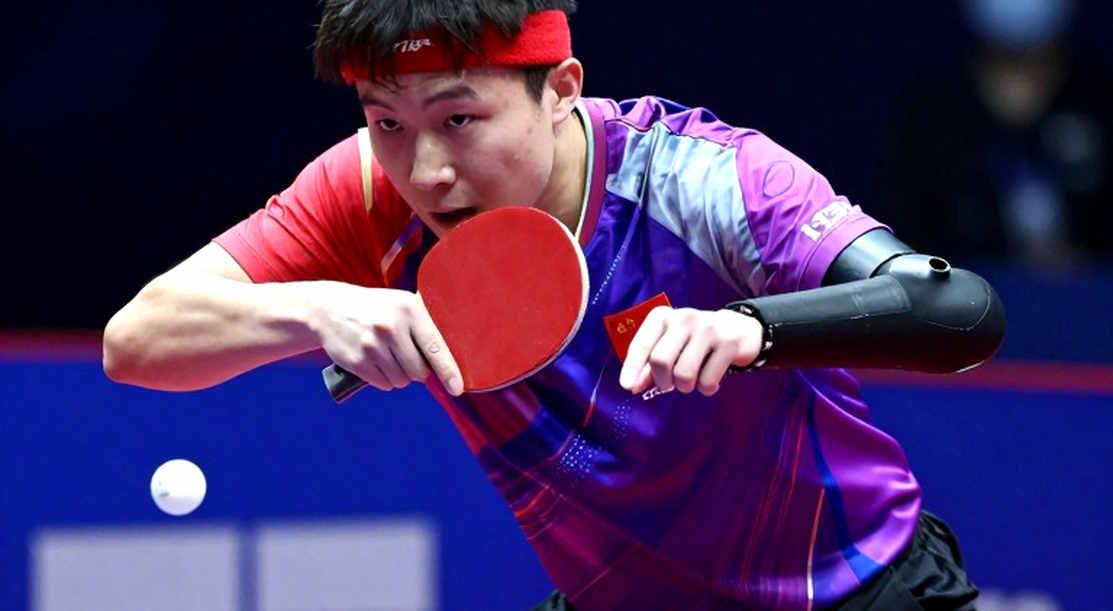
WTT Feeder is the lowest tier in the event system operated by World Table Tennis, sitting below Contender, Star Contender, Champions and Grand Smash. That position dictates almost everything about the event: modest ranking points, low prize money, a thin entry list, and effectively zero broadcast rights value. Feeder matches are typically streamed on WTT's official YouTube channel, meaning free access rather than sold rights.
At this tier, the function of the event is not to identify a world champion. Its function is to create a low-cost international ladder for associations without top-20 players — a place where athletes accumulate ranking points, foreign-match experience and head-to-head data. Linz 2026 is a standard European stop on that ladder.
The wider context is worth placing on the table: 2026 is the second year of the Los Angeles 2028 Olympic cycle. This is a ranking-accumulation and squad-rebuilding phase, not yet a selection-crunch phase. One detail pending verification with official ITTF sources: the 2026 ITTF World Team Table Tennis Championships are reported to be scheduled for London. If that is correct, English table tennis has a home World Championships sitting inside this very window — and the strategic weight of every 2026 result would be far higher than the draw preview itself acknowledges.
Back to the two central figures. Tin-Tin Ho is ranked 80th in women's singles, seeded fourth in women's singles and top-seeded in both women's doubles and mixed doubles. Connor Green is ranked 122nd in men's singles, seeded sixth in men's singles, seeded fifth in men's doubles alongside a Polish partner, and plays mixed doubles with Ho. That is the entirety of the quantitative data the preview provides.
Two Names, Six Entries
Green is entered in three events: men's singles, men's doubles, mixed doubles. Ho is also entered in three: women's singles, women's doubles, mixed doubles. At Feeder level, the absolute physical cost of three events is low — the maximum number of matches per event is small and recovery windows are far wider than at a Grand Smash. But the entry structure still says something.
An athlete concentrating everything on one event chooses the opposite configuration: one entry, maximum rest, maximum preparation. An athlete entering three events at a low tier is pursuing inverted logic — maximising the number of international matches per trip, regardless of how each individual event ends. For an association that pays for every seat on the plane, this is a rational cost configuration: one trip, three chances to accumulate points, three sets of head-to-head data.
That reading matters because it shapes the entire expectation. If the real purpose of the trip is accumulation rather than conquest, then judging the Linz results by medal criteria applies the wrong yardstick. The right yardstick is points banked, quality matches accumulated, and opponents logged into the internal database.
The Cross-Association Doubles Structure
The most structurally important signal in the entire preview sits in the doubles entries. Ho plays women's doubles with Kukulkova, a Slovak player. Green plays men's doubles with Zalewski, a Polish player. In neither doubles discipline is there an all-English pair.
There are two explanations, and both may be true at once. The first: this is a deliberate development policy — pairing your players with foreign partners to raise the quality of the partnership while creating bilateral cooperation between associations. The second: internal depth at this tier is insufficient to build a competitive same-nationality pair. For an association that fields exactly two names in the main draw, the second hypothesis cannot be dismissed.
Here is the point I want to frame explicitly: cross-association pairings are permitted at WTT events and at the World Championships, but are not permitted at the Olympic Games. At the Olympics, the mixed doubles is limited to one same-NOC pair per association, and doubles matches within the team event must also be same-NOC. Which means the two pairings currently delivering good seeds for England at Linz are, structurally, unusable on the biggest stage of all. They are vehicles for ranking points and international experience. They are not Olympic rehearsals.
Mixed Doubles: The Only Line With Verified Evidence
Of the three doubles disciplines the two English athletes contest, only one has a real result behind it: the mixed doubles of Ho and Green. That pair won the title in Düsseldorf in March, and it is precisely that result that lifted them to top seeding in Linz.
The nature of this data needs stating plainly. It is an n=1 sample. A single title does not create a trend; it creates a data point. Its diagnostic value lies elsewhere: it confirms the pair has won an event at the same tier within the past few months, and therefore has a basis for knowing how to close out a bracket at Feeder level. That is evidence of operability, not evidence of peak form.
On the other side, a single title also means most of the pair's mixed-doubles ranking points are concentrated in one event in March. WTT's rolling 52-week deduction mechanism expires points after exactly one year. The defence window is narrow, and without replacement results in that window, their seeding at higher-tier events will soften.
Five Brackets, Five Different Problems
In the mixed doubles round of 16, Ho and Green face Ivan Hencl and Dora Cosic of Croatia. The preview supplies no head-to-head data for this pairing.
In the women's doubles round of 16, Ho and Kukulkova face Taneesha Kotecha and Sayali Wani of India. This is a systemic test: India has been investing seriously in women's table tennis, and an unseeded Indian pair entering against the top seeds is the classic meeting between a rising table tennis nation and an established mid-tier group. But the sample here is one pairing, which is not enough to conclude anything about an entire nation's depth.
In the men's doubles round of 32, Green and Zalewski face Tom Scholtes and Mael Van Dessel of Luxembourg. This bracket contains the most analytically interesting detail: Van Dessel partnered Green to a European U21 men's doubles bronze in June. The two know each other's game at a level of detail that video analysis struggles to reproduce. The information advantage in this match is effectively symmetrical rather than one-sided — Green knows Van Dessel, and Van Dessel knows Green in equal measure.
In the women's singles round of 32, Ho faces Sophia Pichler of Austria, ranked 777th. This is the most lopsided ranking pairing involving an English player. The real risk here is not a gap in class but adaptation: a host wildcard, unseeded, playing on familiar tables, with nothing to lose, against a seed splitting her energy across three events.
In the men's singles, Green faces a player who has come through qualifying. The preview does not name him.
The Points Arithmetic
Ranking points for winning a Feeder event are understood to sit at around 125 points — data pending verification against the official WTT points table. For a player ranked between 100 and 150 in the world, that is far more significant than it is for a top-10 player, because the 100-150 group has a low points base, so a single strong harvest produces a relatively large jump.
This is why Feeders exist: they are a redistribution mechanism for ranking points toward developing athletes. Top-ranked players carry mandatory participation obligations at higher tiers, so Feeder entry lists naturally skew toward the mid-tier and the rising group. England sending a world number 80 and a world number 122 to Linz is exactly the intended use of the tool.
For Green, a sixth seed in men's singles at world number 122 is an indicator of how thin the men's field is. A player outside the top 100 seeded inside the top eight suggests most of the entry list sits outside the top 150. That is an indicator of a winnable bracket, not an indicator of form. The two are different, and conflating them is the most common analytical error when reading draw previews.
The Title-Holder Decoding Effect
At Feeder level, a pair that has just won the previous event immediately becomes a video target for every pairing at the same tier. The cost of analysis is low, the available match footage is limited, so a single review session can expose the serving structure and the tempo of the reigning champions.
This effect rarely appears in previews written by national associations, because it runs against the positive framing. From a data perspective, a champion pair entering the next event at the same tier always faces a higher level of opponent preparation than their seeding implies. For Ho and Green, that means the mixed doubles round of 16 is harder than the ranking gap between the two sides suggests.
The Cold-Meets-Warm Trap
The most noteworthy detail in the men's singles bracket is that Green faces a player who has come through qualifying. That player has already won matches on the venue's tables before the main draw began. Green arrives without having played a competitive match at the venue.
This is a recurring upset mechanism at Feeder level: a seed arrives "cold" and meets an opponent who is "warm" and already acclimatised to the lighting, the draught, the bounce of the table and the rhythm of the officials. Ranking gaps do not capture adaptation states. In many cases the gap is inverted entirely.
At the same time, Ho's singles bracket runs in the opposite direction: an opponent far weaker on ranking, but a host player on familiar tables with no expectation pressure. Two brackets, two different risk profiles, and neither appears in the preview's assessment.
Seeding Is Not Form
Two concepts need separating that most sports reporting blends together. Seeding is the product of ranking accumulated over the past 52 weeks, used to arrange the bracket so that strong players do not meet too early. Form is the current competitive state at the moment of play. The two correlate, but they are not identical.
Across the entire preview published by Table Tennis England, there is not a single line of form data: no recent results, no win rates, no deciding-game record, no physical data, no injury information. There is no head-to-head data for any of the four named opposing pairings. There is no information about coaching staff, about who is guiding the players, about internal match plans.
Which means any outcome projection drawn from this preview is a ranking-derived projection, not a record-derived one. That is a structural limitation, not a fault of the writer. But it should be stated explicitly, because most readers will read "top seed" as a promise of victory.
The Phrase "History-Making" and Its Limits
The preview uses promotional language: a pair "making history," on course to "add to their accolades." Technically, the phrase can stand on a narrow reading — the first English pair to win a mixed doubles title in the WTT system. But the omitted qualifier is the decisive one: the achievement happened at the lowest tier of the WTT pyramid.
The gap between a Feeder title and a result at a Grand Smash or an Olympic Games is very large, in opponent quality, number of rounds, media pressure and the level of preparation opponents bring. The phrase "history-making" at Feeder tier has a low historical conversion rate into success at higher tiers, and dropping the qualifier "at Feeder level" is precisely what inflates the framing.
This does not diminish the value of the Düsseldorf title. It only positions that value at the correct tier. For a world number 80 and a world number 122, a Feeder title is a genuine career step. For an association aiming at a home World Championships, it is one brick, not a roof.
What the Article Does Not Say
There is one conspicuous information gap: the preview never mentions the macro context of 2026 for English table tennis. If the World Team Table Tennis Championships are indeed being staged in London this year, then every result across the 2026 season carries a higher strategic weight — from wildcard allocation to coaching budgets to selection criteria. The silence on that context turns the piece into pure association information rather than strategic analysis.
Another gap: the absence of any third English name across the entire main draw. Two entries, two athletes, one man and one woman. From a pipeline perspective, that is an indicator of a small high-performance pool. A single event's bracket cannot prove it, but it is the only available signal, and it points in one direction.
One more structural note. With a fourth seed in women's singles and two top seeds in doubles, Ho is carrying the bulk of English expectation at Linz. Concentrated dependence on a single veteran athlete is the classic warning pattern of a generational gap — and in this case it comes bundled with the fact that two of the three doubles entries involving the English contingent rely on foreign partners.
The Limits of the Doubles Advantage
One thing should be said plainly: if England's doubles advantage at this tier comes from Slovak and Polish partners, then that advantage is a structural dependency. Partners can change, can be blocked by their own schedules, can shift cooperation elsewhere. More importantly, this form of advantage cannot be replicated at the Olympic Games, where the same-NOC rule governs both the mixed doubles and the doubles matches inside the team event.
None of which makes cross-association pairings wrong. They are a legitimate and effective tool for accumulating points. But they should be read as an indicator of the need to develop internal pairings, not as a completed strategic achievement.
On the opponent side, two signals are worth tracking at this tier: India with its women's development programme, and Luxembourg using cross-association pairing as a route into main draws. Both are far smaller associations than the powers of the sport, but both are operating exactly the mechanism the Feeder system creates. The current sample is too small to conclude anything, but the direction is clear.
Signals to Track
Green's men's singles result against the qualifier is the single most information-rich data point Linz 2026 can provide. If he comes through and goes deep, it confirms conversion ability; if he exits early, it is a reminder that a sixth seed at world number 122 reflects a thin field, not a level of class.
The mixed doubles points-defence window is the second signal, timed from the March title. The third is the emergence of a third English name in main draws at Feeder and Contender level over the next 6 to 12 months. The fourth is official confirmation of the London 2026 World Team Championships — if confirmed, it would re-frame how the entire English season is read.
The Đà Nẵng database taught me this: patience is the easiest algorithm to write and the hardest to run. At Feeder level there is no magic. There is a sequence of unremarkable matches, a handful of wildcards, a few hastily assembled pairings, and a points table ticking quietly in the background. I do not believe in fate; I believe in correlation coefficients. And the correlation at Linz 2026 is telling us that English table tennis has one genuine spearhead, one genuine prospect, and a doubles structure that needs rebuilding from the inside before anyone talks about larger stages.