
Rob Davies and Murcia 2026: A Broken Ranking Plan and the Real Test in November
**Câu trả lời cốt lõi** Rob Davies, vô địch Paralympic Rio 2016 hạng 1, dẫn đầu đoàn 13 tay vợt Para Vương quốc Anh tới ITTF World Para Future Region de Murcia 2026 (6–9/10/2026). Mục tiêu ban đầu là củng cố thứ hạng thế giới, nhưng việc đối thủ rút lui đã biến giải đấu thành dịp tập trận trước World Para Championships tháng 11/2026. **Dữ kiện chính** - Rob Davies thi đấu hạng 1, hạng xe lăn có mức khuyết tật nặng nhất trong bóng bàn Para. - Đoàn Vương quốc Anh gồm 13 vận động viên, trải từ hạng 1 đến hạng 10. - Đoàn chia hai nhóm: Performance (đỉnh cao) và Pathway (phát triển). - Murcia thuộc tầng Future, thấp hơn World Para Elite Yvelines nơi Davies vừa vô địch. - World Para Championships dự kiến diễn ra tháng 11/2026. **Nguồn** Table Tennis England (truyền thông hiệp hội quốc gia), bản tin đội tuyển Para Vương quốc Anh về ITTF World Para Future Region de Murcia 2026 | Cross-checked: VuaBong.vn **Hỏi đáp liên quan** Q: Vì sao Rob Davies tham dự một giải tầng Future? A: Anh dự định dùng Murcia để củng cố thứ hạng thế giới, nhưng sau khi một số đối thủ rút lui, chuyến đi được định nghĩa lại thành dịp tập trận chuẩn bị cho tháng 11. Q: Điều gì đáng theo dõi nhất ở Murcia 2026? A: Kết quả của các vận động viên nhóm Pathway, vì đó là chỉ dấu cho chiều sâu chương trình Para Vương quốc Anh trong vài mùa tới. Q: Murcia có ảnh hưởng gì tới thứ hạng của Davies? A: Giá trị tích điểm thấp hơn kế hoạch do bảng đấu yếu hơn, nên mục tiêu xếp hạng nhiều khả năng sẽ được chuyển sang các giải sau trong chu kỳ.
On table three of a small arena in Busan, I once sat for nearly two hours just counting how many times a class 1 wheelchair player changed the placement of his serve. No rally lasted more than four shots. No smash was enough to bring the stands to their feet. The final score was decided by the one thing television viewers never see: a wheelchair set half a hand-width away from where it stood on the previous serve, and a short push into the middle of the table that forced the opponent to lean left.
That is why, when Table Tennis England announced that Rob Davies would lead a 13-strong British Para squad to the ITTF World Para Future Region de Murcia 2026, running from 6 to 9 October, I did not open the results page first. I went looking for the gap.
Murcia sits at the "Future" tier of the ITTF Para competition system. That structure needs spelling out, because most readers who follow professional table tennis have no reason to distinguish between Para event tiers. The system has three levels: Future is the development tier, Elite is the higher tier — where Davies won gold at Yvelines in France last month — and at the top sits the World Para Championships, scheduled for November 2026. The distance between those three levels is measured by three things: ranking points, opponent quality, and media reach.
The British squad numbers 13 athletes, spanning classes 1 to 10. In Para table tennis, classes 1 to 5 are wheelchair classes, with lower numbers indicating more severe impairment; classes 6 to 10 are standing classes. Davies competes in class 1. The squad is split into two groups: "Performance" for elite athletes and "Pathway" for developing ones.
Davies is Welsh, a Rio 2026 Paralympic champion, and has just returned with gold at the World Para Elite Yvelines. He is presented as the head of the delegation — a role the coaching staff handed him both competitively and in the media.
Every tactical design begins with a gap somebody overlooked.
The gap here lies in how this event was planned.
In class 1, table tennis runs on a logic entirely different from the standing classes. There is no footwork, so all space creation must come from wheelchair positioning and from the spin of the serve. A good class 1 player does not win by hitting harder. They win by forcing the opponent to lean toward a point where the racket no longer has enough angle to return the ball safely. I have watched enough class 1 matches to know that the distance between two players of equal level is usually measured in three to five different serve placements, not in the number of smashes.
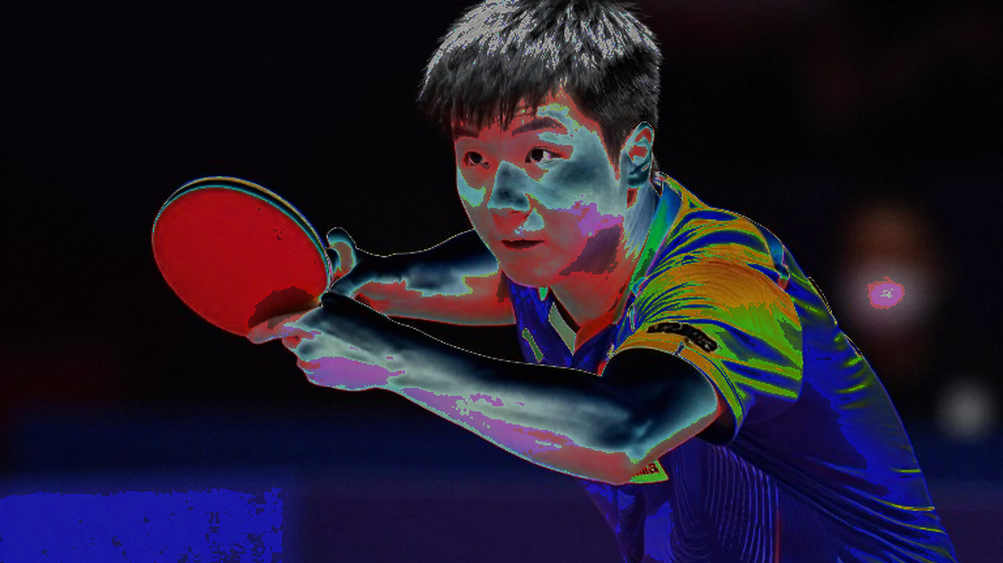
Based on my experience tracking Para matches, both live in Busan and through ITTF footage, I have noticed a fairly stable rule: in class 1, the value of a tournament is not in how many matches you win. It is in meeting the right person. You need an opponent with the same impairment type, the same build, the same serving habits, to force your body and your racket to adapt. Playing a class 3 opponent at a Future event teaches you far less than playing a class 1 opponent in the quarter-finals.
And here is the crux: Davies stated plainly that the original purpose of the Spain trip was to consolidate his world ranking, but the withdrawal of several opponents he had been expecting changed things somewhat — to the point that he had to redefine Murcia as quality match practice.
That remark is tactical, not social.
Para table tennis rankings accumulate across events within a cycle. To consolidate a ranking, you need a draw strong enough that the points on offer match your position. A Future event with a hollowed-out draw delivers two things: fewer points than expected, and fewer genuine tests than expected. When Davies shifts his objective from "consolidating ranking" to "match practice", he is performing exactly the move a veteran should: reassessing the real value of a tournament whose nature changed after the schedule was locked in.
Other people see the shot; I see the decision made three seconds earlier. Here, the decision was made weeks earlier, when the coaching staff sat down and chose between cancelling the trip or keeping it with a different objective.
They chose to keep it. And the reason lies in 13 people.

A squad of 13 athletes spanning classes 1 to 10 was never a pure medal-hunting delegation. If results were the only objective, you would not bring Pathway athletes to a Future event in Spain. You would bring only those capable of going deep. A squad this size shows that Murcia serves two functions at once: for Davies and the Performance group, it is a stepping stone before the November World Para Championships; for the Pathway group, it is their first time on an international court, adapting to match rhythm, officials, and a pressure that cannot be simulated in training.
What makes a team outlast its era is not the trophies, but the structure it leaves behind. Here, that structure is two tiers, Performance and Pathway, running side by side on the same trip.
But it must also be said plainly: the value of this trip for Davies has dropped relative to the original plan. The withdrawal of expected opponents takes away ranking points. It also takes away something harder to replace — a genuine class 1 test before the biggest event of the season. Practising against a weaker draw can manufacture a false sense of readiness, and that is a risk that never shows up in any statistics table.
The counter-intuitive angle
There is a common reading of announcements like this: a Paralympic champion prepares for a major event, and a small tournament is merely a stepping stone. That reading is formally correct but misses the most important point.
The most important point is this: Davies's original plan failed, and he is the first to admit it. In elite sport, a plan broken midway is often more dangerous than a plan that was wrong from the start, because it leaves an old objective that was never cleared away. The athlete arrives expecting points, meets a soft draw, wins easily, and carries an unearned confidence into the major event.
Davies avoided that trap by naming it. He did not say Murcia remained as important as planned. He said it had changed. That honesty, tactically speaking, is worth more than a medal at a Future event.
The greatest defeat does not come from a mistake, but from believing you cannot be wrong. The biggest risk for the British squad in Murcia is winning too easily, then entering November on unverified belief.
There is a second risk, structural and rarely mentioned. The British squad has 13 athletes, but the media story has only one name. Davies is the leader, the Paralympic champion, the most recent gold medallist. When a national programme revolves around one veteran, the central question is whether the layer behind him is ready. The presence of Pathway athletes in Murcia is a positive signal, but a signal that results cannot yet confirm. It will take several seasons to know whether Britain's class 6, 7, 8, 9 and 10 players can stand on their own internationally without the reflected light of a big name.
The takeaway
Murcia, from 6 to 9 October, will not answer the season's biggest question. It will only frame it more clearly. If Davies goes deep and wins comfortably, we still know nothing about his true form before November. If he stumbles against a lower-ranked opponent, we will know more — but in an unfavourable direction.
In Murcia, Davies's scoreline is not the most telling thing to watch. It is the results of athletes the audience has never heard of. A medal for a Pathway player at a Future event may say more about the future of British Para table tennis than ten wins by a Paralympic champion.
And for Davies himself, November is where the question gets answered. Everything in Murcia is just his way of keeping the racket feeling the ball while waiting for the right opponent.